Tamil Nadu Raises CMCHIS Cover to ₹25 Lakh Annually
| General Studies Paper II: Health, Government Policies |
Why in News?
Recently, the Parliamentary Standing Committee on Health and Family Welfare recommended a 20% Cap on Medicine Price Gap between landing cost and MRP, aiming to curb excessive mark-ups.
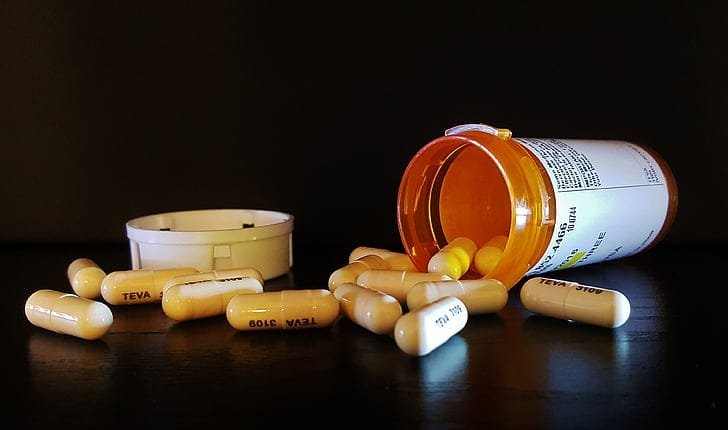
What Is Cap on Medicine Price Gap?
- About: The Cap on Medicine Price Gap refers to a proposed regulatory limit placed on the difference between the actual manufacturing or entry cost of a drug and its eventual cost to consumers.
- The proposal is recommended in the 176th Report of the Parliamentary Standing Committee on Health and Family Welfare.
- It seeks to restrict the difference between a medicine’s landing price and its Maximum Retail Price (MRP).
- Landing price refers to the cost at which a medicine or medical device reaches the market.
- It provides the base reference price before subsequent commercial mark-ups, and distribution margins.
- Maximum Retail Price (MRP) is the highest price printed on a product’s package at which it can be sold to consumers.
- Cap: The Committee’s recommendation is that the landing-price-to-MRP gap should not exceed 20%.
- The recommendation concerns medicines and medical devices.
- Thus, instead of allowing unrestricted mark-ups, the proposed framework would establish a transparent upper limit on the price differential.
- Need: The Committee expressed concern over the large disparity between landing costs and MRPs of medicines and medical devices.
- Such disparities can increase healthcare expenditure and weaken price transparency for consumers.
- Medicines remain an important component of household healthcare spending in India. A large landing-price–MRP differential can increase patients’ out-of-pocket expenditure (OOPE).
- The Committee highlighted Tenecteplase, a clot-dissolving emergency medicine, reporting a landing cost of approximately ₹18,000 against an MRP of about ₹50,000.
- It represents a mark-up regulation approach, seeking greater alignment.
- Significance: Lower medicine costs can improve financial protection and access to treatment, two important dimensions of Universal Health Coverage (UHC).
- Greater transparency can improve consumers’ ability to identify unreasonable pricing and strengthen regulatory oversight.
Why Are Medicine Prices Significantly Higher Than Costs?
- Complex Supply Chain: Medicines move through manufacturers, carrying-and-forwarding agents, distributors, wholesalers and retailers before reaching patients.
- Each layer can add costs and margins, widening the difference between the manufacturer’s price and final consumer price.
- Trade Margins: Trade margins compensate intermediaries for distribution, inventory, storage and selling activities.
- However, where margins become excessive, they can substantially increase the MRP without a proportionate increase in the medicine’s underlying cost.
- Brand-Based Pricing: India’s pharmaceutical market contains numerous branded generics selling the same therapeutic ingredients under different brand names.
- Brand positioning, promotion and perceived quality differences can allow substantially different prices for similar products.
- Information Asymmetry: Medicines exhibit severe information asymmetry: patients generally cannot independently assess therapeutic equivalence, appropriate dosage or product quality.
- WHO identifies this imbalance between medicine suppliers and consumers as a source of market failure.
- Weak Price Transparency: Patients may not know the manufacturer price, distributor margin, wholesale price or comparable alternatives.
- WHO notes that greater pricing transparency can strengthen competition and improve efficiency.
Reasons for Capping the Medicine Price Gap
- The National Health Accounts 2022–23 reported that Indians spent over ₹1.6 lakh crore on medicines during the year, making medicines one of the largest components of healthcare expenditure.
- Therefore, reducing excessive price escalation can have significant affordability implications.
- Government data show that OOPE declined from 62.6% of Total Health Expenditure in 2014–15 to 39.4% in 2021–22.
- Despite this improvement, households still finance a substantial share of healthcare directly, making medicine-price regulation important for financial protection.
- Private hospitals frequently use unregulated internal markups on high-end devices and consumables, creating artificial billing inflation.
- Implementing price ceilings on coronary stents in 2017 dropped costs from ₹1.9 lakh down to ₹25,000–₹30,000, saving consumers an estimated ₹13,353 crore annually.
India’s Existing Drug Price Regulation Framework
- Legal Foundation: India’s drug-pricing system operates primarily under the Essential Commodities Act, 1955 and the Drugs (Prices Control) Order, 2013 (DPCO).
- DPCO 2013 was notified on 15 May 2013, following the National Pharmaceutical Pricing Policy (NPPP), 2012.
- The NPPP 2012 established three core principles: essentiality of medicines, formulation-level price control, and market-based pricing.
- As of 31 March 2025, NPPA reported ceiling prices for 928 formulations under NLEM 2022. Thus, India follows a targeted price-control model, balancing medicine affordability with market-based pricing.
- Regulation:
- The National Pharmaceutical Pricing Authority (NPPA), established on 29 August 1997, implements DPCO and performs price-fixation, monitoring and enforcement functions.
- It also monitors drug availability, investigates overcharging and advises the Government on pharmaceutical pricing.
- The National List of Essential Medicines (NLEM) provides the essentiality-based foundation for scheduled-drug price control.
- The latest NLEM is NLEM 2022, containing 388 medicines; these are incorporated into Schedule I of DPCO through the applicable regulatory process.
- The National Pharmaceutical Pricing Authority (NPPA), established on 29 August 1997, implements DPCO and performs price-fixation, monitoring and enforcement functions.
- Price Control:
- For scheduled medicines, NPPA fixes a maximum permissible ceiling price.
- Under DPCO’s market-based methodology, the calculation uses prices of qualifying brands and generics having at least 1% market share, based on Moving Annual Turnover (MAT), with a 16% retailer margin added to the calculated average price to retailer.
- For non-scheduled formulations, DPCO provides for monitoring of annual price increases.
- NPPA states that increases of up to 10% during the preceding 12 months are permitted under the applicable provision.
- DPCO also provides a mechanism for fixing retail prices of new drugs.
- NPPA reports that it had fixed retail prices for 3,286 new drugs as of 31 March 2025, demonstrating that regulation extends beyond conventional scheduled formulations.
- Under Para 19 of DPCO 2013, the Government/NPPA can regulate prices of medicines outside ordinary controls in extraordinary circumstances or public interest.
- This power has been used for products including certain anti-diabetic and cardiovascular medicines and medical devices.
- For scheduled medicines, NPPA fixes a maximum permissible ceiling price.
- Recent Reform: The Government of India notified the Drugs (Prices Control) Amendment Order, 2026 on June 30, 2026, to update drug pricing rules and simplify new drug launches.
- The government can set different ceiling or retail prices for the same medicine based on packaging type, pack size, dosage form (liquid or tablet), or special therapeutic reasons.
- A manufacturer is not held fully liable for overcharging if a local dealer or retailer sells a drug above the price limit, as long as the manufacturer followed all price-sharing rules.
- Companies launching a “me-too” drug (an already approved medicine) do not need to reapply for a fresh price approval if launched within 12 months of the original price fix.
Frequently Asked Questions (FAQs):
1. What is the proposed 20% cap on medicine price gaps?
It proposes limiting the difference between a medicine’s landing price and MRP to 20%, curbing excessive mark-ups.
2. Why has the Parliamentary Panel proposed a 20% cap?
To address excessive price disparities, improve medicine affordability, strengthen transparency, and reduce patients’ financial burden.
3. What does the medicine price gap mean?
It means the difference between a medicine’s landing price and its Maximum Retail Price (MRP) charged to consumers.
4. How would a 20% cap affect medicine prices in India?
It would restrict permissible mark-ups above landing costs, potentially lowering MRPs where existing price differences are substantially higher.
5. Will the proposed rule make medicines cheaper for consumers?
Potentially yes, particularly for medicines with large landing-price–MRP gaps, although actual savings depend on implementation and enforcement.
Disclaimer: Information in this article is based on official announcements and public records. Regulations and implementation details may evolve over time.
| Also Read: US New Generic Drug Tariffs Plan |