




Delhi Gymkhana Members Challenge Government Eviction Order
|
General Studies Paper II: Fundamental Rights, Government Policies and Interventions |
Why in News?
Recently, Members of the historic Delhi Gymkhana Club officially moved the Delhi High Court, challenging the Centre’s directive to vacate its premises in Lutyens’ Delhi by June 5.
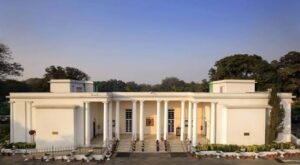
Know About Delhi Gymkhana Club
- Location: Delhi Gymkhana Club is one of India’s most exclusive social, sporting, and heritage clubs, located on 27.3 acres at Safdarjung Road in Lutyens’ Delhi.
- It symbolizes elite networking, colonial legacy, and bureaucratic influence.
- Foundation: The club was founded in 1913 during British rule as the Imperial Delhi Gymkhana Club.
- Historical Legacy: The institution became a powerful center of India’s post-colonial elite culture after Independence.
- It served British civil and military officers posted in the new imperial capital after Delhi replaced Calcutta in 1911.
- Its first president was Sir Spencer Harcourt Butler, a prominent administrator in British India.
- The institution emerged as a primary social anchor during the construction of the new imperial capital of New Delhi.
- After India attained independence in 1947, the word “Imperial” was officially dropped from the title, and then-Prime Minister Jawaharlal Nehru became its new Vice-Patron.
- Architecture & Accommodation: The club complex was designed by noted British architect Robert Tor Russell, architect of Connaught Place and Teen Murti Bhavan. Its colonial architecture reflects imperial-era planning traditions.
- The club includes 26 grass tennis courts, swimming pool, squash courts, restaurants, three bars, dining halls, party venues, and recreation spaces.
- The complex includes top-tier facilities for squash and billiards, as well as a temperature-controlled swimming pool and a fully equipped modern gymnasium.
- The club manages a total of 43 transit rooms. This accommodation array includes 37 single twin-bedded rooms, 2 two-room suites, and 4 double suites.
- Management: The club earlier operated through an elected committee.
- It is presently administered under a government-appointed committee after National Company Law Tribunal (NCLT) intervention.
- This is a 15-member committee of directors who run the prestigious club’s day-to-day affairs.
- Membership System: The club historically followed the controversial 40-40-20 rule—40% civil servants, 40% defence officers, and 20% others. Membership waiting periods reportedly stretched 30–40 years.
- The selection process relies heavily on an informal assessment of a candidate’s background, social standing, and whether they fit seamlessly into the club’s traditional culture.
- Adult children of existing members received preferential “green card” treatment, leading to accusations of nepotism and exclusivity against outsiders.
- Financial Strength: Recent reports revealed nearly ₹200 crore mutual fund investments and around ₹129 crore net worth, showing strong finances.
- Controversies: Government agencies accused the club of drifting from sports promotion into excessive hospitality culture, famously calling it transformation from “vyayamshaala to madhushaala.”
- Government audits highlighted systemic unauthorized constructions, commercial exploitation of sub-leases, and structural alterations executed without approvals.
- Following allegations of financial irregularities and governance violations the Ministry of Corporate Affairs intervened.
- The National Company Law Tribunal (NCLT) and its appellate body (National Company Law Appellate Tribunal (NCLAT)) superseded the club’s private general committee due to rampant mismanagement.
Government Eviction Order
- Order: The Union Government ordered Delhi Gymkhana Club to vacate its 27.3-acre Safdarjung Road property by 5 June 2026.
- The government notified that the site lies near the Prime Minister’s residence and high-security zones, making it essential for defence infrastructure and public security expansion.
- The land was never privately owned by the club. Ownership legally remained with the Government of India, while the club functioned merely as a leaseholder occupant since colonial times.
- Issuing Authority: The directive was issued by the Land & Development Office (L&DO) under the Ministry of Housing and Urban Affairs, the central authority managing Union government leasehold land in Delhi.
- Re-Entry Provision: The Centre justified action through the constitutional principle of public purpose, commonly used in state land acquisition and infrastructure expansion matters.
- The Government invoked the legal doctrine of “re-entry and resumption”, allowing the lessor to reclaim leased public land for sovereign or public purposes under lease conditions.
- Officials specifically cited Clause 4 of the original lease deed, which permits the government to repossess land whenever required for public purpose or institutional necessity.
- Because Lutyens’ Delhi land falls under Union administration, the Centre possesses overriding authority through central urban land governance mechanisms and lease administration powers.
Delhi Gymkhana Members Stand & Resistance
- Stand: The members argue the government violated principles of natural justice because adequate consultation, hearing opportunity, and transition planning were allegedly absent before issuing the eviction deadline.
- The members’ core argument is that the property operates under a perpetual lease, legally closer to freehold rights, and therefore cannot be resumed without extraordinary public necessity and due process safeguards.
- Lawyers supporting members are relying on Article 300A of the Constitution, which states no person can be deprived of property except through lawful procedure and due process.
- Several members argue the century-old institution represents an important colonial-era heritage structure and social archive of post-Independence India requiring preservation rather than administrative removal.
- The club also highlights the livelihoods of nearly 600 employees, many serving for decades, claiming sudden closure could create major labour and rehabilitation concerns.
- The governing council sought government clarification regarding an alternative land parcel before surrendering possession, insisting operations should continue without institutional disruption.
- Members rejected the government’s “high-security zone” reasoning, noting that nearby public institutions like the Indira Gandhi Memorial receive thousands of visitors daily without similar restrictions.
- Members described the order as a “shock,” fearing that the dispute could become a precedent for stronger state intervention in other elite institutions occupying government land.
- Legal Action: Members of Delhi Gymkhana Club launched a coordinated court battle against the Centre’s eviction order, calling the decision abrupt, disproportionate, and legally questionable.
- More than 500 permanent members reportedly signed a formal resolution authorising senior member Vijay Khurana to represent them collectively before courts, tribunals, and government authorities.
- Members intend to seek judicial review before the Delhi High Court, arguing that government power under lease agreements is not absolute and remains reviewable for arbitrariness or mala fide intent.
- Members are expected to challenge any proceedings under the Public Premises (Eviction of Unauthorised Occupants) Act, 1971, arguing that occupation cannot instantly become “unauthorised” without exhaustive legal adjudication.
|
Property Rights and Public Land Laws in India:
|
|
Also Read: What is Enemy Property? |