WMO Issues El Nino Warming
|
General Studies Paper III: Important Geophysical Phenomena, Climate Change, Environmental Pollution & Degradation |
Why in News?
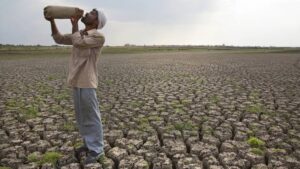
Recently, the World Meteorological Organization (WMO) warned of a high probability of El Niño developing by August 2026, which threatens to trigger severe heatwaves and disrupt India’s monsoon with below-normal rainfall.
Key Findings of WMO’s 2026 El Niño Warning:
- High Probability: The World Meteorological Organization (WMO) projects an 80% probability of El Niño developing during June–August 2026, rising to around 90% during September–December 2026.
- Most climate models indicate a moderate to potentially strong event, making it one of the most significant climate risks of 2026.
- Warming Signals: The warning is driven by unusually warm central and eastern equatorial Pacific Ocean waters.
- Rising sea-surface temperature anomalies indicate a clear shift from the fading La Niña phase to El Niño conditions, strengthening confidence in forecasts.
- Temperature Surge: WMO forecasts above-average temperatures across most land areas worldwide during June–August 2026.
- El Niño adds heat to an already warming climate system, increasing the likelihood of new global temperature records during 2026–27.
- Indian Monsoon: Historically, El Niño weakens the Southwest Monsoon. India’s 2026 monsoon is projected near 90% of the Long Period Average (LPA), potentially the weakest in over a decade.
- El Niño typically enhances summer and post-monsoon temperatures. Combined with ongoing warming, India could witness more frequent and prolonged extreme heat events.
What is El Niño?
-
- About: El Niño is the warm phase of the El Niño–Southern Oscillation (ENSO), characterized by unusually warm sea-surface temperatures in the central and eastern equatorial Pacific Ocean.
- It is the world’s most influential natural climate phenomenon.
- ENSO has three phases: El Niño (warm phase), La Niña (cool phase), and Neutral conditions. These phases collectively drive major year-to-year climate variability worldwide.
- Name Origin: The term “El Niño” originated among Peruvian fishermen. In Spanish, it means “The Little Boy” or “Christ Child.”
- They observed unusually warm coastal waters near Peru around Christmas, which reduced fish catches and affected livelihoods.
- Factor: The primary trigger is the weakening of easterly trade winds over the tropical Pacific.
- This reduces the westward movement of warm water, allowing accumulated warm water to shift eastward toward South America.
- Temperature Threshold: An El Niño is officially declared when the Niño 3.4 region records a sea-surface temperature anomaly of +0.5°C or more for at least five consecutive overlapping three-month seasons.
- Scientists use the Oceanic Niño Index (ONI) to measure sea-surface temperature.
- Development Process: Under normal conditions, warm water remains near Indonesia while cold nutrient-rich water upwells near Peru.
- During El Niño, weakened trade winds suppress upwelling and spread warm water across the eastern Pacific, initiating large-scale atmospheric changes.
- Warmer ocean waters increase evaporation and convection, shifting rainfall zones eastward.
- Monitoring Systems: Monitoring is conducted by the World Meteorological Organization (WMO).
- It is monitored using satellites, ocean buoys, sea-level pressure data, ocean temperatures, and the Southern Oscillation Index (SOI).
- The National Oceanic and Atmospheric Administration’s (NOAA) tropical Pacific buoy network continuously measures temperature, winds, currents and pressure.
- Frequency: El Niño occurs irregularly every 2–7 years, averaging once every 3–4 years.
- Most events last 9–12 months, though some persist for up to 18 months and produce stronger global impacts.
- About: El Niño is the warm phase of the El Niño–Southern Oscillation (ENSO), characterized by unusually warm sea-surface temperatures in the central and eastern equatorial Pacific Ocean.
- Climate Influence: It modifies atmospheric circulation, affecting weather across Asia, Africa, Australia, the Americas, and the Pacific.
- This modifies global pressure systems, jet streams, storm tracks, and rainfall patterns, creating worldwide climatic impacts.
-
-
- El Niño transfers stored ocean heat into the atmosphere, often contributing to record global temperatures.
-
- It is considered the most important source of interannual climate variability on Earth. It can trigger droughts, floods, storms, and abnormal temperature patterns.
-
- The Walker Circulation, a system of east-west atmospheric circulation, weakens during El Niño.
- It disrupts normal atmospheric circulation and impacts southwest monsoon in India, resulting in below-normal rainfall, delayed monsoon onset.
Potential Impact on India
- Monsoon: The Southwest Monsoon provides nearly 70% of India’s annual rainfall and supports agriculture, drinking water and energy systems.
- For 2026, India has projected rainfall at about 90% of the Long Period Average (LPA), potentially the weakest monsoon in 11 years due to developing El Niño conditions.
- Historically, many major drought years—1982, 1987, 2002, 2009 and 2015—coincided with El Niño conditions.
- Agriculture: Agriculture remains highly monsoon-dependent despite irrigation expansion.
- Nearly 50% of India’s farmland is rain-fed, making crops vulnerable to rainfall deficits.
- Rice, pulses, oilseeds, soybean and cotton are particularly exposed to moisture stress during weak monsoon years.
- El Niño-induced rainfall deficits reduce soil moisture during the critical June–September Kharif season.
- Delayed sowing, poor germination and lower yields can significantly affect foodgrain output, especially in semi-arid regions of western, central and peninsular India.
- Groundwater Stress: A weak monsoon reduces reservoir storage, river discharge and groundwater recharge.
- With reduced inflows from rain, major water reservoirs in states like Maharashtra, Karnataka, and central India suffer significant storage drops.
- Less rainfall means inadequate natural recharge for aquifers. Consequently, reliance on deep borewells increases exponentially, lowering water tables and creating acute drinking water shortages.
- Reducing water levels in reservoirs directly throttles hydroelectric power output, removing a critical baseload component just when power is needed most.
- Heatwaves: El Niño generally raises surface temperatures across India.
- Combined with anthropogenic warming, it increases the frequency, duration and intensity of heatwaves exceeding 45°C.
- Consequences include heat-related illnesses, mortality risks, reduced labour productivity, and increased stress on public-health infrastructure.
- Food Inflation: Reduced agricultural output often translates into higher prices of cereals, pulses and edible oils.
- Analysts estimate inflation could approach 5.5%, largely through food-price pressures, affecting household purchasing power nationwide.
- Lower farm incomes, reduced wage opportunities and weaker rural consumption can slow demand for consumer goods, machinery and rural services.
- Environmental Impact: These prolonged dry spells and soaring temperatures elevate forest fire risks, accelerate land degradation, and severely stress biodiversity.
- Furthermore, reduced river flows and increased thermal stress drastically diminish aquatic productivity and harm freshwater ecosystems.
India’s Preparedness and Policy Response
- The Union Government has directed all states to activate district-specific contingency plans.
- These plans focus on local rainfall deficits, crop conditions, water availability and drought-risk management rather than adopting a uniform national approach.
- The Agriculture Ministry has launched a dedicated Kharif Contingency Plan 2026 emphasizing seed buffers, alternative crops and adaptive farming practices.
- States have been instructed to ensure availability of certified drought-tolerant and short-duration seed varieties. These crops require less water and mature faster under rainfall uncertainty.
- Government advisories emphasize moisture conservation, micro-irrigation, efficient reservoir management and life-saving irrigation during prolonged dry spells to protect standing crops.
- States have been asked to maintain 1% strategic seed reserves, while national fertilizer stocks have been built to 51% of kharif-season requirements, significantly above normal preparedness levels.
- The Centre has established Crop Weather Watch Groups and crisis-management teams for continuous monitoring of rainfall, sowing progress, pest outbreaks and crop stress indicators.
- Digital platforms, call centres and extension services are being strengthened to provide real-time weather advisories, re-sowing guidance and climate-risk information to farmers.
- The National Disaster Management Authority (NDMA) has expanded Heat Action Plans across India.
- Around 300 plans are operational, with about 100 more under development, focusing on cooling shelters, water access and urban heat mitigation.
|
Also Read: Scientists Warn of Super El Niño Risk |