Rudra Gaurav Shresth Appointed India Next Ambassador to Turkiye
| General Studies Paper II: Effect of Policies & Politics of Countries on India’s Interests |
Why in News?
Recently, the Ministry of External Affairs appointed Rudra Gaurav Shresth as India’s next Ambassador to Turkiye.
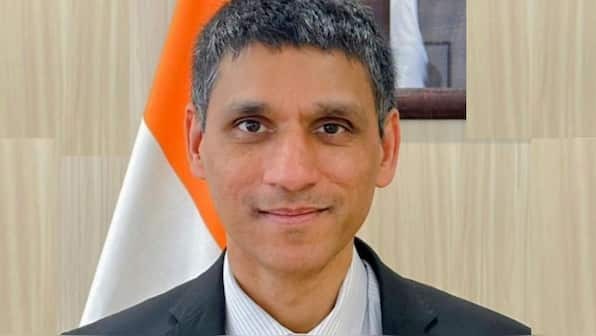
Image Credit: Firstpost
Who is Rudra Gaurav Shresth Ambassador to Türkiye?
- About: Rudra Gaurav Shresth is a senior Indian Foreign Service (IFS) officer of the 1999 batch.
- Shresth holds a post-graduate degree from the Delhi School of Economics (DSE), one of India’s premier institutions for economics and public policy.
- After clearing the highly competitive UPSC Civil Services Examination, he joined the Indian Foreign Service in 1999.
- Career: During the initial phase of his career, he served in Indian diplomatic missions in France, Mauritius, Afghanistan, Singapore, and Bhutan. These postings exposed him to Europe, Africa, South Asia, and Southeast Asia.
- At the Ministry of External Affairs, New Delhi, he handled personnel management, policy planning, and later served as Director in the Foreign Secretary’s Office, gaining experience in strategic decision-making.
- His first major ambassadorial-level leadership assignment was as India’s High Commissioner to Mozambique from 2016 to 2019, strengthening India–Africa engagement.
- He functioned as the Deputy Chief of Mission in Thimphu, Bhutan. He served for nearly three years in the Prime Minister’s Office (PMO), holding responsibilities of Officer on Special Duty (OSD) and at the Joint Secretary level and contributing to high-level governance coordination.
- In May 2023, he assumed charge as India’s Ambassador to Iran, a strategically vital posting given Iran’s importance for energy security, connectivity, and West Asian geopolitics.
- Contribution: His diplomatic career spans Europe, Africa, South Asia, Southeast Asia, and West Asia.
- He drove matters tied to regional transit and heavily contributed to advancing the Chabahar Port project, cementing India’s footprint in Central Asian and Eurasian trade.
India–Turkiye Relations
- Historical Tiles: India and Turkiye share centuries-old connections dating back to the Ottoman era.
- Diplomatic exchanges between Ottoman rulers and Indian kingdoms were recorded as early as the 15th century.
- Cultural interactions were strengthened through Sufi traditions, particularly the influence of Rumi’s philosophy, which resonated with India’s Bhakti movement.
- Diplomatic Relations: Turkiye recognized India soon after independence in 1947, and formal diplomatic relations were established in 1948.
- Since then, both countries have maintained embassies and regular diplomatic consultations, making the relationship one of the oldest among Asian republics.
- Political Engagement: Political relations have witnessed periodic high-level exchanges.
- Key milestones include Prime Minister Narendra Modi’s participation in the G20 Summit in Antalya (2015) and President Recep Tayyip Erdoğan’s visits to India in 2017 and the G20 Summit in 2023.
- These engagements focused on trade, security, aviation, and regional issues.
- Trade Growth: Economic cooperation remains the strongest pillar of bilateral ties. Total trade reached US$10.43 billion in FY 2023-24, while FY 2024-25 recorded US$8.71 billion.
- India enjoys a consistent trade surplus, exporting machinery, chemicals, textiles, and petroleum products.
- Investment: Indian investments in Turkiye exceed US$125 million, while Turkish investments in India are above US$210 million.
- Companies from both countries operate in automobiles, infrastructure, pharmaceuticals, engineering, and information technology sectors.
- Security Cooperation: India and Turkiye have explored cooperation in defence, counter-terrorism, maritime security, and strategic dialogue. However, defence engagement remains limited compared to economic ties.
- People-to-People: Tourism, education, films, and cultural exchanges have strengthened societal links. More than 307,000 Indian tourists visited Türkiye in 2024, reflecting growing public interest in Turkish heritage, cuisine, and historical sites.
Significance of Turkiye in India’s Foreign Policy
- Strategic Gateway: Turkiye geography is its greatest strategic asset. Located at the intersection of Europe, West Asia, the Caucasus, the Black Sea, and the Mediterranean, it controls access through the Bosporus and Dardanelles Straits.
- For India, Turkiye is a crucial geopolitical node connecting Asian markets with Europe and Eurasia.
- India–Europe Connectivity: Turkiye occupies a central position in emerging East-West trade corridors.
- As India seeks faster access to European markets through initiatives such as the India–Middle East–Europe Economic Corridor (IMEC), Turkiye remains an influential transit actor whose geographic location cannot be ignored.
- West Asian Geopolitics: Turkiye is one of the most influential middle powers in West Asia, maintaining active roles in Syria, Iraq, the Eastern Mediterranean, and the Gulf.
- Since West Asia supplies nearly half of India’s crude oil requirements, developments involving Türkiye directly affect India’s broader regional interests.
- Central Asia Access; India’s Connect Central Asia Policy faces geographical constraints.
- Türkiye’s growing engagement across Central Asia makes it an important stakeholder in Eurasian connectivity, energy flows, and regional economic integration.
- Maritime Significance: Turkiye has expanded its diplomatic and naval footprint in the Western Indian Ocean, East Africa, and the Horn of Africa.
- This increasing maritime presence has important implications for India’s Indo-Pacific strategy and sea-lane security calculations.
- Security Dimension: Turkiye possesses one of the fastest-growing indigenous defence industries, producing drones, naval platforms, missiles, and electronic systems.
- Its expanding defence outreach across Asia and Africa makes it a significant security actor that India must monitor closely.
Challenges Between India–Turkiye Relations
- Pakistan Factor: Ankara’s persistent alignment with Islamabad remains the primary strategic roadblock.
- Türkiye’s frequent references to the Kashmir dispute at the UN General Assembly directly challenge India’s territorial sovereignty and strategic interests.
- Türkiye frequently uses the Organization of Islamic Cooperation (OIC) to criticize India’s internal policies.
- Defense Asymmetry: Türkiye has emerged as a major defense supplier to Pakistan.
- By transferring advanced Bayraktar drones, MILGEM corvettes, and missile technology, Ankara inadvertently alters the balance of power in South India.
- Recently during Operation Sindoor Turkey provided drones to Pakistan.
- Divergent Cyprus Policy: The geopolitical conflict extends into Europe and the Mediterranean. India officially supports the Republic of Cyprus and calls for adherence to UN Security Council resolutions, whereas Türkiye strongly backs the unrecognized Northern Cyprus state, creating direct diplomatic clashes.
- Bilateral Trade Contraction: Bilateral trade dropped from $10.43 billion to $8.71 billion, marked by a 17% decline in Turkish exports to the Indian market.
- Total merchandise trade contracted, falling from roughly $10 billion to just $4.59 billion by late FY26.
- Geopolitical tensions significantly drag down the potential for reaching the mutually targeted $20 billion trade mark.
- The All India Consumer Products Distributors Federation initiated boycotts.
- Tourism Deficit: Geopolitical tensions have impacted soft-power exchanges. Indian tourist arrivals to Türkiye witnessed a 37% drop, signaling how diplomatic friction can quickly suppress bilateral tourism and hospitality sectors.
- Security Scrutiny: India exercises growing caution concerning Turkish corporate involvement in sensitive Indian sectors.
- India recently revoked security clearance for Çelebi Airport Services India, highlighting rising national security vigilance against Turkish entities.
- Multilateral Blockades: Ankara consistently obstructs New Delhi’s integration into global governance architectures. Türkiye blocks India’s entry into the Nuclear Suppliers Group (NSG) by tying its membership to Pakistan’s application.
- New Delhi views this as an abuse of multilateral forums to target its domestic sovereignty.
- Trilateral Strategic Axis: The formation of the Türkiye–Azerbaijan–Pakistan trilateral axis poses a complex challenge.
- This bloc coordinates defensive and diplomatic maneuvers, requiring India to recalibrate its Eurasian foreign policy.
FAQs:
1. Who is Rudra Gaurav Shresth?
Rudra Gaurav Shresth is a 1999-batch Indian Foreign Service (IFS) officer, currently serving as India’s Ambassador to Iran.
2. Why has he been appointed Ambassador to Türkiye?
India selected him for his extensive diplomatic experience across West Asia, Europe, Africa, and strategic policy planning roles.
3. What are the responsibilities of an ambassador?
An ambassador represents India abroad, manages bilateral relations, protects national interests, promotes trade, and leads the embassy.
4. How important are India–Türkiye relations?
Türkiye is strategically located between Europe and Asia, making it important for trade, connectivity, diplomacy, regional security, and geopolitical engagement.
5. When will he assume the new role?
The MEA stated that Rudra Gaurav Shresth is expected to take up his assignment in Ankara shortly.