




Utusu Virus
| General Studies Paper II: Health |
Why in News?
Recently, Usutu virus (USUV) was detected in Scotland for the first time after infected blackbirds were identified on the Isle of Arran.
What is Usutu Virus (USUV)?
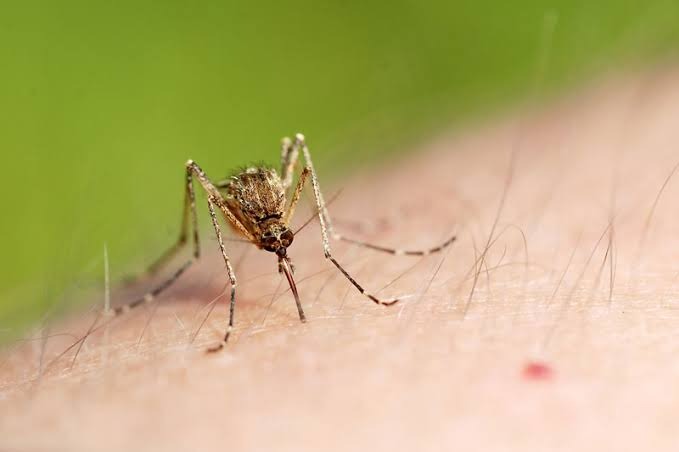
- About: Usutu virus (USUV) is an emerging mosquito-borne zoonotic virus that primarily circulates between wild birds and mosquitoes.
- Discovery: USUV was first isolated in 1959 from Culex neavei mosquitoes collected near the Usutu River in present-day Eswatini (formerly Swaziland), South Africa.
- The virus derives its name from this river. Although identified in Africa in 1959, its first recognized human infection—a case involving fever and rash—was reported later.
- Taxonomic Classification: USUV belongs to the Family: Flaviviridae, Genus: Orthoflavivirus (formerly Flavivirus).
- It is a member of the Japanese Encephalitis Virus (JEV) serocomplex. This places it among medically important arboviruses transmitted by mosquitoes.
- It is classified under Baltimore Group IV, comprising viruses with a positive-sense RNA genome.
- Genome Structure: The virus possesses a single-stranded positive-sense RNA genome of approximately 11 kilobases.
- Its genome contains one long open reading frame (ORF) flanked by 5′ and 3′ non-coding regions, producing a polyprotein that is later cleaved into structural and non-structural proteins essential for viral replication, transmission, and host infection.
- Relation: USUV is closely related to West Nile virus, Japanese encephalitis virus, Murray Valley encephalitis virus, and St. Louis encephalitis virus, sharing similar ecological and transmission characteristics.
Transmission and Global Spread of Usutu Virus
- Transmission Cycle: Usutu virus (USUV) is maintained through an enzootic bird–mosquito transmission cycle, similar to that of West Nile virus.
- The principal vectors are Culex mosquitoes, particularly Culex pipiens, although other mosquito species can also participate in transmission.
- Infected mosquitoes acquire the virus while feeding on viraemic birds and subsequently transmit it to new avian hosts through bites.
- Temperature strongly influences mosquito abundance, viral replication, and transmission efficiency, making climatic conditions a key driver of disease expansion.
- Wild birds serve as the primary reservoir and amplifying hosts of USUV. Among them, Eurasian blackbirds (Turdus merula) are particularly susceptible and often experience severe disease and mortality. Other passerine birds and owls also contribute to viral circulation.
- Humans are considered incidental or dead-end hosts because they generally develop insufficient viraemia to infect mosquitoes. Human infections are relatively rare and mostly asymptomatic, though occasional cases of neurological disease have been documented.
- Global Distribution: Originally identified in Africa, USUV expanded into Europe, where it was first recognized in Austria in 2001.
- Since then, the virus has spread across numerous European countries, including Germany, France, Italy, the Netherlands, Belgium, the United Kingdom, and Denmark.
- Genetic evidence indicates successful establishment in European mosquito–bird ecosystems, with overwintering mosquitoes helping maintain transmission between seasons.
- In April 2026, UK authorities confirmed the first detection of USUV in Scotland after infected blackbirds were identified on the Isle of Arran.
- Investigations linked the findings to clusters of blackbirds displaying neurological symptoms or found dead during 2025.
Impact of Usutu Virus on Wildlife Biodiversity and Human Health
- Effects on Bird Populations: USUV primarily targets Passeriformes (perching birds) and Strigiformes (owls).
- The Eurasian blackbird (Turdus merula) is highly susceptible, suffering severe systemic illness and seasonal mass die-offs during initial outbreaks in new regions.
- Captive and wild birds suffer from multi-systemic organ degeneration.
- Studies from Germany estimated an 15.7% decline in blackbird populations within areas suitable for USUV transmission.
- Ecological Consequences: More than 50 bird species have been reported as susceptible to infection, including passerines and birds of prey.
- Large-scale mortality among common species can alter ecological interactions such as seed dispersal, insect control, and food-web dynamics.
- Blackbirds are considered important components of European ecosystems; therefore, sustained population reductions may disrupt ecosystem services and weaken ecological resilience.
- Human Infections & Zoonotic Spillovers: Humans and mammals do not develop high enough viral loads in their blood to re-infect mosquitoes.
- Clinical manifestations in humans are diverse, ranging from asymptomatic to mild or severe neuroinvasive conditions.
- Documented symptomatic cases present with persistent fever, rash, headache, and meningoencephalitis.
- Some patients experience neurological issues, including polyneuritis and facial palsy.
- Vulnerable Groups: The risk of symptomatic and severe neuroinvasive disease significantly increases in immunocompromised individuals (e.g., patients with leukaemia).
- The greatest health risks are observed among elderly individuals, organ-transplant recipients, and people with weakened immune systems.
Diagnosis and Treatment of Usutu Virus
- Diagnosis: Physicians rely on a combination of clinical presentation, travel history, mosquito exposure, and epidemiological context to identify suspected cases.
- Most infections are asymptomatic. Symptoms may include fever, rash, jaundice, headache, and rarely meningitis, encephalitis, tremors, or seizures.
- The standard for diagnosis is molecular detection of viral RNA using real-time Reverse Transcription Polymerase Chain Reaction (RT-PCR).
- Viral RNA can be detected in blood, cerebrospinal fluid (CSF), urine, and tissue samples, particularly during the acute phase of infection.
- Laboratories also use pan-flavivirus PCR assays followed by sequencing to differentiate USUV from related viruses.
- Positive serological results require confirmation through Plaque Reduction Neutralization Tests (PRNTs), which remain the most specific antibody-based diagnostic method.
- Treatment: Currently, no specific antiviral drug and no licensed human vaccine exist for USUV infection.
- Since no vaccine is available, management focuses on prevention and surveillance. Key measures include mosquito control, elimination of breeding sites, use of insect repellents and public awareness campaigns.
- Mild cases are managed with rest, hydration, and pain-relieving medications, while severe neurological cases may require hospitalization, and monitoring.
- Modern control strategies increasingly adopt the One Health approach, integrating surveillance of mosquitoes, wild birds, blood donors, and human cases.
FAQs:
1. What is the Usutu Virus?
Usutu virus (USUV) is a mosquito-borne flavivirus closely related to West Nile virus, first identified in South Africa in 1959.
2. How does the Usutu Virus spread?
USUV spreads mainly through bites of infected Culex mosquitoes that acquire the virus from infected wild birds. Humans are incidental dead-end hosts.
3. What are the symptoms of Usutu Virus infection?
Most infections are asymptomatic. Symptoms may include fever, rash, jaundice, headache, and rarely meningitis, encephalitis, tremors, or seizures.
4. Is Usutu Virus dangerous to humans?
Generally, risk is low. However, severe neurological disease can occur, especially in elderly or immunocompromised individuals.
5. Which countries have reported cases of Usutu Virus?
Cases have been reported in parts of Africa, Europe, and the Middle East, including Austria, Germany, Italy, France, the Netherlands, Belgium, and the UK.
| Also Read: Nipah Virus Case Reported in West Bengal |