Government Approves E100 Fuel Regulation
| General Studies Paper III: Environmental Pollution & Degradation, Government Policies & Interventions |
Why in News?
Recently, Union Minister Nitin Gadkari has approved the regulatory framework for E100 fuel, establishing the formal legal process for vehicles to operate entirely on 100% ethanol in India.
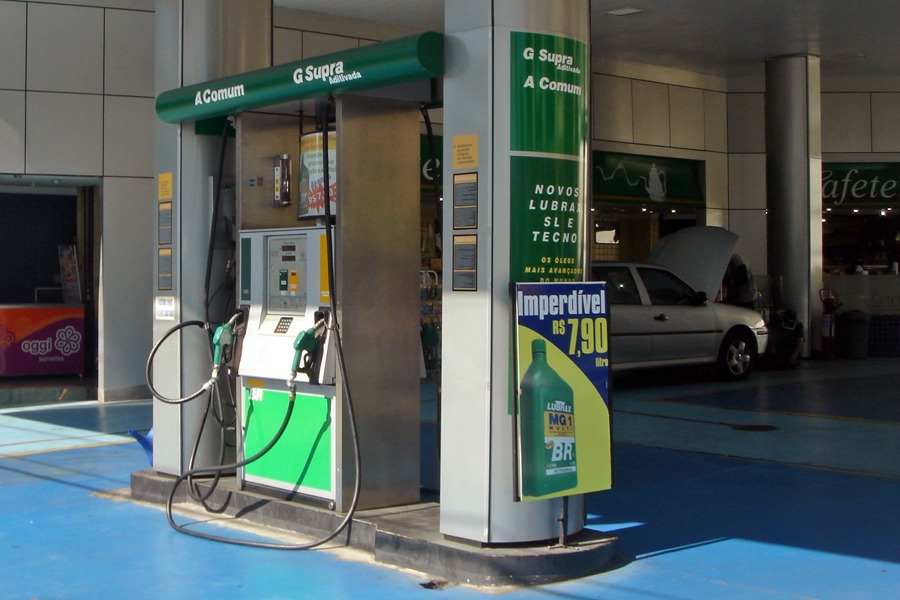
E100 Fuel Regulation in India
- Approval: The Government has formally approved E100 (100% ethanol) as a recognized automotive fuel under the regulatory framework governing motor vehicles.
- The approval stems from amendments to the Central Motor Vehicles Rules, 1989, which previously covered lower ethanol blends.
- The revised framework now explicitly incorporates E100 alongside higher-blend fuels such as E85.
- The regulations introduce a formal classification system for higher ethanol fuels.
- Vehicle Type: Only vehicles specifically engineered and certified for E100 compatibility will qualify for type approval.
- Manufacturers are required to specify whether a vehicle is compatible with E100.
- Following regulatory approval, automobile manufacturers can launch fully ethanol-powered models after obtaining certification under the revised rules.
- Fuel: E100 fuel must comply with notified standards regarding anhydrous ethanol content, impurity limits, sulphur levels, vapour pressure, octane parameters, blending requirements, testing methods, and safety norms.
- FFV Provision: The new regulations establish a robust testing and certification framework for Flex-Fuel Vehicles (FFVs) and engines to safely operate on high-ethanol blends.
What is E100 Ethanol Fuel?
- About: E100 is a high-ethanol automotive fuel in which ethanol constitutes the overwhelming majority of the blend.
- In India, E100 generally contains about 93–95% anhydrous ethanol, with the remainder comprising petrol and approved co-solvents or additives.
- The letter “E” denotes ethanol content in fuel. Thus, E100 contains 100% ethanol.
- Fuel Component: The principal ingredient is anhydrous ethanol (water-free ethanol) produced through dehydration and purification processes.
- Fuel-grade ethanol differs from industrial alcohol because it must satisfy automotive fuel specifications.
- Feedstock Sources: E100 ethanol is manufactured from agricultural feedstocks such as sugarcane, maize (corn), surplus rice, damaged food grains, molasses, and biomass residues. These materials undergo fermentation and distillation before fuel production.
- Availability: E100 fuel was first introduced in India by IndianOil in 2024, with initial availability across 183 retail outlets in Maharashtra, Karnataka, Uttar Pradesh, Tamil Nadu, and Delhi.
- Globally, Brazil remains the only country worldwide where E100 fuel is widely used at scale.
- Composition: IndianOil’s Ethanol 100 formulation contains approximately 93–93.5% ethanol, around 5% petrol, and nearly 1.5% co-solvent for operational stability.
- The small petrol fraction and additives assist cold-start performance, improve fuel stability, and prevent freezing under low temperatures.
- Characteristics: E100 possesses a high octane rating of roughly 100–105, making it a high-octane fuel category.
- Ethanol is also hygroscopic, meaning it readily absorbs moisture from the atmosphere.
- Vehicle Requirement: It requires dedicated ethanol-compatible or flex-fuel vehicles (FFVs) equipped with corrosion-resistant fuel systems and specialized engine calibration.
- Maruti Suzuki unveiled India’s first flex-fuel passenger car—the Wagon R Flex Fuel, which can seamlessly run on blends from E20 to E100.
- Hero MotoCorp launched E85-ready variants of commuter bikes like the Splendor Plus and HF Deluxe.
India’s Ethanol Blended Fuel Spectrum (E10-E100)
- E10 (10% Ethanol): India adopted the Ethanol Blended Petrol (EBP) Programme in 2003, while nationwide E10 rollout was targeted for April 2022 and achieved ahead of schedule.
- E10 contains 10% ethanol and 90% petrol. It became the country’s primary petrol blend before E20.
- Average blending crossed 10% in June 2022, fulfilling the national target.
- E20 (20% Ethanol): The original target year was 2030, but the government advanced it to 2025-26.
- E20 contains 20% ethanol and 80% petrol. Nationwide availability was achieved in 2025, and mandatory usage expanded from 1 April 2026.
- India officially achieved the 20% blending target in 2025, five years ahead of schedule.
- E22 to E30 (22%-30% Ethanol): Formally notified in May 2026 under BIS standard IS 19850:2026, E22 to E30 fuels specify compositions containing 22% to 30% ethanol.
- This standard targets phase-one calibration for compatible modern vehicles prior to full commercial rollout.
- E85 (85% Ethanol): Pilot launch initiated in June 2026 across select Public Sector OMC retail outlets in New Delhi, targeting a pan-India footprint of 5,000 ROs.
- Composition is 85% ethanol and 15% petrol. Intended exclusively for certified Flex-Fuel Vehicles (FFVs).
Significance of E100 Fuel for India
- Macro Energy Security: India imports nearly 85% to 88% of its crude oil, costing the economy an estimated ₹22 lakh crore annually.
- Transitioning to E100 fuel serves as a strategic financial shield against volatile global oil shocks and geopolitical tensions.
- Economic Foreign Exchange Savings: The historical scale of ethanol integration underscores its immense fiscal utility.
- Between 2014 and July 2025, public-sector ethanol blending successfully saved over ₹1.44 lakh crore in foreign exchange.
- It directly substituted approximately 245 lakh tonnes of crude oil imports.
- Rural Agrarian Transformation: Widespread manufacturing of E100 turns 5 crore sugarcane farmers into independent energy providers.
- Shifting half of India’s fleet to flex-fuel will consume an additional 311.8 crore litres of ethanol.
- This generates ₹12,403 crore in extra income for rural communities.
- Environmental Emission Reductions: Pure ethanol is highly oxygenated, promoting optimal combustion to drastically lower harmful tailpipe emissions.
- It significantly reduces greenhouse gases, carbon monoxide, and particulate matter.
- However, it does introduce localized increases in hazardous acetaldehyde (C2H4O) pollutants.
- Engine Performance Optimization: E100 exhibits a very superior Research Octane Number (RON) rating of 100 to 110.
- This high-octane performance allows aggressive engine tuning, advanced ignition timing, and increased power output.
- The internal cooling effect of ethanol vapor also effectively prevents engine knocking.
Challenges
- Vehicle Incompatibility: Conventional petrol or E20 vehicles cannot use E100. Pure ethanol requires corrosion-resistant fuel lines, specialized seals, and revised engine calibrations. Millions of older vehicles must be replaced with expensive flex-fuel vehicles.
- Lower Energy Density: Ethanol possesses less energy per liter than petrol. Vehicles running on E100 experience a noticeable drop in mileage (up to 25 to 30 percent), demanding much more frequent refueling.
- Infrastructure Bottlenecks: Fuel stations lack the hardware for pure ethanol. Retailers face high infrastructure costs to build dedicated underground storage tanks and dispensing units to prevent moisture absorption.
- Feedstock Sustainability: Ethanol production heavily relies on water-intensive crops like sugarcane. Scaling production raises concerns about depleting groundwater levels and compromising food security.
- High Production Costs: The cost of producing E100 remains comparable to or higher than petrol. Without ongoing government subsidies or climate finance, large-scale scaling is difficult for oil companies.
- Consumer Acceptance: Lower fuel efficiency and the higher initial price of flex-fuel vehicles create consumer reluctance. Buyers will hesitate until fuel availability is widespread.
FAQs:
1. What is E100 fuel?
E100 is a high-efficiency renewable fuel comprising nearly 100% ethanol, produced from agricultural plant feedstocks like sugarcane, corn, and organic waste.
2. Why has the government approved E100 fuel?
The Indian government approved E100 regulations to reduce massive crude oil import dependency, lower carbon emissions, and significantly boost income opportunities for local farmers.
3. How is E100 different from regular petrol?
Unlike petrol, E100 has a higher octane rating but lower energy density, causing a mileage drop, and it requires specialized corrosion-resistant flex-fuel engines.
4. What are the benefits of ethanol fuel?
It dramatically lowers tailpipe greenhouse gas emissions, provides a cheaper local fuel option, and utilizes surplus domestic crops to strengthen the rural economy.
5. How will E100 impact India’s energy sector?
It transforms the sector by accelerating green decarbonisation pathways, saving billions in foreign exchange, and establishing long-term national energy self-reliance.
| Also Read: Govt Pushes Ethanol Blending Beyond 20% |