India 155 GW Wind Energy Capacity Target by 2035
| General Studies Paper lII: Sustainable Development, Government Policies & Interventions |
Why in News?
India plans to expand installed wind energy capacity to 100 GW by 2030 and 155 GW by 2035.
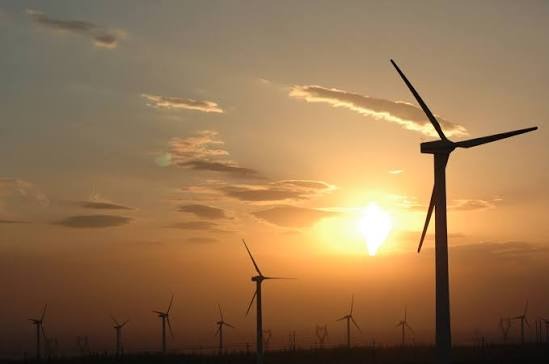
Current Status of Wind Energy Sector in India
- Installed Capacity: India’s cumulative wind power capacity has crossed 56 GW, making it the fourth-largest wind energy market globally.
- Wind contributes around 9–10% of India’s total installed power capacity.
- It remains the country’s second-largest renewable source after solar.
- The sector recorded its highest-ever annual addition of 6.05 GW in FY 2025-26, surpassing the previous record of 5.5 GW achieved in FY 2016-17.
- This represents a 46% year-on-year increase, indicating renewed momentum after years of moderate growth.
- Wind energy is a critical pillar of India’s target of 500 GW non-fossil fuel capacity by 2030 and supports long-term energy security, decarbonization, and climate commitments under the Paris Agreement.
- Leading States: Gujarat, Karnataka, Tamil Nadu, Maharashtra, and Rajasthan dominate India’s wind sector.
- Gujarat as the national leader (over 15 GW), successfully overtaking Tamil Nadu (approx. 12 GW) for the top capacity spot. Karnataka (8.5+ GW) and Maharashtra (5.8+ GW) follow closely.
- Manufacturing Ecosystem: India has successfully built a highly localized domestic supply chain, achieving 70-80% indigenization across critical components like blades and gearboxes.
- Annual turbine manufacturing capacity currently exceeds 24 GW.
- Backed by this Make-in-India momentum, exports of wind turbines and components crossed ₹12,000 crore, positioning the country as a major global export hub.
- Favorable Auction Tariffs: Wind power remains incredibly cost-competitive.
- Levelised auction tariffs have historically hovered around ₹2.77 to ₹3.17 per kWh, ensuring that clean energy remains financially affordable.
- Regulatory Support: The sector benefits from Wind Renewable Purchase Obligations (RPOs), competitive bidding, concessional customs duties, and Inter-State Transmission System (ISTS) charge waivers until 2028.
- The Ministry of New and Renewable Energy (MNRE) launched the WT-MARUT portal and implemented the Approved List of Models and Manufacturers (ALMM) to ensure quality control, transparency, and strict domestic sourcing requirements.
- Offshore Wind Frontier: India is advancing into offshore wind development to utilize the high speeds along its 7,600 km coastline.
- The government has committed substantial viability gap funding (VGF) of ₹6,853 crore to support the initial 4 GW offshore tenders.
- Total Potential: The National Institute of Wind Energy estimates India’s wind energy potential at 695.5 GW at 120m and 1,164 GW at 150m above ground level.
- This immense capacity places India among the global leaders in renewable energy.
- Karnataka, Rajasthan, and Maharashtra are among India’s top wind energy states, holding immense assessed wind power potentials.
- International Collaboration: India is forming robust international partnerships.
- Collaborative task forces with the United Kingdom, Denmark, and Belgium actively drive advanced technology transfer.
- Capacity Vision: India has adopted an ambitious wind energy roadmap targeting 100 GW installed wind capacity by 2030 and 155 GW by 2035.
- Wind energy is expected to contribute around 20% of this target, complementing solar, hydro, nuclear and storage technologies.
- The Central Electricity Authority (CEA) has incorporated 155 GW wind capacity into its National Generation Adequacy Plan for 2035–36.
- The roadmap prioritizes wind-solar hybrid projects, Green Energy Corridors, and modern transmission infrastructure to ensure efficient integration of large renewable capacities.
Government Initiatives for India’s Wind Energy Sector – India 155 GW Wind Energy
- National Offshore Wind Energy Policy: Launched in October 2015, this policy created India’s first framework for offshore wind development within the Exclusive Economic Zone (EEZ). It opened opportunities for large-scale coastal wind projects, technology transfer and private investment.
- Policy for Repowering of Wind Power Projects: Introduced in August 2016, it promotes replacement of old low-capacity turbines with modern high-efficiency machines. The policy provides financial incentives and aims to maximize electricity generation from existing wind sites.
- National Wind-Solar Hybrid Policy: Launched on 14 May 2018, it encourages integrated wind-solar projects for better land utilization and improved grid stability. The policy reduces renewable energy variability and enhances transmission efficiency.
- ISTS Charge Waiver Scheme: The government extended Inter-State Transmission System (ISTS) charge waivers for renewable projects to lower transmission costs and attract investment in wind-rich regions.
- National Repowering & Life Extension Policy: Launched in December 2023, it allows refurbishment and life extension of aging turbines. The policy identifies about 25.4 GW repowering potential, improving productivity without additional land use.
- Wind Resource Assessment Programme: Implemented through the National Institute of Wind Energy, the programme maps wind potential across states, supporting scientific site selection and investment planning for new projects.
Benefits and Challenges of Wind Energy Sector in India
- Benefits:
- Enhancing Energy Security: Wind energy reduces dependence on imported coal, oil and natural gas, insulating India from global fuel-price shocks. As a domestic resource, it strengthens long-term energy sovereignty and diversifies the national energy mix.
- Supporting Decarbonisation Goals: Wind power generates electricity without fuel combustion, significantly lowering greenhouse gas emissions and air pollutants. It is a key instrument for achieving India’s net-zero 2070 commitment and broader climate objectives.
- Employment and Rural Development: The sector creates jobs across manufacturing, installation, operations, maintenance and logistics. Wind projects provide lease income to landowners and stimulate economic activity in rural and semi-arid regions.
- Low Water Footprint: Unlike thermal power plants, wind turbines require negligible water for electricity generation. This is strategically important for a water-stressed country where energy and water security are increasingly interconnected.
- Challenges:
- Land Acquisition Constraints: Large wind farms require extensive land parcels, often leading to disputes related to land ownership, environmental clearances and local community concerns, delaying project execution.
- Grid Integration and Curtailment: Transmission infrastructure has not always kept pace with renewable expansion. Several renewable-rich states have reported 10–30% power curtailment, reducing project efficiency and investor confidence.
- Intermittent and Seasonal Generation: Wind output depends on seasonal wind patterns and fluctuating speeds. This variability creates challenges for grid balancing, forecasting and ensuring round-the-clock power supply.
- Financing and Contractual Bottlenecks: Project development is hindered by delayed Power Sale Agreements (PSAs) and payment risks from financially stressed DISCOMs. Around 44 GW of awarded renewable capacity remained without signed PSAs in 2025.
- Slow Offshore and Repowering Progress: Despite significant offshore prospects and an estimated 25 GW repowering potential, progress remains limited due to high costs, regulatory uncertainties, technology requirements and weak investor participation.
Way Forward
- Accelerate Development: India should fast-track Green Energy Corridors, interstate transmission lines and grid-modernisation projects. Strong evacuation infrastructure is essential to integrate rising wind capacity.
- Promote Offshore Wind Deployment: The government should operationalise offshore wind projects along the Gujarat and Tamil Nadu coasts through viability-gap funding, risk-sharing mechanisms and international technology partnerships.
- Expand Energy Storage: Large-scale deployment of Battery Energy Storage Systems (BESS) and pumped-storage projects should accompany wind expansion. Storage will help manage intermittency and improve grid stability.
- Strengthen Domestic Manufacturing: Policy support for indigenous production of turbines, blades, gearboxes and critical components should continue. A robust domestic supply chain will reduce import dependence and lower costs.
- Improve Investment and Framework: Timely signing of Power Sale Agreements (PSAs), faster environmental clearances, stable policy regimes and improved DISCOM financial health are crucial to attract private investment.
FAQs:
1. What is India’s wind energy target for 2035?
India aims to achieve 155 GW of installed wind energy capacity by 2035, up from about 56.1 GW currently.
2. Why is India expanding wind energy capacity?
To strengthen energy security, support industrial growth, and help achieve 500 GW non-fossil fuel capacity by 2030 and net-zero by 2070.
3. How much wind power capacity does India currently have?
India has over 56.1 GW of installed wind power capacity, making it the world’s fourth-largest wind energy market.
4. What challenges does the wind energy sector face?
Major challenges include grid delays, transmission bottlenecks, land acquisition issues, financing constraints, and project execution delays.
5. How will the target support India’s clean energy goals?
The target will boost renewable capacity, reduce emissions, and help increase the share of non-fossil energy sources in India’s power sector.