India First Private Gold Mine
| General Studies Paper lI: Mineral & Energy Resources, Government Policies & Interventions |
Why in News?
Recently, India’s first private gold mine, the Jonnagiri (Swarnagiri) Gold Project in Andhra Pradesh, began commercial operations, marking a historic shift toward private-sector mining.
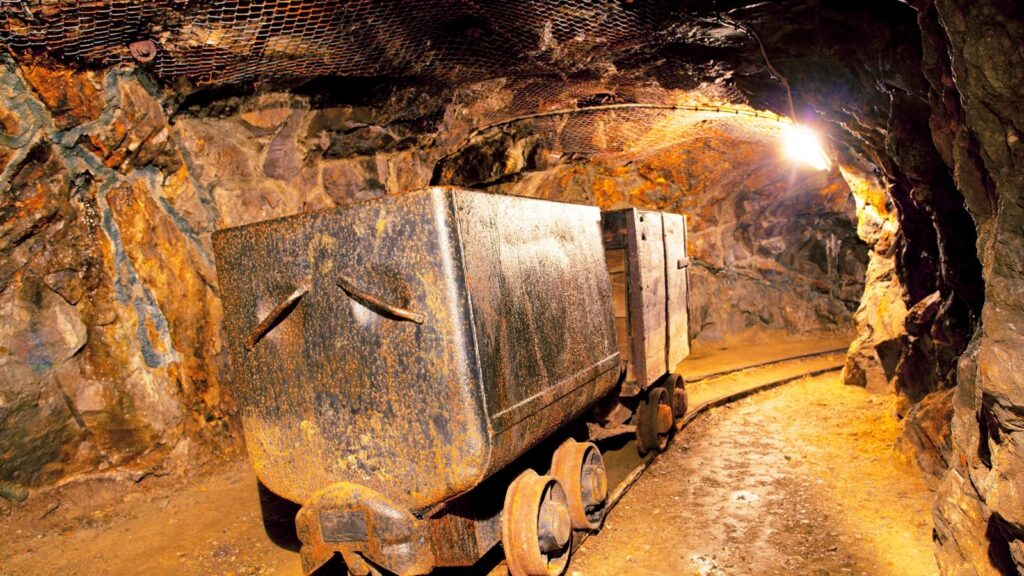
Image Credit: News18
India’s First Private Gold Mine: Jonnagiri (Swarnagiri) Gold Project
- Location: The Jonnagiri (renamed Swarnagiri) Gold Project is located in Tuggali Mandal, Kurnool district, Andhra Pradesh.
- Operational: It became operational on 24 June 2026, marking India’s first large-scale private gold mine since Independence.
- It is a landmark shift from government-dominated gold mining to private-sector participation.
- Ownership: The project is being developed by Geomysore Services India Pvt. Ltd., backed by Thriveni Earthmovers, Deccan Gold Mines Ltd., and investors including the Lloyds Group.
- Area: The mining lease covers nearly 598 hectares across Jonnagiri, Erragudi and Pagidirai villages.
- The region lies within the mineral-rich Dharwar Craton belt, known for significant gold-bearing formations.
- Investment: More than ₹400 crore has been invested in mine development, processing facilities, roads, utilities and ore-handling systems.
- The project represents one of the largest recent private mining investments in Andhra Pradesh.
- Production Capacity: Initial Year 1 output is targeted at 400 kg.
- Commercial operations target 900 kg of gold annually.
- Ore-processing capacity currently stands at about 1,000 tonnes per day, with plans to increase to 2,500 tonnes daily.
- The mine is expected to operate for approximately 15 years, subject to reserve expansion through further exploration.
- Gold Reserves: Certified reserves are estimated at about 13.1 tonnes of gold.
- Continued exploration may raise the resource potential to over 42 tonnes, enhancing long-term viability.
- Technology: The project uses open-pit mining combined with controlled blasting.
- It is followed by crushing, milling, carbon-in-leach (CIL) processing and smelting.
- Storage Facility: The facility employs a Tailings Storage Facility (TSF) equipped with a high-density polyethylene (HDPE) liner and bentonite to prevent groundwater seepage.
- Water Conservation: The project implements a Zero Liquid Discharge (ZLD) policy to eliminate external effluent release.
- Air Protection: To combat fugitive dust, the mine uses dry fogging systems, vacuum suction hoods, and bag filters at high-risk points.
Economic Significance of India’s First Private Gold Mine
- Boost to Domestic Gold Production: India’s domestic gold production is extremely limited, generating only about 1.6 to 2 tonnes annually.
- The project is expected to produce about 900–1,000 kg of gold annually.
- This increases domestic supply and partially bridges the gap between national demand and limited domestic output.
- Reduction in Gold Import Dependence: India imports more than 800 tonnes of gold annually, creating significant external dependence.
- In past periods, gold alone contributed nearly 20% of total imports, worsening macroeconomic stability.
- The project marks an important step toward reducing reliance on imported gold.
- Foreign Exchange Savings: Gold imports contribute heavily to India’s import bill and foreign-exchange outflow.
- The project can help conserve foreign exchange and marginally ease pressure on the country’s external accounts.
- It represents a crucial step toward strengthening resource security, and advancing Atmanirbhar Bharat in the mining sector.
- Employment Generation: The mine is expected to generate substantial direct and indirect employment.
- Around 90% of the workforce has reportedly been sourced from Kurnool district, strengthening local livelihoods, infrastructure development and district revenues.
- Commercial mining operations create direct jobs in extraction, processing, engineering, and administration while generating indirect employment.
- Private Sector Participation: Jonnagiri gold mine demonstrates the economic potential of private investment in mineral exploration and extraction.
- The project’s success can attract fresh investments into gold and critical mineral exploration.
- It provides a commercial model for future private-sector mining ventures across India.
India’s Gold Mining Ecosystem: Resources and Governance
- Resources: India is the world’s second-largest gold consumer.
- India possesses around 70.1 tonnes of proven gold reserves and nearly 590 tonnes of identified resources.
- The famous Kolar Gold Fields produced over 800 tonnes of gold during its operational life before closing in 2001.
- Currently, Hutti Gold Mines is India’s only major operating gold mine, producing roughly 1.5 tonnes annually.
- Domestic output satisfies less than 0.25% of national demand, highlighting the sector’s underdevelopment.
- Other mining centres include Kolar, Anantapur–Kurnool belt, and Singhbhum (Jharkhand), Sonbhadra (Uttar Pradesh), Gadag (Karnataka) and Ramgiri (Andhra Pradesh).
- The Dharwar Craton of southern India is the country’s most important gold-bearing geological zone.
- Major deposits occur in Karnataka, Andhra Pradesh, Rajasthan, Bihar, Jharkhand, and Chhattisgarh, with Karnataka holding about 88% of proven reserves.
- Bihar holds India’s largest untapped gold resource at 44%. Rajasthan accounts for 25% of national gold resources, mainly in the Bhukia-Jagpura belt.
- Governance & Reforms: India’s mining sector is governed by the Mines and Minerals (Development and Regulation) Act, 1957. It provides the core legal structure for mineral exploration and extraction under Union control.
- The National Mineral Exploration Trust (NMET) was established as a non-profit autonomous body to promote and fund systematic mineral exploration across the country.
- It offers financial reimbursement for exploration expenses, mobilization advances, and success incentives to upgrade mineral blocks, driving exploration across Obvious Geological Potential (OGP) areas.
- The District Mineral Foundation (DMF) was established to benefit communities affected by mining. A portion of the royalty goes toward local infrastructure, healthcare, and education.
- A major reform came through the Mines and Minerals (Development and Regulation) Amendment Act, 2015, which introduced competitive auctioning of mining leases and extended lease periods from 30 to 50 years, improving investor confidence.
- The National Mineral Exploration Policy, 2016 encouraged private-sector participation in mineral exploration through transparent e-auctions and royalty-sharing mechanisms.
- The National Mineral Policy 2019 sought to streamline approvals, promote exploration, establish mineral corridors, provide easier financing, and align India’s mining framework with global best practices.
- The government has proposed auctioning 500 mineral blocks, enabled seamless transfer of leases, allowed greater private participation, and promoted Atmanirbhar Bharat in mining.
- India allows 100% Foreign Direct Investment (FDI) via the automatic route for mining and exploration. It targets high-tech sectors like aerospace and electronics.
- The National Mineral Exploration Trust (NMET) was established as a non-profit autonomous body to promote and fund systematic mineral exploration across the country.
FAQs:
1. Where has India’s first private gold mine started operations?
It has started commercial operations at Swarnagiri (formerly Jonnagiri) in Kurnool district, Andhra Pradesh.
2. Who is operating this gold mine?
The mine is operated by Geomysore Services India Pvt. Ltd., supported by Thriveni Earthmovers and Deccan Gold.
3. What is the significance of private gold mining in India?
It marks India’s first large-scale private gold mine, encouraging private investment and mineral-sector modernization.
4. How will this project benefit the economy?
It will generate jobs, attract investment, increase revenues, and help reduce dependence on imported gold.
5. What impact will it have on India’s gold production?
The mine is expected to produce about 900 kg of gold annually, boosting domestic output.
Disclaimer: Information in this article is based on official announcements and public records. Regulations and implementation details may evolve over time.