




India First Large-Scale Private Gold Mining Project
|
General Studies Paper II: Mineral & Energy Resources, Government Policies & Interventions |
Why in News?
India’s first large-scale private gold mine is set to commence operations in early May 2026 at Jonnagiri in Kurnool district, Andhra Pradesh.
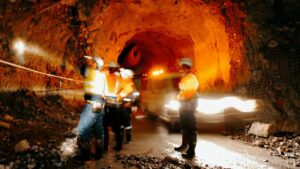
India’s First Large-Scale Private Gold Mining Project
- About: Jonnagiri Gold Project is India’s first large-scale private gold mining project since Independence.
- This historic venture is located in the Kurnool district of Andhra Pradesh, specifically covering the villages of Jonnagiri, Erragudi, and Pagidirayi.
- Ownership: The mine is developed by Geomysore Services India Private Limited (GMSI).
- Key stakeholders include Thriveni Earthmovers, Lloyds Metals, and Deccan Gold Mines Limited (DGML).
- DGML is the only gold exploration company listed on the BSE.
- Scale Details: The project spans nearly 598 hectares of mineral-rich land.
- Investors have infused over ₹400 crore into the infrastructure and processing facilities.
- The processing plant was remarkably completed in just 13 months.
- Resource Capacity: Certified gold resources currently stand at 13.1 tonnes.
- Advanced exploration indicates potential reserves could reach 42.5 tonnes.
- The mine is projected to operate for an estimated 15-year period.
- Production Output: Commercial production is scheduled to begin in early May 2026.
- At peak capacity, it aims to produce 1,000 kg (1 tonne) of refined gold annually.
- Initial Year 1 output is targeted at 400-500 kg.
- Mining Technology: The project utilizes open-pit mining combined with controlled blasting.
- Gold extraction involves a sophisticated carbon-in-leach (CIL) system and gravity separation.
- The final product is refined into doré gold bars.
Sustainable Mining Practices
- Tailings Integrity: The facility employs a Tailings Storage Facility (TSF) equipped with a high-density polyethylene (HDPE) liner and bentonite to prevent groundwater seepage.
- Strict monitoring ensures that cyanide concentrations in tailings remain below 5 PPM to neutralize environmental toxicity.
- Water Conservation: The project implements a Zero Liquid Discharge (ZLD) policy to eliminate external effluent release.
- Approximately 80% of process water is recycled using advanced filtration systems.
- Impervious pits are utilized during core drilling to prevent the contamination of local groundwater reserves.
- Cyanide Safety: Adherence to the International Cyanide Management Code governs all leaching operations at the site.
- Certified professionals handle all chemical processes, and detoxification units treat solutions before disposal.
- This ensures the safe recovery of gold through the Carbon-in-Leach (CIL) method.
- Air Protection: To combat fugitive dust, the mine uses dry fogging systems, vacuum suction hoods, and bag filters at high-risk points.
- Haul roads are treated with regular water sprinkling and chemical suppressants. An on-site environmental laboratory monitors air quality parameters in real-time.
- Land Reclamation: A comprehensive Green Belt covering 7.5 meters width is established along the safety zone.
- Over 5,200 saplings of native species have already been planted in backfilled areas to restore biodiversity.
- The plan targets a density of 2,500 plants per hectare for long-term reforestation.
- Energy Transition: The project proponent is exploring the integration of at least 20% electric vehicles or solar power within the first three years.
- This initiative aims to reduce diesel consumption and lower the overall carbon footprint of the gold extraction process.
|
India’s Gold & Mining Landscape:
|
Significance
- Import Dependency: India currently imports over 800 tonnes of gold annually to satisfy domestic demand.
- These imports primarily serve the jewellery industry but place significant strain on the country’s foreign exchange reserves and trade balance.
- In past periods, gold alone contributed nearly 20% of total imports, worsening macroeconomic stability.
- Forex Conservation: By targeting a peak annual output of 1,000 kg (1 tonne), the project aims to reduce the outflow of foreign currency.
- In fiscal year 2025-26 alone, gold imports cost India a record $71.98 billion, highlighting the urgent need for domestic alternatives.
- Production Deficit: India’s domestic gold production has been stagnant at roughly 1.5 to 3 tonnes per year for decades.
- The Jonnagiri mine will single-handedly boost the national output by nearly 33% to 50% once it reaches its peak capacity.
- Economic Contribution: The project represents a direct investment of over ₹400 crore into rural Andhra Pradesh.
- It is projected to generate annual revenue of approximately ₹300 to ₹600 crore, significantly contributing to the regional GDP and state exchequer.
- Private Participation: This venture breaks the long-standing government monopoly in gold extraction, which was previously limited to firms like Hutti Gold Mines.
- It serves as a modern template to attract private capital and high-end technology into India’s vast mineral sector.
- This project supports the Aatmanirbhar Bharat vision by boosting domestic production.
- Employment Growth: Beyond gold extraction, the project creates local job opportunities in mining, processing, and maintenance.
- It also supports community initiatives in healthcare, sanitation, and skill development for surrounding villages like Pagidirayi and Erragudi.
|
Policy Reforms and Liberalization in Mining Sector:
|
|
Also Read: Japan Extracts Deep-Sea Rare Earth Elements |