IIM Bangalore to Open First International Campus in Indonesia
| General Studies Paper II: Education, Human Resource, Government Policies & Interventions |
Why in News?
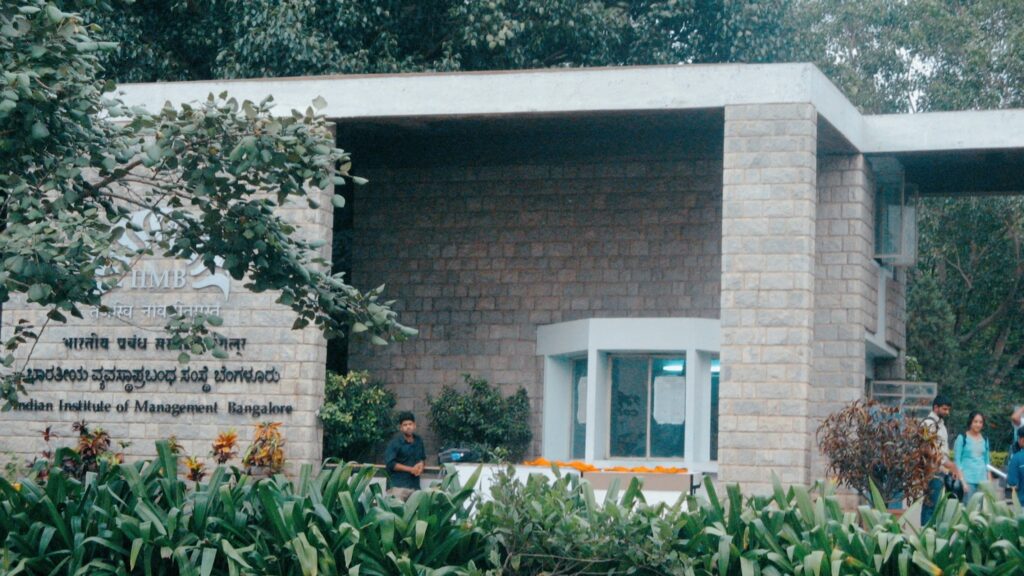
Recently, IIM Bangalore announced its first international campus in Indonesia’s Singhasari Special Economic Zone (Malang), marking India’s expanding higher-education diplomacy.
IIM Bangalore’s First International Campus Highlights
- Announcement: On 7 July 2026, Prime Minister Narendra Modi announced that IIM Bangalore (IIMB) will establish its first international campus in Indonesia.
- Location: The campus will be located in Singhasari Special Economic Zone (SEZ), Malang, Indonesia, a dedicated hub for education, digital technology and innovation.
- Its strategic position supports industry–academia collaboration.
- It expands India’s educational engagement in the Indo-Pacific.
- Alignment: The project advances the vision of National Education Policy (NEP) 2020.
- It encourages premier Indian institutions to establish overseas campuses and expand access to world-class, affordable education globally.
- Curriculum: The curriculum focuses on five emerging domains—Global Supply Chains, Digital Transformation, Artificial Intelligence, Climate & Sustainability, and Healthcare Management.
- This will be supported by interactions with industry leaders, renowned academicians and global experts.
- Implementation: Phase I will offer Executive Education Programmes for senior executives, business leaders and public-sector professionals.
- After successful implementation over two years, Phase II will introduce degree-granting management programmes.
- Institutional Framework: The campus will operate through a Memorandum of Understanding (MoU) between IIM Bangalore and PT Intelegensia Grahatama (PT IGT), the managing and development entity of Singhasari SEZ.
- Regional Outreach: The campus will primarily serve Indonesian nationals while attracting learners from neighbouring Southeast Asian countries.
- Participants will also undertake short academic immersion visits to Bengaluru, gaining exposure to India’s innovation and business ecosystem.
- Significance: The initiative enhances India’s education diplomacy, strengthens ASEAN engagement, promotes Global South cooperation.
- The initiative strengthens the India–Indonesia Strategic Partnership through enhanced academic collaboration, human capital development, and long-term knowledge partnerships across Southeast Asia.
- It expands leadership development, and positions Indonesia as a regional hub for quality management education.
- This will join the international expansion of premier Indian institutions such as IIM Ahmedabad (Dubai), IIT Delhi (Abu Dhabi) and IIT Madras (Zanzibar).
India’s Internationalization Higher Education
- NEP 2020: India’s higher education internationalisation is anchored in the National Education Policy (NEP) 2020.
- It aims to make India a global education hub by increasing the Gross Enrolment Ratio (GER) to 50% by 2035.
- It promotes a four-year multidisciplinary undergraduate programme with multiple exit options and credit transfers via the Academic Bank of Credit.
- It invites the top 100 global universities to operate campuses in India to elevate ecosystem standards.
- It replaces fragmented regulatory bodies (like UGC and AICTE) with the overarching Higher Education Commission of India (HECI) for streamlined, transparent administration.
- Governance: The Ministry of Education provides policy direction, while the University Grants Commission (UGC) regulates standards, approvals and quality assurance.
- The UGC (Setting up and Operation of Campuses of Foreign Higher Educational Institutions in India) Regulations, 2023 permit leading global universities to establish campuses in India with autonomy in curriculum, admissions and fee structure, subject to UGC oversight.
- It allows top-500 globally ranked institutions to open autonomous, physical campuses. It forces domestic UGC institutions to upgrade standards, foster research, and enhance curriculum quality.
- It attracts international students and faculty to India, improving academic diversity.
- It prohibits purely online or distance delivery (except for limited pre-approved lecture hours).
- Qualifications are awarded under the seal of the parent institution but are protected by Indian University Grants Commission jurisdiction.
- Universities are encouraged to establish joint degrees, dual degrees, twinning programmes, credit transfer arrangements, faculty exchanges and collaborative research, strengthening global academic integration.
- Institutions are promoting international curricula, foreign language learning, visiting faculty, multicultural campuses and globally benchmarked teaching.
- It allows Indian Higher Educational Institutions (HEIs) to partner with foreign universities, enabling credit recognition and joint or dual-degree certifications.
- Initiatives: World-class foreign universities operate in the Gujarat International Finance Tec-City (GIFT City). Regulated by the IFSCA, they offer FinTech and STEM programs exempt from broader domestic regulatory frameworks.
- The National Foreign Degree Equivalence Portal and the 2025 UGC Regulations on Equivalence streamline the transparent recognition of foreign qualifications.
- Flagship schemes like SPARC and GIAN invite international faculty to India, while the Vishwa Bandhu Fellowship attracts global academic leaders to Indian universities.
- The Study in India program serves as a centralized brand-building initiative to attract international students to high-quality, affordable education in India.
- Mandated by UGC to facilitate ‘internationalization at home’, Office for International Affairs campus-level cells act as single-window hubs for foreign student admissions, welfare, and the Alumni Ambassador Network.
FAQs:
1. Why is IIM Bangalore opening its first overseas campus in Indonesia?
Answer: To strengthen India–Indonesia academic cooperation, serve ASEAN learners, and expand India’s global higher education footprint.
2. Where will the IIM Bangalore Indonesia campus be located?
Answer: At Singhasari Special Economic Zone (SEZ), Malang, East Java, Indonesia.
3. What courses will be offered at the overseas campus?
Answer: Executive Education Programmes initially, followed by degree-granting management programmes in the second phase.
4. Who can apply for admission to the Indonesia campus?
Answer: Primarily Indonesian nationals, with participation open to learners from neighbouring Southeast Asian countries.
5. How will the overseas campus benefit Indian and Indonesian students?
Answer: It enables academic exchanges, immersion visits, global exposure, and stronger innovation and industry collaboration.
6. How does this initiative support international higher education?
Answer: It promotes cross-border education, research collaboration, student mobility, and internationalisation of Indian higher education.
7. What is the significance of IIM Bangalore’s first overseas campus?
Answer: It marks IIM Bangalore’s first international campus and advances India’s global education diplomacy and NEP 2020 vision.
8. How will the campus strengthen India-Indonesia academic cooperation?
Answer: By fostering knowledge partnerships, human capital development, executive education, and long-term institutional collaboration.
Disclaimer: Information in this article is based on official announcements and public records. Regulations and implementation details may evolve over time.