



Jalalabad Renamed To Parshurampuri After UP Cabinet Approval
| General Studies Paper I: Indian History, Government Policies and Interventions |
Why in News?
Recently, the Uttar Pradesh Cabinet approved renaming Jalalabad in Shahjahanpur district as Parshurampuri, reflecting cultural-heritage assertion.
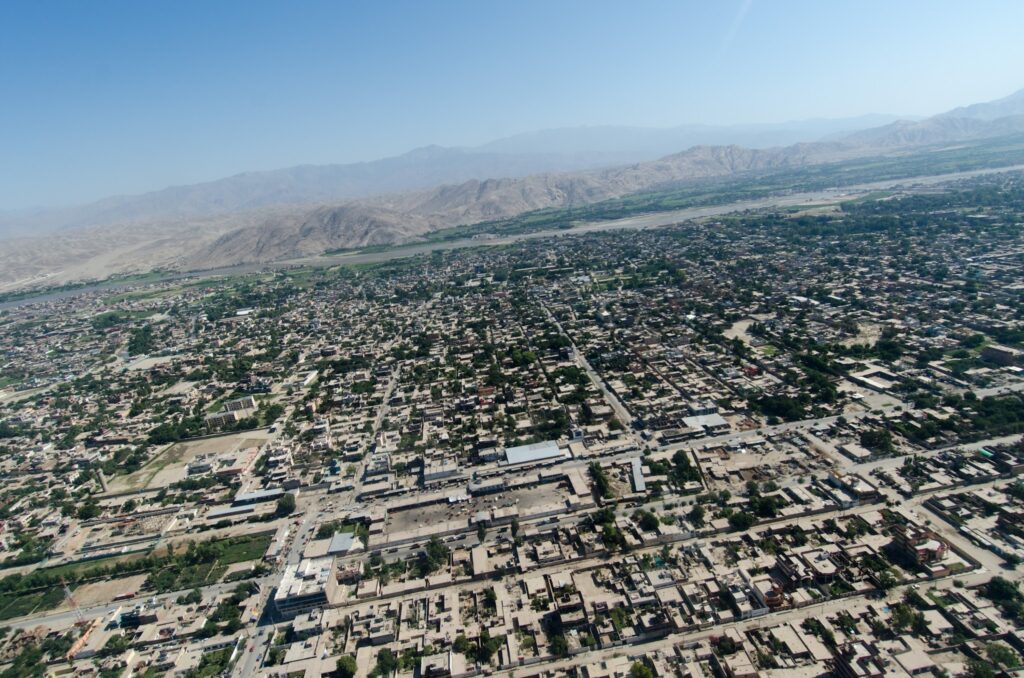
Uttar Pradesh Cabinet Approves Jalalabad’s Renaming
- Approval: The Uttar Pradesh Cabinet, chaired by Chief Minister Yogi Adityanath, approved the proposal to rename Jalalabad in Shahjahanpur district as Parshurampuri.
- The local municipal council passed resolutions to change the name in 2018 and 2023.
- The state government received the proposal on 24 April 2025 and soon sought the Centre’s permission on 27 June 2025.
- The Ministry of Home Affairs issued a No-Objection Certificate (NOC) on 19 August 2025.
- The decision forms part of the state’s broader administrative policy on renaming places with historical and cultural significance.
- Area Covered: The approval applies to both Jalalabad town and the Jalalabad Nagar Palika Parishad, which will officially be known as Parshurampuri after completion of all administrative formalities.
- The name Parshurampuri means the “town of Lord Parshuram“.
Historical and Cultural Significance of the Name ‘Parshurampuri’
- According to the state government and local tradition, Jalalabad is regarded as the birthplace of Lord Parshuram, the sixth incarnation (Avatar) of Lord Vishnu. This belief forms the principal cultural basis for the renaming proposal.
- The town houses an ancient Parshuram Temple and several sacred sites linked with the deity. These religious landmarks have made the area an important destination for devotees.
- Reports indicate that Jalalabad derived its name during the Mughal period, commonly linked to Jalal-ud-din Muhammad Akbar. The new name reflects a shift toward highlighting an older civilisational association.
- Parshuram (Parashurama) is revered as the sixth avatar of Lord Vishnu in the Dashavatara tradition.
- Unlike other avatars, he uniquely combines the qualities of a Brahmin sage and a warrior, symbolising the protection of Dharma through both knowledge and strength.
- According to Hindu scriptures, Parshuram was born to Sage Jamadagni and Mata Renuka of the Bhrigu (Bhargava) lineage.
- His birth is traditionally commemorated on Akshaya Tritiya (Vaishakha Shukla Tritiya), observed annually as Parashurama Jayanti.
- The name “Parashurama” combines Parashu (battle axe) and Rama, meaning “Rama with the Axe.”
- Scriptures state that Lord Shiva bestowed the divine axe upon him after intense penance, making it his defining symbol.
- Puranic literature describes Parshuram’s incarnation to restore cosmic order when oppressive rulers violated Dharma.
- His actions represent the principle that divine intervention occurs when justice and social balance deteriorate.
- Parshuram is recognised as one of ancient India’s greatest teachers of Dhanurveda (martial science).
- Traditions identify Bhishma, Dronacharya, and Karna among his most renowned disciples.
- Parshuram is counted among the seven Chiranjivis (immortals) in Hindu tradition.
- Scriptures state that he will remain alive until the end of Kali Yuga, when he will guide Kalki, the future avatar of Vishnu.
- His life is narrated in the Mahabharata, Valmiki Ramayana, Bhagavata Purana, Vishnu Purana, and Kalki Purana.
- Numerous regions preserve traditions linked to Parshuram, including Parashurama Kund (Arunachal Pradesh), Mahendragiri Hills (Odisha), and the Konkan–Malabar coast.
- Parshuram represents the balance between spiritual discipline, ethical governance, self-restraint, and the justified use of force against injustice.
- His life underscores that power should always serve righteousness, not personal ambition.
Procedure for Renaming Places in India
- Constitutional Basis: The Constitution of India does not prescribe a separate procedure for renaming cities, towns or villages.
- Under Entry 5 of the State List (Seventh Schedule), State Governments possess legislative and executive authority over local government and place names.
- Proposal Initiation: The process typically begins at the local level. Any Member of Legislative Assembly (MLA) can introduce a resolution in the respective State Assembly proposing to rename a particular city, district, or street.
- The proposal must justify the change on historical, cultural, linguistic, geographical or administrative grounds before being examined by the State Government.
- State Examination: The concerned departments verify historical records, public interest, administrative feasibility and legal implications.
- The proposal is then placed before the State Cabinet, which decides whether to approve the renaming through an executive decision.
- The State Assembly then votes on the motion, which requires a simple majority to officially pass.
- Reference to Union Government: After State approval, the proposal is forwarded to the Ministry of Home Affairs (MHA).
- The State cannot implement the new name immediately because the proposal must undergo scrutiny under the MHA’s renaming guidelines.
- The MHA consults the Survey of India, Registrar General of India, Department of Posts, and Ministry of Railways to ensure the proposed name does not create duplication, postal confusion or mapping inconsistencies.
- No-Objection Certificate (NOC): If all concerned agencies agree, the MHA issues a No-Objection Certificate (NOC).
- Although commonly called “approval,” it is formally a clearance allowing the State Government to proceed with the renaming.
- Gazette Notification: Following the MHA’s NOC, the State Government publishes the change through an Official Gazette Notification, making the new name legally operative for administrative purposes.
- Administrative Implementation: Once notified, the Survey of India and the State Mapping Agencies update their official topographical maps, geographical records, and atlases to reflect the newly adopted name for accuracy.
- Government departments subsequently update land records, revenue documents, municipal registers, census databases, election records, postal directories, railway systems, and digital government portals.
- To Renaming a State: Unlike cities or towns, renaming a State requires legislation under Article 3.
- A Constitutional Amendment Bill is introduced following the President’s recommendation.
- To alter a state’s name, both houses of Parliament (Lok Sabha and Rajya Sabha) must pass the legislation by a simple majority.
- Upon receiving the Presidential Assent, the new state name is officially recognized in the Constitution.
FAQs:
1. Why has Jalalabad been renamed as Parshurampuri?
To honour the town’s believed association with Lord Parshuram and reflect long-standing local cultural demands.
2. When did the Uttar Pradesh Cabinet approve the renaming?
The Uttar Pradesh Cabinet approved the renaming on 6 July 2026.
3. What is the significance of the name Parshurampuri?
It symbolises the town’s traditional connection with Lord Parshuram and its cultural-religious heritage.
4. Who was Lord Parshuram?
Lord Parshuram is the sixth avatar of Lord Vishnu, revered as a sage-warrior in Hindu tradition.
5. What is the official process for renaming a town in India?
The state proposes the change, obtains MHA’s NOC, then issues the final official notification.
6. Does the Centre need to approve the name change?
Yes. The Union Ministry of Home Affairs issues a No-Objection Certificate (NOC) before final implementation.
7. How will the renaming affect government records and maps?
Official records, gazette notifications, maps, signboards and government databases will gradually adopt Parshurampuri.
Disclaimer: Information in this article is based on official announcements and public records. Regulations and implementation details may evolve over time.
| Also Read: Proposal to Rename West Bengal |