




Government Approves PPP Lease for 11 Airports in India
| General Studies Paper III: Privatisation, Government Policies and Interventions |
Why in News?
Recently, the Union Government approved PPP Lease for 11 Airports in India, targeting modernization, connectivity, and disciplined competition safeguards.
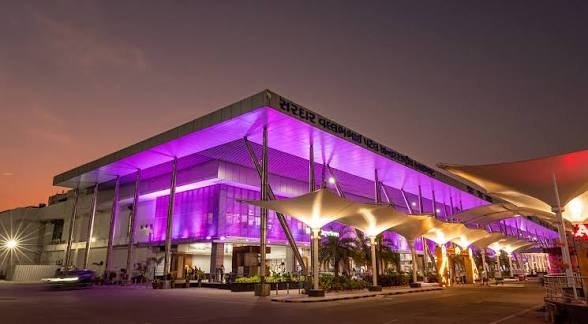
Highlights of Government PPP Lease Approval for 11 Airports
- Approval: The Public Private Partnership Appraisal Committee (PPPAC) granted in-principle approval on 4 August 2026 for 11 Airports Authority of India (AAI) airports.
- This approval was granted under Public-Private Partnership (PPP), marking the next phase of airport monetisation.
- The airports will be packaged into five bundles, pairing major and smaller airports: Amritsar–Kangra, Varanasi–Gaya–Kushinagar, Bhubaneswar–Hubballi, Raipur–Aurangabad, and Tiruchirappalli–Tirupati.
- Concession Period: Each bundle is proposed for a 50-year concession.
- This time period allows private operators to invest, expand capacity, modernise facilities, and recover capital through long-term operations.
- Bidding: The bidding parameter is a per-passenger fee for domestic travelers, with the international fee fixed at double that rate.
- Operational Transformation:
- Public authority will retain ownership or regulatory control over specified functions.
- Private participation can bring capital, managerial expertise, technology and service innovation.
- The Airports Authority of India (AAI) will continue to manage air traffic control and core navigation services.
- The government has proposed a one-year joint management period and a requirement to retain 60% of existing staff for up to three years.
- Investment Potential: The proposal is expected to attract approximately ₹8,622 crore in private investment, strengthening airport infrastructure.
- Bundling stronger airports with smaller airports is designed to improve commercial viability, and distribute traffic and revenues.
- The Bhubaneswar–Hubballi bundle is projected to require the highest private investment at ₹2,725 crore.
- Regional Development: The selected airports span North, South, East, Central and Northeast-linked markets, potentially improving regional air connectivity and broader economic integration.
Why India Is Expanding Airport Infrastructure Through PPPs?
- Surging Passenger Demand: India expanded PPP models to tackle a massive boom in air traffic. Driven by a rising middle class, nationwide passenger volume surged from 160 million in 2014 to over 400 million by 2025.
- Escalating Capacity Crises: Public entities faced severe financial constraints, lagging behind standard demand. PPP conversions drastically escalated facility thresholds.
- Delhi’s DIAL escalated capacity from 16 million to over 75 million passengers annually.
- Mobilizing Private Investments: Upgrading major airports demands intense funding. By using the DBFOT (Design-Build-Finance-Operate-Transfer) framework, the civil aviation sector is on track to attract USD 25 billion in private investments.
- Revenue Growth: Private operators optimize retail, food, and duty-free avenues to balance costs. Consequently, PPP airports generate 87% of India’s non-aero aviation revenue while managing 64% of total traffic.
- FY25 air cargo reached 3.72 MMT, up from 2.53 MMT in FY15. PPP-backed airports can therefore strengthen tourism, logistics, trade and regional employment.
- Successful Greenfield Models: Building entirely new aviation hubs relieves metro congestion. Prominent greenfield projects like Bengaluru (BIAL) and Hyderabad demonstrate top-tier operational self-reliance and commercial success.
- Manohar International Airport, Goa, developed under the DBFOT PPP model, was designed for 4.4 million passengers annually in Phase I, expandable to 35 million with traffic growth.
- Asset Monetization Pipelines: Under the government’s National Monetisation Pipeline (NMP), brownfield assets are systematically leased to private entities. This includes a targeted 25-airport privatization plan to unlock embedded public capital.
- Regional Connectivity Integration: PPP ventures work alongside the UDAN scheme to improve regional aviation networks. Operational facilities doubled from 74 in 2014 to 164 by 2025, targeting 350+ locations.
- By 2026, 665 routes connected 95 airports, heliports and water aerodromes, carrying over 1.64 crore passengers.
- Global Standard Infrastructure: Private players bring global tech, automated baggage handlers, and biometric boarding. Outperforming state-run hubs, these privatized airports rival top international benchmarks like London Heathrow in per-passenger commercial returns.
- India is already the world’s third-largest domestic aviation market. Airport expansion therefore supports airline network growth.
- Balanced Regional Development: Better airports can stimulate tourism, services, trade and investment beyond metropolitan centres.
- This is particularly significant for cities such as Gaya, Kangra, Hubballi, Tirupati and Kushinagar, where aviation can support regional economies.
- Modernisation of Civil Aviation: Private concessionaires can introduce technology, professional management and commercial expertise, improving terminal capacity, passenger services, operational efficiency and airport infrastructure standards.
Background of Airport Privatisation in India
- India’s airport-privatisation journey followed wider aviation-sector liberalisation.
- The 1990 open-sky policy allowed air-taxi operators greater freedom, while 1994 ended the monopoly in domestic air transport.
- The Airports Authority of India Act, 1994 created the institutional framework for airport development. AAI subsequently became the principal public-sector airport manager.
- On 1 April 1995, International Airports Authority of India and National Airports Authority merged to create AAI, aimed at integrated airport modernisation and operational development.
- The AAI Amendment Bill, 2003 enabled AAI to transfer airport operations and management through long-term leases to private players, establishing the legal foundation for PPP participation.
- In September 2003, the government decided to restructure Delhi and Mumbai airports through joint ventures.
- Delhi’s Terminal 3 became a landmark PPP achievement, completed in just 37 months with an annual capacity of 34 million passengers.
- In 2004, the Bengaluru and Hyderabad airports represented a major shift toward greenfield PPP development, using public-sector participation.
- In 2019, the Indian government privatized six airports through a competitive bidding process won entirely by the Adani Group.
- This includes Ahmedabad, Lucknow, Jaipur, Mangaluru, Guwahati, and Thiruvananthapuram airports.
Concerns of Airport Privatisation
- Market Concentration and Monopoly Risks: Past bidding rounds allowed a single corporate group to win all major airport bids.
- This creates monopoly or oligopoly fears, which weaken airline bargaining power and limit passenger choices.
- Rising Costs for Passengers: User development fees and ancillary charges often increase significantly after private takeovers.
- Passengers frequently report expensive parking, high taxi charges, and added terminal costs.
- Workforce and Labor Concerns: Airport workers and unions argue that private management threatens stable public-sector jobs and self-reliant industry growth.
- Although concessionaires are urged to retain a percentage of AAI staff temporarily, long-term workforce restructuring remains a worry.
- Regulatory Uncertainty: India’s PPP ecosystem has faced delays in regulatory decisions and tariff disputes, creating uncertainty for investors and affecting project financial viability.
- Multiple Approvals: Airport projects interact with numerous government authorities. Complex approval processes can delay implementation and contribute to cost overruns.
- Public Accountability: Privatisation can raise questions regarding transparency, auditability and access to information, particularly where commercially sensitive private operations intersect with public assets.
- Government working-group discussions have recognised this tension.
Frequently Asked Questions (FAQs):
1. How many airports has the government approved for PPP leasing?
The PPPAC gave in-principle approval for 11 AAI airports, grouped into five bundles for 50-year private concessions.
2. What does the PPP model mean for airport operations?
A private concessionaire will operate, manage and develop airports, while AAI retains ATC and CNS responsibilities.
3. Why is the government leasing airports under the PPP model?
PPP aims to mobilise private investment and expertise, improve efficiency, modernise infrastructure and financially sustain smaller airports through bundling.
4. Which 11 airports are included in the PPP lease plan?
Amritsar, Kangra, Varanasi, Gaya, Kushinagar, Bhubaneswar, Hubballi, Raipur, Aurangabad, Tiruchirappalli and Tirupati are included.
5. How will PPP leasing affect airport infrastructure?
Concessionaires must undertake sanctioned capital expenditure and capacity expansion, supporting terminal, city-side and related infrastructure modernisation.
6. Will airport operations remain under government oversight?
Yes. AAI retains ATC and CNS services, while government-regulated frameworks continue overseeing safety, security and other statutory functions.
7. What are the expected benefits of the airport PPP model?
Expected benefits include private capital, better efficiency, modern infrastructure, stronger connectivity, improved passenger services and sustainable development of smaller airports.
Disclaimer: Information in this article is based on official announcements and public records. Regulations and implementation details may evolve over time.