



US Removes Syria From State Sponsors of Terrorism List After Decades
| General Studies Paper II: Impact of International Policies on India’s Interest |
Why in News?
Recently, the United States (US) removed Syria from its State Sponsors of Terrorism list after 47 years, signaling normalization, and easing financial constraints.
What Is the State Sponsors of Terrorism List?
- About: The State Sponsors of Terrorism (SST) List is a U.S. government designation for foreign governments determined to have repeatedly supported acts of international terrorism.
- It is primarily a tool of counterterrorism, sanctions and foreign policy.
- It targets governments, whereas the Foreign Terrorist Organizations (FTO) list designates non-state organizations.
- Legal Foundation: The designation operates under three principal U.S. legal authorities: Foreign Assistance Act, Arms Export Control Act, and provisions incorporated through the National Defense Authorization Act (NDAA).
- Designation: The U.S. Secretary of State makes the determination after assessing whether a foreign government has repeatedly provided support for international terrorism.
- The concept concerns government assistance to terrorist activity, potentially including financing, weapons, training, safe haven, logistical assistance or other support to terrorist actors.
- Impacts: Designation triggers substantial restrictions, including foreign-aid restrictions, defense-export bans, and dual-use export controls.
- The designation can significantly constrain a country’s access to international economic institutions and financial transactions.
- Restrictions can discourage U.S. trade, investment, technology transfers and commercial financing, thereby increasing economic isolation.
- Beyond sanctions, SST designation functions as a powerful foreign-policy instrument, signalling that Washington considers a government’s conduct a serious terrorism-related security concern.
- The framework leverages secondary sanctions on trading partners. Third-party individuals, or foreign governments engaging in trade with a designated state face domestic legal penalties and asset freezes.
- Listed Countries: As of August 2026, only three nations remain on the list: Cuba, Iran and North Korea.
- Iran (1984) remains noted as the most active sponsor due to its Quds Force operations.
- Cuba was re-designated in 2021, and North Korea (2017) remains penalized for historical and ongoing offenses.
- Delisting: A government can be removed following a statutory review and U.S. determination that relevant conditions have been satisfied.
- Syria was designated in 1979. It was removed in August 2026.
- Syria was officially removed from the list in August 2026 after a 47-year designation that began in 1979.
- Other past members include Iraq, Libya, South Yemen, and Sudan, all of which were removed after meeting specific diplomatic or political conditions.
Syria’s Terrorism Designation: From Isolation to Reintegration
- Background:
- The United States designated Syria a State Sponsor of Terrorism on 29 December 1979, placing it on Washington’s first such list.
- The decision reflected allegations of Syrian support for Palestinian militant organisations and other groups regarded by the U.S. as terrorists.
- The designation emerged amid intense Middle East strategic competition, particularly Syria’s opposition to Israel and its relationships with regional armed groups.
- Over subsequent decades, Washington repeatedly cited Syria’s relationships with organisations including Hezbollah as evidence supporting continued designation.
- Damascus was also accused of facilitating or tolerating militant networks operating across regional conflicts.
- After 9/11, U.S. concerns increasingly included Syria’s alleged role in facilitating militant activity connected with the Iraq insurgency.
- U.S. assessments later cited Syrian territory and networks associated with Al-Qaeda in Iraq.
- The Syrian uprising and subsequent civil war dramatically expanded U.S. sanctions.
- Washington targeted the Assad government over human-rights abuses, repression and violence, creating a broader sanctions architecture.
- The Caesar Syria Civilian Protection Act of 2019 substantially increased pressure by targeting persons and entities supporting significant transactions with the Syrian government.
- SST designation imposed major restrictions involving U.S. foreign assistance, defence exports, dual-use goods and certain financial transactions.
- It also created significant compliance and reputational risks for banks and investors, discouraging international economic engagement.
- The country simultaneously faced civil war, EU/US sanctions, loss of oil production, destruction of infrastructure, Lebanon’s financial crisis and weak governance.
- The Syrian pound experienced extraordinary depreciation during the conflict years.
- Currency weakness made imported food, fuel, medicines and essential goods increasingly expensive. Consequently, households experienced a sharp decline in real purchasing power.
- The World Bank reported that Syria’s GDP contracted 1.5% in 2024, with only 1% growth projected for 2025, reflecting security constraints.
- By 2025, the World Bank and other international assessments described Syria as facing extraordinary humanitarian and development needs, with approximately 90% of Syrians living in poverty.
- The United States designated Syria a State Sponsor of Terrorism on 29 December 1979, placing it on Washington’s first such list.
- Reintegration:
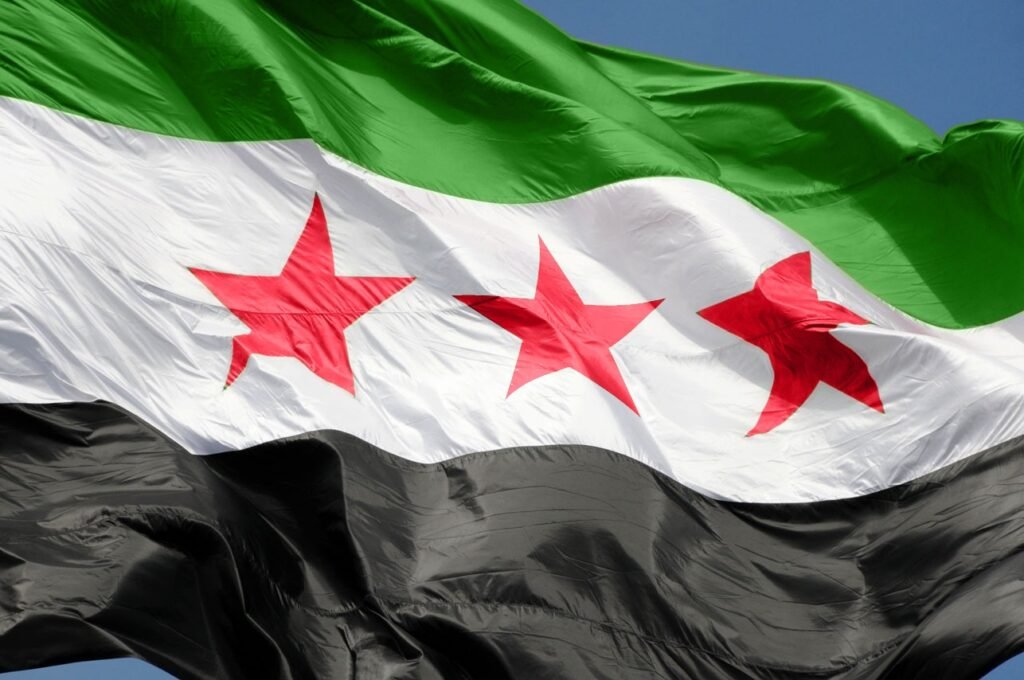
- The fall of Bashar al-Assad’s regime in December 2024 fundamentally changed Washington’s assessment.
- The emergence of a new Syrian government under Ahmed al-Sharaa created an opportunity to reconsider policies developed against the former regime.
- In June 2025, President Donald Trump ordered major Syria sanctions to be revoked, effective 1 July 2025, while retaining targeted measures against Assad-linked individuals, human-rights abusers, narcotics traffickers, chemical-weapons actors and ISIS-related threats.
- On 8 July 2026, the U.S. began the formal process to rescind Syria’s SST designation by notifying Congress.
- Following the required 45-day congressional notification period, Secretary of State Marco Rubio formally rescinded the designation on 24 August 2026.
- Syria remained continuously designated for nearly 47 years.
- Significance:
- The delisting removes a major legal and financial barrier to Syria’s reintegration, potentially facilitating investment, trade, and international business.
- Delisting eliminates major legal barriers for private sector investment, providing an essential foundation for domestic economic recovery and infrastructure repair.
- It enables Syria to re-enter the international economic system and resume normal commercial engagement globally.
- Geopolitical Impact:
- Delisting strengthens a Syrian government increasingly less dependent on Iranian patronage. This threatens Tehran’s traditional land corridor through Iraq to Syria and Lebanon, potentially reducing its ability to support regional partners.
- Reduced Iranian influence benefits Israel strategically, but tensions remain over Syrian military rebuilding, border security and Israeli operations.
- Post-Assad Syria provides Turkey greater strategic space in security, reconstruction and political affairs. It’s growing role could simultaneously create cooperation and competition with Israel, the US and Arab states.
- Delisting complements wider Arab and international efforts to reintegrate Syria, creating possibilities for Gulf capital, reconstruction projects, trade and diplomatic normalization. The EU has also restored the full application of its EU–Syria Cooperation Agreement.
- India has maintained friendly, civilizational and political ties with Syria and supports Syrian sovereignty, territorial integrity and a Syrian-led political process consistent with UNSC Resolution 2254.
- India has established experience in Syria through BHEL, ONGC Videsh, Apollo International and other companies, stabilization could revive such economic engagement.
- Syria’s Mediterranean geography gives it potential importance for energy corridors, ports and Asia–Europe connectivity. India therefore has an indirect interest in stable Syrian infrastructure supporting wider West Asian trade routes and India–Middle East–Europe Economic Corridor (IMEC)-related connectivity.
- Reconstruction, humanitarian assistance, counterterrorism and connectivity can strengthen India’s broader West Asia policy. India has already provided humanitarian assistance, including medicines.
Frequently Asked Questions (FAQs):
1. Why did the US remove Syria from the list?
The US cited Syria’s changed leadership, counterterrorism commitments, and efforts to distance itself from international terrorism, supporting reconstruction and stability.
2. What is the US State Sponsors of Terrorism list?
It is a US designation for governments determined to have repeatedly provided support for international terrorism, triggering significant statutory sanctions and restrictions.
3. When was Syria designated a state sponsor of terrorism?
The US designated Syria on 29 December 1979, making its removal in August 2026 the end of nearly 47 years of designation.
4. Will the decision remove all US sanctions on Syria?
No. Delisting removes SST-specific restrictions, but other targeted sanctions and security-related measures can remain applicable to particular individuals or entities.
5. How could the decision affect Syria’s economy?
It could improve banking connectivity, investment, trade finance and reconstruction funding, helping Syria reconnect with international financial and commercial systems.
6. How will the move affect US-Syria diplomatic relations?
It signals a major shift toward normalization and constructive engagement, with Washington seeking Syrian stability, counterterrorism cooperation and economic recovery.
Disclaimer: Information in this article is based on official announcements and public records. Regulations and implementation details may evolve over time.