




DRDO Missile Technology Transfer Approval To Boost Defence Production
| General Studies Paper III: Defence, Domestic Production, Government Policies & Interventions |
Why in News?
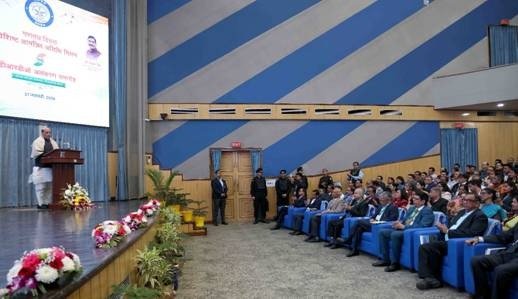
Recently, Union Defence Minister Rajnath Singh approved transfer of technology for all conventional missile systems developed by the Defence Research and Development Organisation (DRDO) to the Indian defence industry.
India’s Defence Technology Transfer & Industry Participation Framework
- Policy: India’s current DRDO Technology Transfer Policy 2025, supported by detailed DRDO Procedures for Technology Transfer (ToT) 2025, governs transfer of DRDO-owned technologies to industry.
- ToT enables DRDO-developed technologies to move from research laboratories to industrial production.
- It aims to simplify procedures, reduce compliance burdens and expand industrial participation.
- It seeks faster technology commercialisation, stronger defence manufacturing capabilities, and greater ease of doing business.
- Scope: It covers DRDO technologies whose IP rights or know-how/know-why belong to DRDO, enabling industry to manufacture products for Armed Forces, paramilitary forces and State Police, besides permitted domestic or foreign sales.
- DRDO retains important intellectual-property and March-in rights for sovereign use, national security, R&D and further improvement.
- The framework uses CNDA, MTA and LAToT. CNDA protects confidential information; MTA governs transfer of samples/materials for evaluation; LAToT legally licenses technology for industrial production.
- Categories: DRDO classifies technologies into Category A (MILTECH), comprising military technologies primarily for government/security users.
- Its Category B covers non-security-sensitive dual-use technologies with commercial potential.
- Industry Selection: DRDO’s Development-cum-Production Partner (DcPP) framework promotes structured collaboration with Indian industry.
- Interested companies express interest and undergo technical assessment by DRDO.
- The process evaluates whether an industry possesses adequate technical, manufacturing and quality capabilities before licensing.
- A comprehensive Technology Transfer Document (TTD) is mandatory. It must be sufficiently complete and technically clear so industry can manufacture the technology with minimum DRDO handholding.
- Royalty Structure: For Category-A technologies, specified cases attract ToT fees.
- While Development-cum-Production Partners/Production Agencies and certain DRDO development partners are exempt.
- The policy also provides structured royalty and payment arrangements.
- Technology Absorption: DRDO laboratories provide appropriate technical handholding.
- Industry can obtain a Technology Absorption Certificate from DIITM, DRDO HQ, following recommendation from the concerned laboratory.
- The framework encourages MSEs and startups. Complementary mechanisms such as the Technology Development Fund (TDF) support indigenous defence and dual-use technology development.
- Participation: DRDO’s DcPP framework has successfully transferred technologies to 134 partner companies to boost domestic defence manufacturing.
- Around 2,180 agreements signed to move lab innovations into production.
- Over 2,780 DRDO IP rights opened for industry use as of March 2026.
- Recent Development: On 25 August 2026, Defence Minister approved transfer of DRDO-developed technologies for all conventional missile systems to eligible Indian defence industries for domestic production.
- It encompasses non-strategic, non-nuclear tactical guided weapons and surface-to-air or multi-barrel rocket systems.
- It may includes systems like the Akash air defence series, Pinaka multi-barrel rocket launchers, Pralay tactical ballistic systems, and the QRSAM/Anant Shastra classes.
- It excludes sensitive strategic nuclear-capable or joint-venture platforms requiring separate government-to-government frameworks (such as BrahMos).
- The initiative targets the Indian defence industry, with particular opportunities for MSMEs and other technology partners to participate in missile-system supply chains and manufacturing activities.
Strategic Imperatives Behind India’s Missile Technology Expansion
- Changing Security Environment: India faces a complex security environment requiring credible conventional capabilities and rapid technological adaptation.
- The recent DRDO approval seeks to strengthen domestic missile production rather than relying excessively on external sources.
- Lessons from Recent Conflict: Modern warfare increasingly emphasises precision, stand-off range, surveillance and networked operations.
- India’s experience during Operation Sindoor highlighted the operational importance of technologically advanced, precision-oriented capabilities.
- Indigenous systems provide greater control over availability and future upgrades.
- Reducing External Dependence: Dependence on foreign suppliers can create geopolitical, logistical and supply-chain vulnerabilities, particularly during crises.
- Technology transfer to Indian industry can increase domestic control over production.
- Sanctions or export restrictions abroad would have less impact when critical capabilities are domestically manufactured.
- From R&D to Production: Transferring DRDO technologies to industry connects laboratory innovation with manufacturing capacity.
- A successfully developed missile technology can reach production faster through qualified industrial partners.
- Strengthening War Sustainability: Modern conflicts can consume significant quantities of precision munitions.
- A larger indigenous industrial base improves prospects for replenishment, maintenance and production scalability.
- Domestic manufacturing provides greater flexibility to expand output according to operational requirements.
- India’s Production Capacity: India’s defence production reached a record ₹1.78 lakh crore in FY2025–26, up 15.6% from the previous year.
- This expanding industrial base creates stronger conditions for absorbing sophisticated missile technologies.
- Private Sector Participation: Private industry accounted for 24% of defence production in FY2025–26, its highest-ever share.
- Missile technology transfer can deepen participation beyond conventional manufacturing into high-technology defence systems.
- Large firms can integrate systems while MSMEs supply specialised components.
- Aatmanirbharta in Critical Technologies: Missiles involve strategically sensitive technologies; domestic capability therefore strengthens technological sovereignty and Aatmanirbharta.
- India has also opened 25% of defence R&D funding to industry, startups and academia since 2022–23.
- Export-Oriented Defence: A stronger domestic missile ecosystem can eventually support defence exports, subject to government authorisation and strategic considerations.
- Total defence exports scaled to a record ₹23,622 crore in FY 2024–25, reaching over 100 countries including the US, France, and Armenia.
- India’s defence exports reached a record ₹38,424 crore in FY2025–26.
How India Is Strengthening Defence Through Self-Reliance?
- Defence Budget Expansion: India’s defence budget expanded from ₹2.53 lakh crore in 2013–14 to ₹7.85 lakh crore in 2026–27, marking a 3.1-fold growth to strengthen overall military preparedness.
- Higher Capital Expenditure: Defence capital expenditure grew from ₹94,587.95 crore in 2014–15 to ₹2.19 lakh crore in 2026–27, fueling the continuous modernization of the armed forces.
- Positive Indigenisation Lists: Releasing multiple positive indigenisation lists legally mandates the stoppage of imports for designated military platforms, weapons, and sub-systems over set timeframes.
- Defence Industrial Corridors: Specialized defence industrial corridors in Uttar Pradesh and Tamil Nadu have successfully mobilized over ₹9,000 crore in localized manufacturing investments.
- Innovation via iDEX: Frameworks like iDEX (Innovations for Defence Excellence), ADITI, and TDF actively link military needs with agile start-ups, MSMEs, and academic institutions.
- ADITI scheme, with a ₹750-crore outlay, supports development of advanced defence technologies.
- Indigenous Platforms: Flagship creations like INS Vikrant, India’s first home-built aircraft carrier featuring 76% local content, validate massive domestic naval capabilities.
- Procurement Reforms: Initiatives like DAP 2020 (Defence Acquisition Procedure), the Srijan Portal, and the Defence Exim Portal drive transparency and speed in domestic procurement.
- Through the Defence Testing Portal, domestic manufacturers, startups and industries can access specialised testing facilities across 24 DRDO laboratories on a paid basis, reducing barriers to technology validation.
- Private Sector and FDI: Increasing automatic Foreign Direct Investment (FDI) limits up to 74% encourages global original equipment manufacturers to co-develop high-end tech locally.
- Advanced Manufacturing Complexes: New technological hubs focus on energetic materials, TNT/RDX plant tech, and advanced systems like the 300-km Suryastra rocket launching system.
Private Industry’s Role in Defence Manufacturing & Capacity Expansion
- Multi-Actor Production: Reforms increasingly integrate DPSUs, private companies, MSMEs, startups, academia and DRDO, creating a broader defence-industrial ecosystem rather than relying primarily on government production.
- Supply-Chain Multipliers: MSMEs provide specialised components, subsystems and manufacturing capabilities, allowing larger defence programmes to develop deeper domestic supply chains.
- Startups Driving Defence Innovation: The iDEX ecosystem had engaged 676 startups, MSMEs and innovators and signed 551 design-and-development contracts by March 2026. This connects emerging innovators directly with defence requirements.
- iDEX Converts Ideas into Procurement: By February 2026, 58 prototypes worth about ₹3,853 crore had received procurement clearance, while 45 contracts worth nearly ₹2,326 crore had been signed. This demonstrates movement from innovation towards actual acquisition.
- Opening Defence R&D to Industry: Since 2022–23, 25% of the defence R&D budget has been opened to industry, startups and academia. This widens access to government-supported research and encourages collaborative technology development.
- Industrial Corridors Expanding Capacity: The Uttar Pradesh Defence Industrial Corridor had attracted ₹42,057 crore in investment commitments by April 2026, while Tamil Nadu’s corridor attracted ₹32,699 crore. Such clusters strengthen infrastructure and manufacturing capacity.
- Exports Demonstrate Industrial Maturity: Defence exports reached a record ₹38,424 crore in FY2025–26; the private sector contributed 45.16%. This shows that private industry is increasingly contributing not only to domestic production but also to India’s global defence presence.
Frequently Asked Questions (FAQs):
1. Why is DRDO transferring missile technology?
To expand indigenous production, strengthen operational capability, reduce import dependence, increase domestic value addition and deepen industry participation.
2. What missile technologies will DRDO transfer?
The approval covers technologies of all conventional missile systems developed by DRDO; individual systems were not specifically named.
3. Which Indian defence companies can receive the technology?
Qualified Indian defence companies can receive technologies, subject to prescribed qualifications, certifications and regulatory approvals.
4. How will technology transfer boost production?
It bridges the gap between DRDO development and large-scale industrial manufacturing, enabling qualified companies to undertake indigenous production.
5. What is DRDO’s role in defence manufacturing?
DRDO primarily develops defence technologies, which can subsequently be transferred to qualified industry for production and wider industrial adoption.
6. How does industry participation strengthen Aatmanirbharta?
It converts indigenous R&D achievements into manufacturing capacity, supporting the broader objective of Aatmanirbhar Bharat in Defence.
Disclaimer: Information in this article is based on official announcements and public records. Regulations and implementation details may evolve over time.