Rule 267 Rajya Sabha: Detailed Parliamentary Suspension Mechanism
| General Studies Paper II: Parliament, Indian Constitution |
Why in News?
Recently, the Opposition invoked Rajya Sabha Rule 267 seeking suspension of scheduled business for an urgent debate on education-related protests.
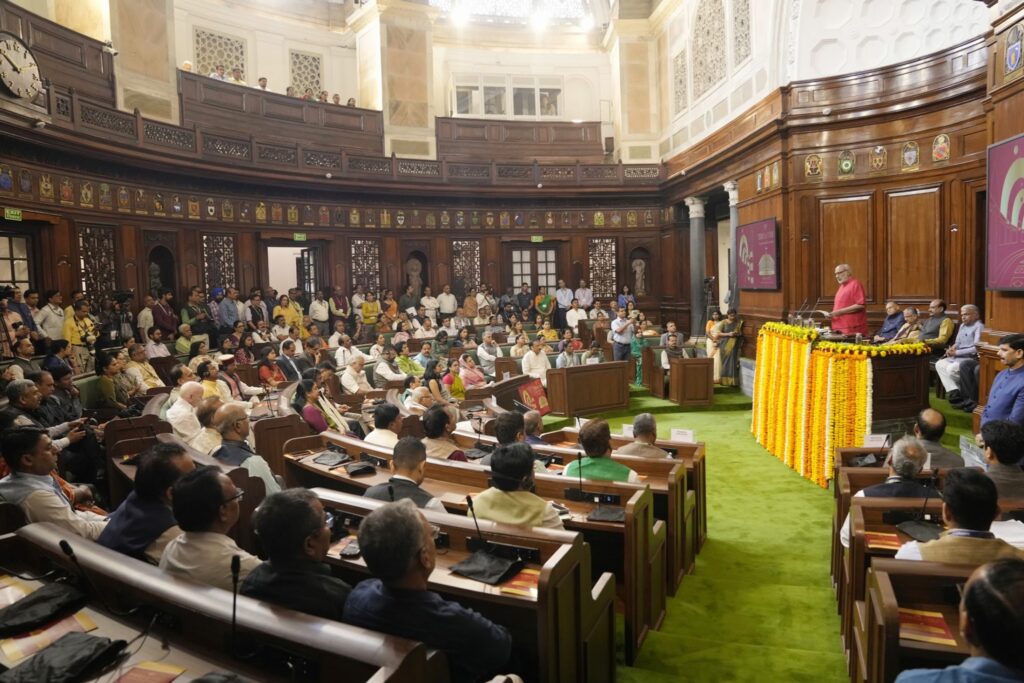
What is Rule 267 of the Rajya Sabha?
- About: Rule 267 is a procedural rule of the Rules of Procedure and Conduct of Business in the Rajya Sabha.
- It enables the House to suspend its scheduled business to discuss a matter of urgent public importance.
- It is not a constitutional provision but derives authority from the Rajya Sabha’s rule-making powers.
- It allows urgent matters to be debated without waiting for the normal agenda.
- Procedure and Conditions:
- Submission of Notice: AnyRajya Sabha Member (MP) may submit a written notice under Rule 267 requesting suspension of a rule to enable discussion on an important matter.
- The notice must be submitted in the prescribed parliamentary format before consideration by the Chair.
- Specific Rule Must Be Mentioned: The notice must clearly specify the exact rule proposed to be suspended. Vague or incomplete requests are not considered.
- Relation with Listed Business: After the 2000 amendment, Rule 267 can be invoked only for a matter related to the day’s List of Business.
- It cannot be used to introduce an entirely unrelated issue into the House agenda.
- Grounds for Invocation: The Member must explain why suspension is necessary.
- The notice should establish the urgency, public importance, and the need for immediate parliamentary attention.
- Chairman’s Prior Consent: The Chairman of the Rajya Sabha has complete discretion to admit or reject the notice.
- Without prior consent, the motion cannot be moved in the House.
- Restrictions on Use: Rule 267 cannot be invoked where another Rule already provides a specific procedure for suspension or discussion.
- Decision of the House: If the Chairman admits the notice, the Member moves the motion before the House.
- Only if the motion is carried does the relevant rule remain suspended temporarily for that business.
- The Chair has repeatedly clarified that Rule 267 is meant for “rarest of rare” situations and should not become a routine procedural device.
- Submission of Notice: AnyRajya Sabha Member (MP) may submit a written notice under Rule 267 requesting suspension of a rule to enable discussion on an important matter.
- Powers of the Chairman: The Chairman of the Rajya Sabha has the exclusive authority to grant or refuse permission for a Rule 267 motion.
- The Chairman examines whether the notice satisfies all procedural requirements. The notice must specify the rule to be suspended.
- The Chairman safeguards parliamentary discipline by preventing frequent or improper use of Rule 267.
- As the presiding authority, the Chairman interprets the scope and application of Rule 267. Through rulings and observations, the Chair clarifies the Rule.
- The Chairman acts as the neutral guardian of the House by ensuring fairness, impartiality, and orderly proceedings.
- Invoked: According to parliamentary records, it was invoked 11 times between 1990 and 2016.
- It was last successfully invoked and accepted in November 2016 to discuss the issue of demonetisation under the chairmanship of Hamid Ansari.
- It has been sought for debates on farm laws and farmers’ protests (2020–21), Pegasus surveillance allegations (2021), Manipur violence (2023), and the US indictment-related allegations (2024–25) but notices were not admitted.
- During the Monsoon Session 2026, the Opposition submitted Rule 267 notices for discussions on education-related protests, alleged police action against student protesters, detention of Opposition leaders, and the NEET controversy.
- Alternative Methods: When Rule 267 is declined, Members may use Rule 176 (Short Duration Discussion), Zero Hour, or Special Mention.
- However, these mechanisms do not suspend the scheduled business, making Rule 267 procedurally stronger.
- Here, Rule 267 refers to the parliamentary mechanism:
- The total time allocated for the entire debate cannot exceed two and a half hours.
- The discussion is strictly informational. It does not conclude with a formal motion, resolution, or voting, meaning it carries no threat of censuring the government.
- An MP must submit a written notice to the Secretary-General, supported by the signatures of at least two other members, accompanied by an explanatory note.
- The Chairman, in consultation with the Leader of the House, fixes the date and timing for the discussion.
- Significance: Rule 267 compels the Government to respond immediately before the House. This reinforces executive accountability.
- The Rule allows the Rajya Sabha to address time-sensitive national issues without waiting for the normal agenda.
- It strengthens deliberative democracy by enabling detailed discussion on pressing issues.
- Ministers are expected to explain the Government’s position and actions. This promotes transparency and confidence in parliamentary governance.
- Criticisms: Most Rule 267 notices are rejected, limiting opportunities for immediate debates.
- Critics contend that the absence of objective admission criteria may reduce transparency and create political controversy.
- Persistent disagreements frequently resulted in adjournments, protests, and disruption of House proceedings, reducing time available for policy debates.
| Note: Lok Sabha uses adjournment motions under Rules 56 to 63 rather than Rule 267. Rule 56 lets members halt normal house work to talk about a clear, very important, and fast-approaching public problem, provided it follows the set rules. |
FAQs:
1. What is Rule 267 in the Rajya Sabha?
It allows suspension of listed business to discuss an urgent public importance matter, subject to the Chairman’s approval.
2. Why is Rule 267 frequently mentioned during Parliament sessions?
Opposition often invokes it for immediate debates on urgent national issues requiring prompt government response.
3. Who has the authority to accept or reject a Rule 267 notice?
The Chairman of the Rajya Sabha has exclusive authority to admit or reject Rule 267 notices.
4. What happens when a Rule 267 notice is accepted?
The House may suspend the relevant rule and immediately discuss the specified urgent matter.
5. How is Rule 267 different from other discussion rules in Parliament?
It seeks suspension of listed business, unlike other discussion rules that generally continue normal House proceedings.
6. Which issues are generally raised under Rule 267?
National emergencies, law and order, education, farmers, economic, governance, and major public interest issues.
Disclaimer: Information in this article is based on official announcements and public records. Regulations and implementation details may evolve over time.