Cabinet Approves BHAVYA Rasayan Scheme For Chemical Industry Growth
| General Studies Paper III: Development and Growth, Government Policies and Interventions |
Why in News?
Recently, the Union Cabinet approved the ₹3,030 crore BHAVYA Rasayan Scheme to establish three chemical parks to boost manufacturing and sustainable industrial infrastructure.
What is BHAVYA Rasayan Scheme?
- About: BHAVYA Rasayan (Bharat Audyogik Vikas Yojana Rasayan) is a Central Sector Scheme approved by the Union Cabinet on 24 July 2026.
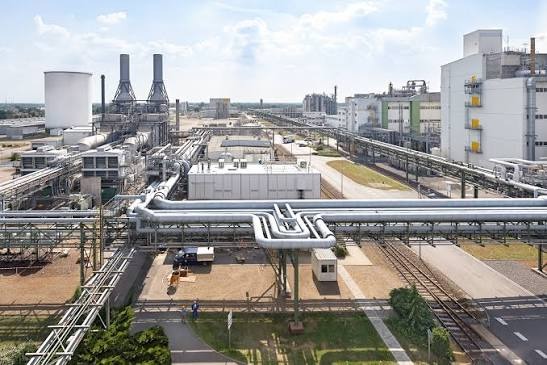
- It aims to establish three dedicated Chemical Parks across India with world-class common infrastructure for the chemical and petrochemical industry.
- Department: The scheme was announced in the Union Budget 2026–27 and will be implemented by the Department of Chemicals and Petrochemicals, Ministry of Chemicals and Fertilizers.
- Financial Outlay: The scheme has a total financial outlay of ₹3,030 crore.
- Out of this, ₹3,000 crore is earmarked for developing Common Infrastructure Facilities (CIFs) and Basic Utilities, while ₹30 crore is allocated for administrative expenditure.
- Duration: The implementation period is five years, from FY 2026–27 to FY 2030–31.
- Implementation: The scheme will be implemented through a Challenge Route, where State Governments will compete for selection.
- The Central Government will provide a grant of up to ₹1,000 crore per Chemical Park, while the concerned State Government must contribute at least ₹500 crore.
- Chemical Park Requirements: Under the scheme, three dedicated Chemical Parks will be developed.
- Each park must have a minimum contiguous area of 8 square kilometres (2,000 acres) of encumbrance-free land.
- This land requirement ensures integrated planning and smooth industrial operations within each park.
- Plug-and-Play Infrastructure: The parks will provide plug-and-play industrial infrastructure, allowing industries to begin operations without creating individual common facilities.
- This integrated approach will reduce duplication of infrastructure and enable faster establishment of manufacturing units.
- Common Environmental Facilities: Every Chemical Park will include a Common Effluent Treatment Plant (CETP) and a Treatment, Storage and Disposal Facility (TSDF).
- These centralised facilities will handle industrial effluents and hazardous waste through a common system designed specifically for chemical industries.
- Basic Utility Infrastructure: The parks will provide water supply and distribution systems, steam generation and distribution networks, interconnected pipeline networks, and solvent recovery and distillation facilities.
- Logistics and Industrial Services: Each park will include logistics infrastructure and warehousing facilities for efficient storage and movement of raw materials and finished products.
Significance for India’s Chemical Industry and Economy
- Supports High-Value Manufacturing Sector: India’s chemical industry is valued at about US$220 billion.
- It contributes nearly 7% of India’s GDP, 13–14% of manufacturing GVA, and accounts for about 7% of industrial output.
- Strengthening this sector through BHAVYA Rasayan can therefore generate economy-wide manufacturing gains.
- Improves India’s Global Position: India is the 6th largest chemical producer globally and 3rd largest in Asia.
- However, its global market share remains only around 3–3.5%. Better industrial infrastructure can help India capture a larger share of the expanding global chemicals market.
- Reduces India’s Chemical Import Dependence: Despite being a major producer, India remains a net importer of several specialty and high-value chemicals.
- The Government expects integrated chemical parks to strengthen domestic manufacturing and increase import substitution, reducing supply-chain vulnerabilities.
- Expands Export Competitiveness: The Indian chemical industry contributes nearly 11–12% of India’s merchandise exports.
- Better infrastructure, lower logistics costs and integrated manufacturing are expected to improve export competitiveness and strengthen India’s participation in Global Value Chains (GVCs).
- Catalyst Large-Scale Investment: The chemical sector has already attracted over US$22 billion FDI (2000–2025).
- World-class chemical parks with common infrastructure are expected to further accelerate both domestic and foreign investments.
- Strengthens Employment Generation: India’s chemical industry directly and indirectly supports nearly 2 million jobs.
- Expansion of manufacturing clusters is expected to generate additional employment in production, logistics, engineering, maintenance, warehousing and industrial services.
- Boosts Downstream Manufacturing: The chemical sector supplies essential inputs to pharmaceuticals, agriculture, textiles, automobiles, electronics, paints, construction and consumer goods.
- Since chemicals are intermediate inputs, improvements in this sector create multiplier effects across numerous manufacturing industries.
- Drives Regional Industrial Development: Chemical parks can become regional manufacturing hubs by attracting ancillary industries, MSMEs, logistics providers and service enterprises. Such industrial clustering supports balanced regional industrialisation.
- Contributions to Viksit Bharat 2047: By encouraging industrial expansion, investment, exports and employment, the scheme contributes to the long-term objective of Viksit Bharat @2047 through a stronger manufacturing-led economy. The scheme supports the vision of Atmanirbhar Bharat.
Government Policies Supporting India’s Chemical Industry
- Petroleum, Chemicals and Petrochemicals Investment Regions (PCPIR) Policy: The PCPIR Policy (2020–35) promotes large integrated industrial regions with world-class infrastructure.
- The policy aims to mobilise over US$420 billion (about ₹34 lakh crore) of investment by 2035, making India a major petrochemical manufacturing hub.
- Plastic Parks Scheme: The Government of India has approved a total of 10 Plastic Parks across different states under the Plastic Park Scheme to support cluster-based manufacturing, and build common infrastructure.
- The central government provides grant funding of up to 50% of the project cost, capped at a maximum of ₹40 crore per park.
- Production Linked Incentive (PLI) Proposal: The Government is examining a PLI Scheme for chemicals and petrochemicals to promote domestic manufacturing, increase exports, and strengthen India’s position in global chemical value chains.
- 100% FDI under Automatic Route: India permits 100% Foreign Direct Investment (FDI) under the automatic route in most chemical manufacturing segments. This policy encourages global technology transfer, and foreign capital inflow.
- National Centre for Petrochemicals Research: The Central Institute of Petrochemicals Engineering & Technology (CIPET) operates advanced research, testing, design, innovation and skill-development centres. It supports industry through technology development, certification and skilled manpower creation.
Frequently Asked Questions (FAQs):
1. What is the BHAVYA Rasayan Scheme?
The BHAVYA Rasayan Scheme is a Central Sector Scheme to develop three world-class Chemical Parks with common infrastructure for chemical and petrochemical industries.
2. Why did the Union Cabinet approve the BHAVYA Rasayan Scheme?
The Cabinet approved it to strengthen chemical manufacturing, attract investments, reduce imports, increase exports, improve infrastructure and enhance global competitiveness.
3. What are the objectives of the BHAVYA Rasayan Scheme?
Its objectives are developing chemical parks, providing common infrastructure, promoting manufacturing, improving efficiency, encouraging investments and supporting sustainable industrial growth.
4. Which industries will benefit from the scheme?
Chemical, petrochemical, specialty chemicals, agrochemicals, pharmaceuticals, textiles, plastics, paints, dyes, electronics, automobiles and other downstream manufacturing industries will benefit.
5. How will the scheme strengthen India’s chemical sector?
It will lower production costs, improve infrastructure, attract investments, support exports, increase domestic manufacturing and integrate India with global value chains.
Disclaimer: Information in this article is based on official announcements and public records. Regulations and implementation details may evolve over time.