SC Pushes to Raise District Judges Retirement Age, Officers Will Not Retire Before 62
| General Studies Paper II: Judiciary, Supreme Court |
Why in News?
Recently, the Supreme Court directed seven states to raise district judicial officers’ retirement age from 60 to 62.
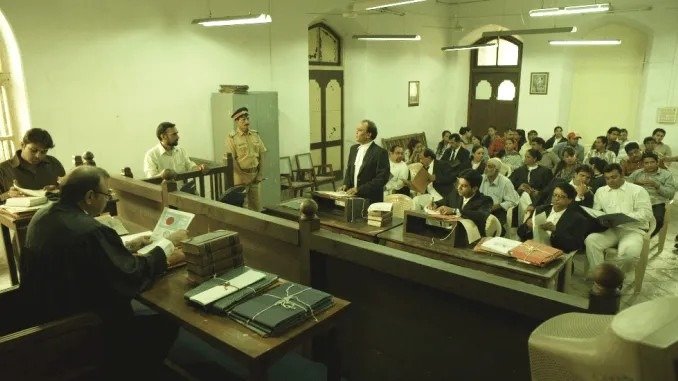
Image Credit: The Better India
Supreme Court’s Directive: Retirement Age Raised from 60 to 62
- Latest Direction: The Supreme Court has directed seven States to amend their service rules and raise the retirement age of judicial officers in the district judiciary from 60 to 62 years. The direction follows the States’ consent to the proposal.
- States Covered: The seven States are Chhattisgarh, Karnataka, Madhya Pradesh, Maharashtra, Sikkim, Tamil Nadu and West Bengal.
- Their respective governments agreed to enhance the retirement age.
- The Supreme Court has also asked the remaining States and Union Territories to reconsider their positions on enhancing judicial officers’ retirement age.
- Supervisory Role: The move does not provide an unconditional two-year extension.
- Judicial officers reaching 60 must undergo suitability and performance assessment by the concerned High Court before continuing.
- The concerned High Court will assess whether an officer remains suitable to continue.
- Transitional Protection: The seven States have been directed to formally amend their judicial service rules.
- The Supreme Court said the amendments should be undertaken as early as possible, preferably within two months.
- Until the rules are amended, judicial officers in these States who have already reached 60 years will not superannuate immediately, subject to the required High Court assessment of suitability and performance.
- Judicial officers from these seven States who retired on or after March 31, 2026 may exercise an option to rejoin judicial service, provided they have not subsequently accepted employment or an office of profit under the Union or State government.
- Financial Argument: The Court rejected the argument that higher retirement age would necessarily create an excessive financial burden on States.
- It noted that retirement can itself create post-retirement liabilities while replacement recruitment involves selection and training costs.
States and UTs District Judges Retirement Age:
- Reconsideration Period: The remaining jurisdictions apart from 7 states, have been directed to reconsider their decisions within two weeks and submit compliance reports. The matter is scheduled for further consideration on October 1, 2026.
- Positions: The responses of States have differed.
- Some have opposed enhancement, some are considering it, while others have not yet provided a final response.
- Reported positions include opposition or reservations from jurisdictions such as Assam, Bihar, Haryana, Kerala, Punjab, Uttar Pradesh and Uttarakhand, although the Court has asked jurisdictions to reconsider their positions.
- Meghalaya follows a lower retirement framework, with judicial officers generally retiring at 58, while the High Court may retain an officer up to 60 under the reported arrangement.
- Telangana already has a retirement age of 61 years for its judicial officers and has considered moving towards 62.
- The Supreme Court was informed that most High Courts supported enhancement to 61 or 62, with several suggesting safeguards such as fitness, suitability or performance screening.
Constitutional Framework Governing the District Judiciary
- Constitution: The constitutional framework for subordinate courts is primarily contained in Part VI, Chapter VI of the Constitution, covering Articles 233–237. These provisions establish the basic framework for State-level subordinate judiciary.
- Article 233 deals with the appointment, posting and promotion of district judges. Such appointments are made by the Governor in consultation with the concerned High Court.
- A person outside government service can become a district judge only if they have been an advocate or pleader for at least seven years and are recommended by the High Court.
- Article 234 concerns recruitment to the State judicial service of persons other than district judges. The Governor acts according to rules made after consultation with the State Public Service Commission and High Court.
- Article 235 vests control over district courts and subordinate courts in the High Court, including matters concerning posting, promotion and leave of judicial-service officers below the district judge level.
- It reinforces the High Court’s institutional control over subordinate judiciary. This explains the importance of High Court involvement in suitability and performance assessments.
- Article 236 provides interpretative definitions for this constitutional chapter. The term district judge covers several specified judicial posts, including additional and assistant district judges.
- Article 237 permits application of the constitutional provisions concerning subordinate courts to specified classes of magistrates, subject to conditions prescribed by the Governor.
- Appointment: Under Article 233(1) of the Constitution, the Governor of the State is the official appointing authority of district judges.
- The recruitment of District Judges happens through two distinct streams: Service Candidates (promotion) and Direct Recruitment (from the bar).
- Under Article 233(2), a person not already in the service of the Union or of the State is eligible to be appointed as a district judge only if they fulfill the following conditions: must be a citizen of India, must have been an advocate or a pleader for not less than seven years of continuous practice and must be recommended by the High Court for appointment.
- For those already serving within the state’s lower judiciary (e.g., Civil Judges, Senior Division): must be a member of the judicial service of the State, selection is based on criteria established by the respective High Court, usually involving merit-cum-seniority or through a Competitive Examination conducted by the High Court.
- The entry age is strictly regulated: A candidate must have completed 35 years of age on the date of the application.
- Maximum age generally capped at 45 Years in most states.
- The retirement age issued under the ongoing landmark litigation: All India Judges Association v. Union of India.
- The Supreme Court mandated that the uniform retirement age for judicial officers across India would be 60 years.
- State government civil servants often retire at 58 or 60 depending on state-specific rules.
- The recruitment of District Judges happens through two distinct streams: Service Candidates (promotion) and Direct Recruitment (from the bar).
Why Retaining Experienced Judicial Officers Matters?
- Persistent Judicial Vacancies: One major reason behind the policy is the continuing shortage of judges in the district judiciary. Recent reporting indicates that nearly 24% of sanctioned subordinate-court positions remain vacant.
- Recognising a backlog of over 5.18 crore pending cases and the critical need to retain experienced legal talent.
- The critical issue is the gap between sanctioned strength and actual working strength, which directly affects court capacity.
- Loss of Institutional Experience: Retirement at 60 can remove officers possessing substantial judicial experience, procedural knowledge and institutional memory. Retaining suitable officers can preserve this accumulated expertise.
- Recruitment Takes Time: Judicial recruitment requires appropriate selection, training and professional preparation. Therefore, vacancies created by retirement cannot always be filled immediately.
- Experienced officers can contribute to continuity and institutional stability, particularly in courts handling complex civil and criminal litigation.
- Access to Justice: Vacancies can contribute to delays in adjudication. Strengthening the working capacity of district courts can support the constitutional objective of timely and effective access to justice.
- It should complement faster recruitment, better infrastructure, court management, technological modernisation and procedural reforms.
Frequently Asked Questions (FAQs):
1. What is the current District Judges Retirement Age in India?
The general retirement age is 60 years, but seven States are directed to raise it to 62, subject to High Court suitability assessment.
2. Why did the Supreme Court suggest raising the retirement age of district judges?
The Court seeks to retain experienced judicial talent, address vacancies, strengthen judicial capacity and improve access to justice.
3. What could be the impact of increasing the District Judges Retirement Age?
It could reduce immediate vacancies, preserve institutional experience, improve continuity and potentially strengthen district courts’ capacity to handle pending cases.
4. How can a higher retirement age benefit the district judiciary?
It can retain experienced judges, reduce recruitment pressure, preserve institutional knowledge and provide greater continuity in judicial administration and adjudication.
5. What is the role of the Supreme Court in Judicial Retirement Age reforms?
The Supreme Court can issue directions through constitutional adjudication, while States amend service rules; the Court currently seeks broader uniformity through the All India Judges Association case.
Disclaimer: Information in this article is based on official announcements and public records. Regulations and implementation details may evolve over time.