Supreme Court Approves One Year Practice Rule For Judges
| General Studies Paper II: Judiciary, Supreme Court |
Why in News?
Recently, the Supreme Court reduced Civil Judge (Junior Division) candidates’ mandatory legal practice from three years to one.
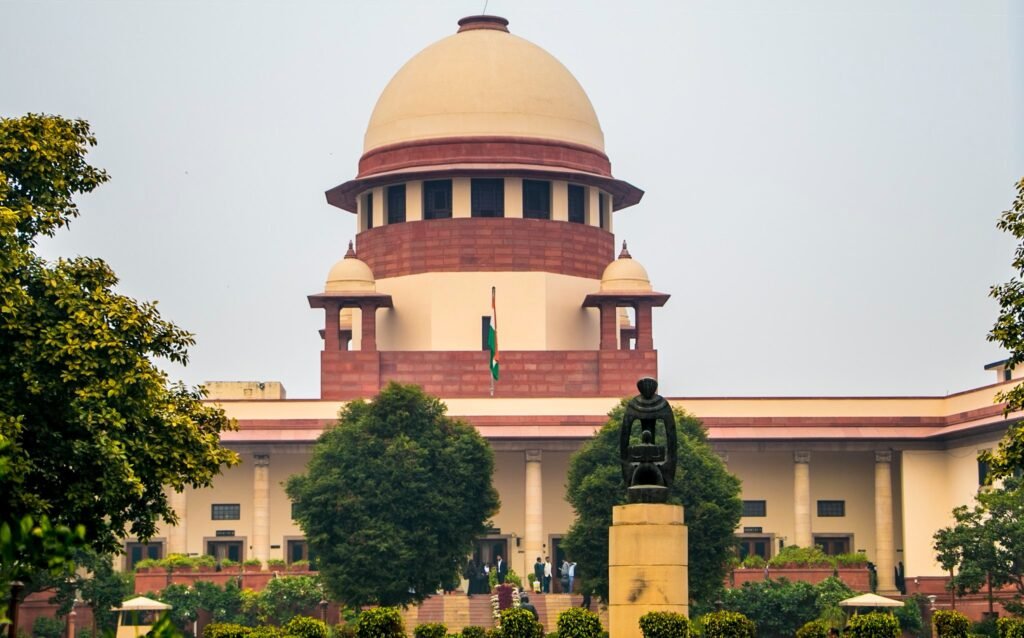
Highlights of Supreme Court Change in Judicial Recruitment
- Bench & Judgment: A three-judge Bench comprising CJI Surya Kant, Justice Augustine George Masih and Justice K. Vinod Chandran delivered the judgment on 21 August 2026 that Civil Judge (Junior Division) candidates’ mandatory legal practice will now be reduced from three years to one.
- Case: The ruling came in Bhumika Trust v. Union of India, concerning entry-level Civil Judge (Junior Division) recruitment and review of the 2025 three-year practice mandate.
- Bhumika Trust, representing hundreds of persons with disabilities, sought exemption from the three-year requirement.
- Review petitioners argued that prolonged practice created economic, gender, accessibility and career-entry barriers.
- Petitioners argued that structured post-selection training and judicial clerkships could provide practical exposure more effectively than merely counting years at the Bar.
- Petitioners argued that the mandate deters top law graduates from entering the judiciary right after college.
- Furthermore, they contended that the rule disproportionately harms women and candidates with disabilities.
- Court’s Observation & Verdicts:
- The 2:1 majority modified the 2025 judgment; satisfactory High Court evaluation precedes regular appointment. Justice K. Vinod Chandran dissented, favouring retention of three years’ practice.
- The Court upheld the core reasoning that some practical legal exposure is necessary before entering judicial service. It therefore did not completely abandon the practice requirement.
- The Bench observed that any prior-experience condition must have a reasonable nexus with judicial competence and should not create disproportionate hardship for young law graduates.
- The Court found that sudden restoration of the three-year practice requirement, without transitional protection, had caused hardship to candidates who had planned their careers under the earlier regime.
- The majority held that courtroom exposure remains necessary, but three years of conventional practice is not necessarily the only route to meaningful experience; quality of exposure matters more than duration alone.
- The Court made the framework reviewable, directing assessment of recruitment quality, clerkship outcomes and trainee performance after sufficient institutional experience.
- New Rules: For recruitment notifications issued between 20 May 2025 and 31 March 2027, all law graduates may apply despite lacking three years’ practice. They are deemed to possess one year’s active practice for this purpose.
- Selected candidates under the new framework will undergo one year of intensive training at the concerned State Judicial Academy, ensuring structured professional preparation.
- Training will be followed by one year of supervised clerkship: six months under a Principal District Judge/Higher Judicial Service member and six months under a sitting High Court judge.
- For notifications issued from 1 April 2027, candidates must complete one year of actual legal practice before appearing for the Civil Judge examination. Practice must be properly verified.
- The supervising High Court judge must provide a reasoned evaluation of the trainee’s progress and suitability. Regular appointment follows only after a satisfactory assessment.
- The scheme is stipulated to operate for five years, after which relevant empirical material may be placed before the Court.
Three-Year Practice Rule for Civil Judge Candidates
- About:
- The Three-Year Practice Rule refers to a regulatory mandate requiring law graduates to complete a minimum of three years of active legal practice at the Bar before becoming eligible to sit for entry-level judicial service examinations, specifically for the post of Civil Judge (Junior Division).
- Background:
- The concept originated from the 14th Law Commission Report (1958), which highlighted that textbook knowledge alone cannot replace first-hand courtroom experience.
- It aimed to prevent inexperienced graduates from presiding over trial courts immediately after completing their degrees.
- In the landmark case of All India Judges Association v. Union of India (1993), the Supreme Court formalised this requirement nationwide.
- The court emphasized that handling matters of life, liberty, and property required a baseline level of professional maturity.
- The First National Judicial Pay Commission (Shetty Commission, 1999) recommended abolishing the rule.
- It argued that modernized law curricula, clinical legal training, and structured internships at National Law Universities (NLUs) successfully bridged the gap for fresh graduates.
- Accepting the Shetty Commission’s findings, the Supreme Court in the 2002 All India Judges Association judgment abolished the mandatory practice condition.
- This relaxation allowed fresh law graduates across India to enter the judicial services directly through state competitive examinations.
- Over the subsequent two decades, several High Courts noticed a steep decline in the practical efficiency of entry-level judges.
- Fresh graduates struggled significantly with procedural management, evidentiary evaluation, and local trial court dynamics.
- In May 2025, a Supreme Court Bench led by the Chief Justice restored the three-year litigation requirement.
- The court noted that recruiting candidates without courtroom exposure had turned out to be an unsuccessful experiment for the lower judiciary.
- The concept originated from the 14th Law Commission Report (1958), which highlighted that textbook knowledge alone cannot replace first-hand courtroom experience.
Significance of the New One-Year Judicial Recruitment Framework
- Constitutional Link: The ruling sits within Articles 233–235 governing subordinate judiciary.
- Importantly, Article 233(2) requires 7 years’ advocacy for District Judge appointment, showing experience has constitutional significance.
- Judicial Independence: The Court connects practical exposure with an independent and competent subordinate judiciary.
- It identified judicial temperament, patience and empathy as qualities strengthened through courtroom exposure.
- Three-Year Exposure Equation: The framework effectively combines 1 year deemed practice + 1 year training + 1 year clerkship = 3 years of recognised preparatory exposure.
- The earlier 3-year threshold has effectively become 1 year actual practice, reduction of 2 years or 66.7%.
- Economic Accessibility: During training and clerkship, trainees receive 50% of the remuneration payable to a Judicial Magistrate First Class, creating financial support during preparation.
- Vacancy-Filling: As of August 2024, District and Subordinate Courts had 25,609 sanctioned posts and 5,238 vacancies—approximately 20.45% vacant. Faster access can potentially enlarge the recruitment pool.
- Institutional Capacity: District judiciary’s sanctioned strength increased from 19,518 in 2014 to 25,741 in 2024, a rise of approximately 31.9%. Recruitment reforms therefore matter alongside expanding judicial capacity.
Frequently Asked Questions (FAQs):
1. What did the Supreme Court decide about the judicial service practice requirement?
The Supreme Court reduced the Bar-practice requirement from three years to one year for Civil Judge (Junior Division) recruitment.
2. How many years of legal practice are now required for entry-level judicial service?
From 1 April 2027, candidates need one year of actual, verified legal practice before appearing for recruitment.
3. Why was the earlier three-year practice requirement changed?
The Court sought to balance practical experience with accessibility, avoiding unnecessary restriction on fresh law graduates while preserving courtroom exposure.
4. Does the one-year practice requirement apply to Civil Judge recruitment?
Yes. The revised requirement specifically concerns Civil Judge (Junior Division), the entry-level subordinate judicial service.
5. What is the role of judicial academy training under the new system?
Selected candidates undergo one year of intensive Judicial Academy training, providing structured preparation before independent judicial responsibilities.
Disclaimer: Information in this article is based on official announcements and public records. Regulations and implementation details may evolve over time.
| Also Read: BCI Social Media Rules for Advocates |