Interceptor Drone Ahuti Mk-II, Becomes India’s Fastest Multirotor UAV
| General Studies Paper III: Defence Technology, Indigenous Technology |
Why in News?
Recently, a defence technology startup Apollyon Dynamics’ Ahuti Mk-II achieved a certified 498 km/h, becoming India’s fastest multirotor UAV.
What is Ahuti Mk-II?
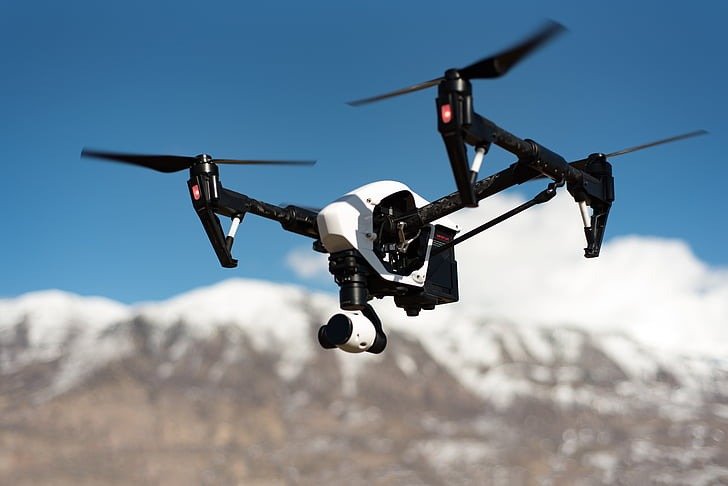
- About: Ahuti Mk-II is an electric, high-speed multirotor interceptor UAV developed primarily for rapidly closing the distance with hostile aerial threats.
- Developed By: The system has been developed by Apollyon Dynamics.
- It is a Hyderabad-based defence-technology startup incubated at BITS Pilani Hyderabad.
- The company was founded in 2025 by Jayant Khatri and Sourya Choudhary and focuses on autonomous and high-performance aerial systems for the armed forces.
- Development History: Apollyon emerged from a student-led defence-technology initiative at BITS Hyderabad.
- Before the company’s formal incorporation in 2025, its founders had demonstrated kamikaze-drone technology to the Indian Army.
- The company subsequently developed high-speed UAV platforms, with its earlier systems reportedly reaching around 300 km/h.
- Features:
- In September 2026, it achieved a certified top speed of 498 km/h, making it the fastest multirotor UAV recorded in India.
- This exceeded previously cited benchmark of approximately 325 km/h by more than 170 km/h.
- The achievement was subsequently recognised by the India Book of Records.
- The Mk-II reportedly underwent approximately 10 iterations involving its frame, propulsion and motor configuration before achieving the record.
- It is redesigned using approximately 400-ampere burst current.
- Ahuti Mk-II retains a multirotor architecture. The platform has been optimised for high-speed forward flight and rapid acceleration.
- Quadcopters, hexacopters, and octocopters are the primary multirotor configurations distinguished by rotors.
- multirotor drones are widely used for surveillance, payload delivery mapping, and photography.
- It (Interceptor drone) is intended to detect, pursue and neutralise an aerial threat.
- They integrate with radar, optical, and radio-frequency sensors to locate targets.
- They eliminate threats via kinetic ramming, deploying nets to snarl propellers, or using localized explosive charges.
- In September 2026, it achieved a certified top speed of 498 km/h, making it the fastest multirotor UAV recorded in India.
Economic and Strategic Dimensions of Drone Defence
- Cost-Benefit Asymmetry: Consumer-grade and first-person view (FPV) drones costing a few hundred dollars can destroy multi-million dollar tanks, air defense systems, and armored vehicles. This flips traditional military economics on its head.
- Multirole Capability: Beyond providing vital intelligence, surveillance, reconnaissance (ISR), and target acquisition, they actively conduct electronic warfare (EW) and deep-strike operations against enemy infrastructure.
- They serve as essential force multipliers by managing artillery spotting and logistics support across the battlefield.
- Zero Pilot Risk: Unmanned systems allow militaries to conduct high-risk reconnaissance and strike missions deep behind enemy lines without risking the capture or death of human pilots.
- Constant Battlefield Visibility: Drones provide continuous, real-time aerial surveillance (often called a “transparent battlefield”). This makes it nearly impossible for large troop movements or armor columns to achieve the element of surprise.
- Precision Strike Capabilities: Even small, improvised drones can carry modified explosive payloads directly into vulnerable spots—like open vehicle hatches or trenches—with pinpoint accuracy.
- Psychological Warfare: The constant, audible buzz of loitering munitions and FPV drones creates severe psychological stress for ground troops, who must remain perpetually on guard against attacks from above.
- Low Barrier to Entry: Unlike advanced fighter jets, smaller drones do not require massive industrial infrastructure or years of pilot training to deploy, allowing smaller nations and non-state actors to rapidly field significant airpower.
India’s Emerging Counter-UAS Ecosystem
- India’s defence environment increasingly treats UAVs and Counter-UAS (C-UAS) as interconnected capabilities.
- Modern C-UAS architecture involves detection, identification, tracking, command-and-control and neutralisation.
- India’s emerging architecture combines radars, electro-optical/infrared sensors, RF detection, electronic warfare, command-and-control systems and physical defeat mechanisms.
- The Indian Army has increasingly tested UAS, Counter-UAS systems, loitering munitions, Integrated Drone Detection and Interdiction Systems, lightweight radars and electronic-warfare platforms under near-operational conditions.
- The 2025 demonstrations at locations including Pokhran, Babina and Joshimath reflected an effort to rapidly absorb emerging technologies.
- The Army’s VAYU SAMANVAY-II exercise in October 2025 focused specifically on drone and counter-drone operations.
- It integrated aerial and ground assets with multi-domain command-and-control in an electronic-warfare environment, highlighting the movement towards networked operations.
- The Indian Army released a comprehensive Technology Roadmap for Unmanned Aerial Systems (UAS), outlining specifications for 30 distinct types of unmanned platforms.
- Additionally, major capital outlays—such as a ₹32,350 crore program for 87 Medium Altitude Long Endurance (MALE) drones—have been cleared across the armed forces.
- A major indigenous example is the D4 Counter-Drone System, developed by DRDO and productionised by Bharat Electronics Limited (BEL).
- BEL describes it as capable of real-time search, detection, tracking and neutralisation of micro and small UAVs using both soft-kill and hard-kill approaches.
- The ecosystem increasingly includes startups and private defence companies alongside DRDO and DPSUs.
- Apollyon Dynamics represents the high-speed interceptor segment, while companies such as Big Bang Boom Solutions are developing indigenous electronic-warfare and anti-drone technologies.
- The government is deliberately encouraging technology transfer, co-development and private production.
- DRDO and Adani Defence & Aerospace unveiled a vehicle-mounted Counter-Drone System in 2025 under a public-private partnership and DRDO technology-transfer framework.
- India is deploying homegrown multi-layered solutions like Indrajaal Systems.
- The Indian Army’s earlier MoU with the Drone Federation of India established a framework for counter-drone technologies through industry, academia and armed-forces collaboration.
- Research is heavily focused on Directed Energy Weapons (DEWs), including DRDO’s Integrated Drone Detection and Interdiction System equipped with 10 kW lasers, and swarm-breaking kinetic solutions like Bhargavastra.
- In 2025, the Ministry of Defence organised a dedicated workshop on UAV and C-UAS indigenisation, particularly targeting dependence on imported critical components.
- In 2026, the Defence Ministry stated that 676 startups/MSMEs/innovators had joined the defence innovation ecosystem through Innovations for Defence Excellence (iDEX).
- Programs like Project Pragyashakti (launched in 2025) and the AI-enabled Akashteer Air Defence Control System work to unify tri-service electronic warfare backbones and automate threat detection.
- Operation Sindoor reinforced the importance of integrated counter-UAS and air-defence networks.
- The government reported that hostile drones and missiles were addressed through an Integrated Counter-UAS Grid and Air Defence systems, demonstrating the importance of combining sensors and multiple neutralisation options.
- India’s emerging C-UAS model is therefore moving towards layered, network-centric defence: electronic warfare against controllable systems, directed-energy or kinetic options where appropriate, and conventional air defence for more demanding threats.
Frequently Asked Questions (FAQs):
1. What is Ahuti Mk-II and why is it called India’s fastest multirotor UAV?
Ahuti Mk-II is an electric multirotor interceptor developed for rapid aerial interception; its 498-km/h certified speed earned India’s fastest multirotor UAV record.
2. How fast is the Ahuti Mk-II fastest multirotor UAV?
Ahuti Mk-II achieved a certified top speed of 498 km/h, surpassing the previously cited Indian multirotor benchmark of approximately 325 km/h.
3. Which Hyderabad drone startup developed the Ahuti Mk-II?
Apollyon Dynamics, a Hyderabad-based defence-technology startup incubated at BITS Pilani Hyderabad Campus, developed Ahuti Mk-II.
4. What is Apollyon Dynamics Ahuti Mk-II and what technology does it use?
It is an electric high-speed multirotor interceptor, redesigned through multiple frame, propulsion and motor iterations, using approximately 400-ampere burst current.
5. What is the role of interceptor drone India technology in modern defence systems?
Interceptor drones rapidly pursue and neutralise hostile UAVs or loitering munitions, offering a potentially scalable response within layered counter-UAS defence.
Disclaimer: Information in this article is based on official announcements and public records. Regulations and implementation details may evolve over time.
| Also Read: Indigenous Vayu Astra-1 Drone |