



Russian State Duma Elections 2026: Impact on Global Geopolitics and Indo-Russia Ties
| General Studies Paper II: Effect of Policies & Politics of Countries on India’s Interests |
Why in News?
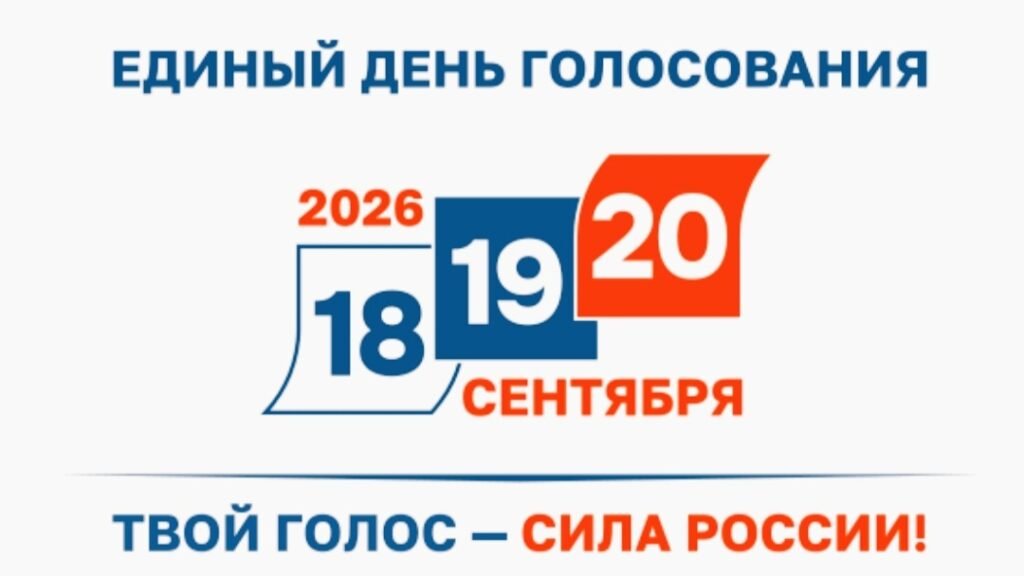
Russian State Duma Elections 2026 are currently being held in Russia from 18 to 20 September 2026 for 450 seats to the State Duma.
Highlights of Russian State Duma Elections 2026
- State Duma: The State Duma is the lower house of Russia’s Federal Assembly.
- The 2026 election elects all 450 deputies for a five-year term, making it Russia’s principal nationwide parliamentary election.
- The result will determine the composition of the 9th State Duma.
- Schedule: Voting is being conducted over three days — 18, 19 and 20 September 2026.
- Electronic voting is available alongside conventional polling.
- Electoral Mandate: Of the 450 seats, 225 are filled through a nationwide party-list system, while another 225 are contested in single-member constituencies.
- The 2026 map included 10 new single-member districts, which prominently incorporated 7 districts established inside Russian-occupied Ukrainian territories.
- The ruling party requires a minimum mandate of 300 seats out of 450 to preserve its constitutional supermajority.
- Contesting Parties: A total of 11 political parties secured spaces on the federal ballot:
- The principal parties include United Russia, CPRF, LDPR, A Just Russia, New People, Party of Pensioners, Communists of Russia, Greens, Rodina and Party of Direct Democracy.
- But Yabloko was subsequently removed from the federal ballot by the Supreme Court.
- The United Russia ticket featured prominent state figures like Dmitry Medvedev and Sergei Lavrov, alongside the strategic nomination of roughly 20 decorated military veterans from the Ukraine conflict to appeal to radical pro-war demographics.
- In 2021, United Russia won 324 seats, CPRF 57, A Just Russia–For Truth 27, LDPR 21, and New People 13.
- Smaller parties and independents together won the remaining seats.
- Eligible Electorate: The total eligible voter base across Russia’s 89 administrative regions and border-crossing stations stood at over 111 million citizens.
- The Kremlin deployed internet-based electronic voting across 33 administrative regions to cover approximately 48.4 million eligible citizens.
- Counting & Declaration: Counting will commence immediately following the closure of the final polling stations.
- The result is expected to be declared within the final week of September 2026.
- Significance: The 2026 election is the first State Duma election since Russia’s full-scale invasion of Ukraine in February 2022.
- The vote is closely connected with domestic support for the government’s wartime policies and Russia’s broader national-security narrative.
Russia’s Parliamentary Election System and Structure
- The national legislature of the Russian Federation is called the Federal Assembly of the Russian Federation, which is constitutionally divided into the State Duma (the lower house) and the Federation Council (the upper house).
- The State Duma consists of 450 deputies who are elected for a fixed legislative tenure of five years.
- The Federation Council acts as the chamber of regional representation, comprising 178 senators derived from Russia’s 89 federal subjects, alongside a specific allocation of presidential appointees.
- The Central Election Commission of Russia (CEC) administers federal elections, including candidate registration, ballots, vote counting and publication of results.
- Regional and territorial election commissions implement voting operations locally.
- Russian citizens aged 18 or above on election day generally have voting rights, subject to statutory eligibility restrictions.
- Elections to the State Duma follow a parallel mixed voting system, meaning that the legislative seats are split evenly between two different electoral methods.
- The first 225 seats are contested through a First-Past-The-Post (FPTP) system in single-mandate constituencies, where the individual candidate with a simple plurality of votes wins the seat.
- The remaining 225 seats are determined through a Proportional Representation (PR) system using closed party lists across a single nationwide constituency.
- To qualify for any seats under the proportional half of the ballot, a political party must clear a strict 5% electoral threshold of the national vote.
- Unlike the lower house, the members of the Federation Council are not directly elected by the general populace.
- Each of Russia’s 89 federal regions sends two representatives: one chosen by the regional legislative assembly and one appointed by the regional executive head or governor.
- The President of Russia holds the structural authority to directly appoint up to 30 additional senators, up to seven of whom can be designated to serve for life.
Major Factors That Will Impact the Election
- Russia–Ukraine War: The Ukraine war is the central political backdrop. President Vladimir Putin has presented participation as an expression of national unity and support for Russian soldiers, making wartime policy an important political context for the election.
- Economic Pressures: Russia faces high interest rates, labour shortages, fuel-related pressures and war-linked economic costs. These conditions could influence voter concerns over household purchasing power, employment, inflation and public expenditure.
- Political Competition: The electoral field is shaped by a combination of United Russia and established parliamentary parties, while openly anti-war political competition has been significantly restricted.
- Opposition forces remain divided over electoral strategies. Such fragmentation affects how anti-government sentiment can translate into parliamentary representation.
Impact on Global Geopolitics and Indo-Russia Ties
- The composition of the new Duma will influence the domestic legislative environment surrounding foreign policy, defence expenditure and national-security legislation. Parliamentary continuity would provide institutional support for existing strategic priorities.
- The election occurs while the Russia–Ukraine conflict remains unresolved. Its political significance lies partly in how Moscow interprets the vote as domestic support for its wartime policies and negotiating position.
- A continuation of Russia’s existing political direction could sustain tensions with the United States and European countries, particularly over Ukraine, sanctions, security architecture and territorial questions. The election therefore has implications beyond Russia’s domestic politics.
- Russia continues to advocate a more multipolar international system, challenging what Moscow describes as Western dominance. A politically consolidated Russian leadership can continue prioritising institutions such as BRICS, SCO and other non-Western diplomatic platforms.
- Russia’s confrontation with the West has deepened its strategic dependence on non-Western economic and diplomatic partners, particularly China. Parliamentary continuity therefore matters for the broader evolution of Eurasian strategic alignments.
- For India, the election matters because Russia remains an important partner within New Delhi’s strategic-autonomy framework. India-Russia cooperation spans defence, energy, nuclear power, space, science, trade and multilateral diplomacy.
- The bilateral relationship includes military equipment, technology, maintenance and defence-industrial cooperation, making political stability in Moscow relevant to India’s long-term defence planning.
- India-Russia trade reached $65.70 billion in FY2023–24, with Russian energy products forming a major component of India’s imports. Both countries have also set a target of $100 billion bilateral trade by 2030.
Frequently Asked Questions (FAQs):
1. When is the Russia parliamentary election 2026?
Voting runs from 18–20 September 2026; 20 September is the officially designated election day.
2. How many seats are being contested in Russia’s State Duma election?
All 450 State Duma seats are contested: 225 through constituencies and 225 through proportional party lists.
3. How does the State Duma election work?
Voters cast two ballots: one for a party list and another for a single-member constituency candidate.
4. Which political parties are contesting Russia election 2026?
Eleven parties submitted federal lists, including United Russia, CPRF, LDPR, A Just Russia, New People and smaller parties.
5. Why is the 2026 Russia parliamentary election important?
It is the first Duma election since Russia’s 2022 full-scale invasion of Ukraine, shaping Parliament amid wartime geopolitical tensions.
6. Who can vote in the Russia parliamentary election?
Russian citizens aged 18 or above on election day generally have voting rights, subject to statutory eligibility restrictions.
7. When will Russia election results 2026 be announced?
Initial results are expected Sunday evening, 20 September; near-complete results are expected Monday, 21 September.
Disclaimer: Information in this article is based on official announcements and public records. Details may evolve over time.
| Also Read: Armenia Parliamentary Elections 2026 |