




New Cat Species Leopardus Tilcayo Discovered, First in a Century
| General Studies Paper I: Biodiversity, New Species |
Why in News?
In a historic breakthrough, scientists have identified new cat species in Bolivia’s Yungas cloud forest named “Leopardus tilcayo”, marking the first new living feline species described in over a century.
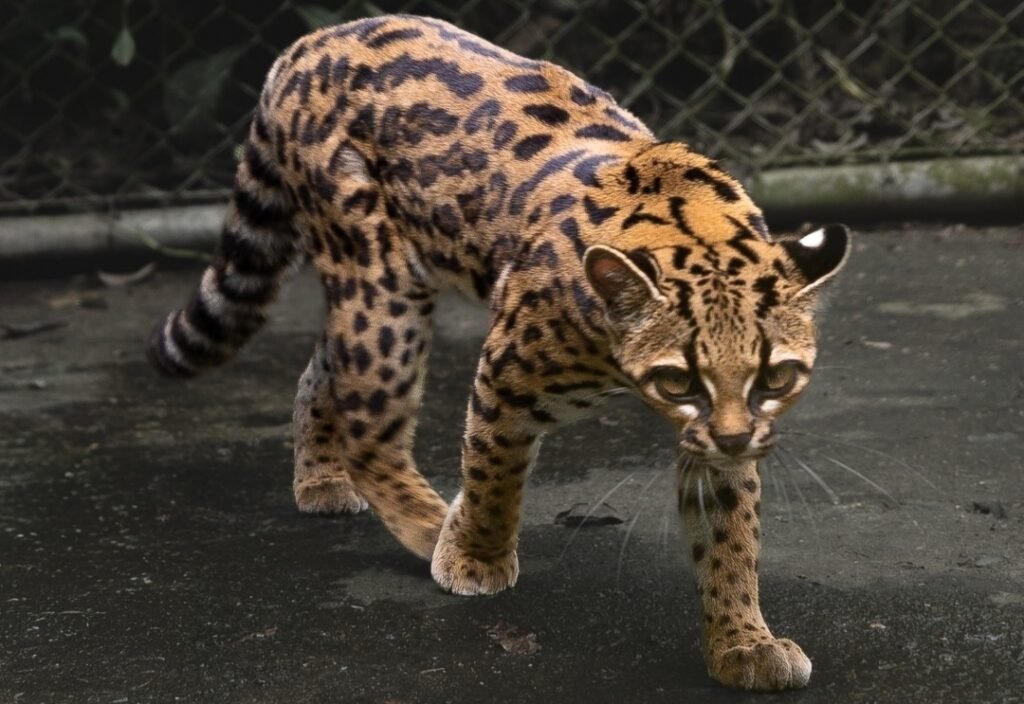
Highlights of New Cat Species “Leopardus tilcayo”
- Location: This specialized predator “Leopardus tilcayo” was found in the Bolivian Yungas, a highly humid mountainous cloud forest ecotone where the eastern slopes of the Andes meet the Amazon basin.
- Its type locality is near Arapata village, Nor Yungas, La Paz Department, at about 1,570 metres elevation.
- Classification: The animal is categorized under the family Felidae and the genus Leopardus.
- It belongs specifically to the tiger cat complex (Leopardus tigrinus group), a lineage of cryptic, small, spotted wild felines native to Central and South America.
- Its formal holotype is an adult male designated CBF-11990.
- Naming: The scientific name Leopardus tilcayo incorporates the term “Tilcayo” (or Tilka), which is the traditional name used by local indigenous communities.
- Discovery: The first newly identified living cat species formally named and described in over a century was officially revealed in September 2026.
- The formal discovery process began around 2016 when researchers first encountered an unusual “weird cat” named Tigrino.
- He was raised briefly by a local family before transitioning to long-term care at the Senda Verde Wildlife Sanctuary.
- The decisive evidence came from phylogenomics and museomics. The study, published in Current Biology on 17 September 2026, formally classified the animal as Leopardus tilcayo sp. nov.
- The last newly described living feline species was the Uruguayan pampas cat in 1923.
- The decisive evidence came from phylogenomics and museomics. The study, published in Current Biology on 17 September 2026, formally classified the animal as Leopardus tilcayo sp. nov.
- Discovered By: The breakthrough research was spearheaded by Dr. Paola Nogales-Ascarrunz, a prominent National Geographic Explorer and Bolivian biologist.
- She collaborated with an international team of geneticists and wildlife biologists, including researcher Eduardo Eizirik, to publish their definitive taxonomic findings.
- Method to Evaluate: Because tiger cats look almost identical, scientists utilized whole-genome sequencing and comparative DNA analysis to evaluate the species.
- They evaluated genetic samples from 38 individual tiger cats, incorporating both living sanctuary residents and museum bone specimens to confirm its complete genetic distinctness.
- Data reveals that Leopardus tilcayo diverged from its closest relatives during the Early Pleistocene, approximately 1.4 million years ago.
- This monumental study successfully resolved the complex into five distinct tiger cat species (L. tigrinus, L. guttulus, L. emiliae, L. pardinoides, and L. tilcayo), alongside a newly identified Peruvian subspecies, L. tigrinus antisuyo.
- They evaluated genetic samples from 38 individual tiger cats, incorporating both living sanctuary residents and museum bone specimens to confirm its complete genetic distinctness.
- Distinctive Features:
- It thrives at high-moisture elevations and is specialized for dense, cloud-covered woodlands.
- It has a primarily nocturnal lifestyle and its diet includes small rodents found in the forest floor.
- Weighing a mere 1.4 to 2.0 kg (approx. 3 pounds) with a body length of 42.5 to 50 cm, it is smaller than an average domestic house cat.
- It features muted, light-brown fur adorned with large, irregularly shaped open rosettes that do not fuse into solid bands.
- It is further distinguished by its small scrunched-up face, short rounded ears, striking amber eyes, and a long, full tail that lacks complete distal rings.
- Conservation Status: Its formal individual status remains unassessed by the IUCN Red List, other members of its genus are classified as Vulnerable.
- The researchers have shared their findings with the IUCN, which can reassess tiger-cat conservation categories following the taxonomic revision.
- Habitat Threats: The species faces a severe risk of extinction due to massive habitat contractions ranging between 50.4% and 68.2% across its range.
- Primary threats include deforestation, aggressive agricultural expansion, forest fires, local mining, and lethal disease spillover from domestic pets.
- Future Protection: Immediate conservation priorities necessitate implementing extensive camera-trap surveys to accurately map out its wild distribution range.
- Protection strategies must emphasize enforcing CITES Appendix I trade bans, preventing retaliatory hunting, and creating vital wildlife corridors outside existing protected parks to secure the Yungas ecosystem.
Cat Species Worldwide and in India
- The Felidae is a globally distributed carnivore family comprising 40 living wild cat species according to the IUCN Cat Specialist Group’s current species presentation.
- These species are broadly categorized into two subfamilies: Pantherinae (big roaring cats) and Felinae (small to medium purring cats).
- Wild felines are distributed across almost every continent except Antarctica and Australia.
- The Americas are dominated by unique species like the Jaguar (Panthera onca ) and Puma , while Africa acts as a stronghold for the African Lion and Cheetah.
- Asia holds the highest concentration of distinct lineages, serving as a critical evolutionary baseline.
- The Leopardus genus, to which L. tilcayo belongs, is particularly diverse in the Neotropics.
- India holds a unique global record, harboring 15 distinct wild cat species, which accounts for roughly 40% of global feline diversity.
- It is the only country in the world where you can find the Tiger, Lion, Leopard, Snow Leopard, and Clouded Leopard all living within national borders.
- The country’s apex predators include the Royal Bengal Tiger (Panthera tigris tigris), which accounts for 70% of the world’s wild tiger population.
- India is also the last remaining wild refuge for the Asiatic Lion (Panthera leo persica), strictly confined to Gujarat’s Gir Landscape.
- The highly adaptable Indian Leopard thrives across diverse terrains, while the elusive Snow Leopard (Panthera uncia) patrols the high-altitude peaks of the Himalayas.
- The clouded leopard is particularly associated with Northeast India’s forest ecosystems.
- India hosts nine specialized small cat species that maintain ecological balance by acting as natural pest controllers.
- The Rusty-spotted Cat (Prionailurus rubiginosus) is celebrated as the world’s smallest wild cat, weighing just 1 to 2 kg.
- Other unique small felines include the wetland-dwelling Fishing Cat, the desert-adapted Asiatic Wildcat, the tree-dwelling Marbled Cat, and the ultra-rare Caracal.
- India protects wild felids through the Wild Life (Protection) Act, 1972, protected-area networks, anti-poaching measures and centrally supported wildlife programmes.
- The MoEFCC, National Tiger Conservation Authority and Wildlife Institute of India increasingly emphasise monitoring and conservation of lesser-known felids.
Frequently Asked Questions (FAQs):
1. What is the new cat species discovered in Bolivia?
Leopardus tilcayo is a newly described small tiger-cat species native to Bolivia’s Yungas cloud forests.
2. Where was Leopardus tilcayo discovered?
It was identified in Bolivia’s Yungas cloud forests, along the eastern slopes of the Andes near the Amazon Basin.
3. Why is the Tilcayo cat important?
It is the first new living wild-cat species formally described in over a century, revealing previously overlooked felid biodiversity.
4. Is Leopardus tilcayo a new wild cat species?
Yes. Genetic evidence established L. tilcayo as a distinct evolutionary lineage, diverging from related tiger cats about 1.4 million years ago.
5. When was the first new cat species discovered in over a century?
Leopardus tilcayo was formally described in Current Biology on September 17, 2026; the previous new living cat was described in 1923.
6. How was the new Bolivia cat species identified?
Researchers compared complete genomes from 38 Leopardus individuals, including museum specimens, revealing five genetically distinct tiger-cat lineages.
Disclaimer: Information in this article is based on official announcements and public records. Details may evolve over time.