




High-Altitude Fish Schizopygopsis Waddellii Discovered in Tawang, Recorded First Time in India
| General Studies Paper I: Biodiversity, New Species in News |
Why in News?
Recently, scientists confirmed the first Indian record of Schizopygopsis waddellii in Tawang, Arunachal Pradesh, expanding India’s known cold-water Himalayan fish diversity.
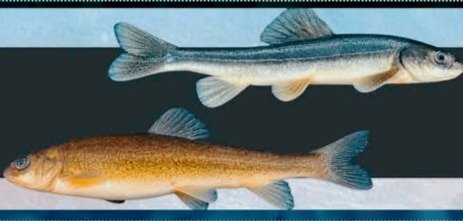
Highlights of the Schizopygopsis Waddellii Discovery
- Location: Recently, Indian scientists recorded Schizopygopsis waddellii, a rare high-altitude freshwater snow trout, in India for the first time.
- The fish was recorded from Pangkang Teng Tso Lake, a natural high-altitude lake in Tawang district, Arunachal Pradesh.
- Discovered By: The work involved scientists from the ICAR-Central Institute of Coldwater Fisheries Research (ICAR-CICFR), Bhimtal, in collaboration with the Department of Fisheries, Government of Arunachal Pradesh, and members of the Shar-Tso Committee of Tawang.
- Altitude: The specimens were found at approximately 12,800 feet (about 3,900 metres) above sea level.
- Researchers collected 10 specimens in July 2026 from Pangkang Teng Tso Lake.
- Indentification: Identification used an integrative taxonomic approach, combining detailed morphological examination with mitochondrial DNA analysis.
- Significance: The finding extends the known geographical range of S. waddellii into the Eastern Himalayas and adds to India’s documented freshwater fish diversity.
- It demonstrates that Arunachal Pradesh’s high-altitude lakes remain under-surveyed biodiversity reservoirs, warranting systematic ichthyological exploration.
About Schizopygopsis Waddellii
- Intro: Schizopygopsis waddellii is a cold-adapted freshwater fish belonging to the carp family, Cyprinidae.
- It is associated with the high-altitude freshwater ecosystems of the Tibetan region and is commonly described as a high-altitude snow trout.
- Scientific Discovery: The species was scientifically described by Charles Tate Regan in 1905 in Annals and Magazine of Natural History.
- Its original name was Gymnocypris waddellii Regan, 1905.
- Its type locality is Yamdok (Yamdrok) Lake, Tibet, recorded at approximately 14,800 feet.
- The original material comprised specimens obtained by Lieutenant-Colonel L. A. Waddell, who preserved them and presented them to the British Museum.
- Etymology: The species name waddellii honours Laurence Austine Waddell, a British army surgeon, explorer and scholar associated with the collection and preservation of the type specimens.
- Taxonomic Position: Its major classification is Kingdom Animalia → Phylum Chordata → Class Actinopterygii → Order Cypriniformes → Family Cyprinidae → Subfamily Schizopygopsinae.
- Geographical Distribution: This species is native to the fragile, cold-water, aquatic ecosystems of the Tibetan and Chinese plateaus.
- Characteristics: It features an elongated, sub-cylindrical body designed for hydrodynamic movement.
- It displays a dark greyish to olive-colored dorsal (upper) side paired with a silvery to creamy-white underside.
- It possesses a blunt snout, a subterminal mouth (positioned slightly under the snout), and a distinctive, hard plate-like horny structure around the lower lip used for scraping algae and biofilm off submerged rocks.
- It includes dark spots on the head, body and forked caudal fins.
- It is characterized by a deeply forked caudal (tail) fin for swift propulsion in cold, fast-moving currents, along with a prominent and complete lateral line system.
- The Indian observations indicate marked sexual dimorphism: males may possess numerous small body spines/tubercles and stronger coloration, whereas females are comparatively duller and lack these spines.
- Ecological Importance: The species contributes to high-altitude aquatic food webs and provides an indicator of the biological uniqueness of Himalayan freshwater systems.
About Pangkang Teng Tso Lake
- Pangkang Teng Tso Lake, also known as Pankang Teng Tso or P.T. Tso, is a high-altitude natural lake.
- The lake is located in the Tawang District of Arunachal Pradesh, situated deep within the Eastern Himalayas.
- Tawang is located in the extreme northwestern corner of Arunachal Pradesh.
- It shares crucial international borders with Tibet (China) to the north and Bhutan to the southwest.
- It is separated from the West Kameng district to the east by the high-altitude Sela Mountain Range.
- It sits at a high altitude of approximately 4,640 meters (15,223 feet) above mean sea level.
- It is a glacial meltwater lake, formed naturally by the receding glaciers and snowmelt of the surrounding Himalayan peaks.
- Geographically, it is located roughly 15 to 22 kilometers north of Tawang town, sitting directly en route to the strategically vital Bum La Pass on the India-China border.
- The lake is characterized by its crystal-clear freshwater, standing in sharp contrast to the endorheic saltwater lakes (like Pangong Tso) found in the Western Himalayas.
- The surrounding vegetation consists of sensitive alpine ecosystems, featuring dense growth of rhododendrons, primulas, and blue lapis flowers that bloom during the summer months.
- Due to its isolation, the surrounding wetlands serve as a localized habitat for high-altitude Himalayan avifauna and endemic alpine herbs.
- The lake holds massive geopolitical weight due to its close proximity to the Line of Actual Control (LAC) separating India and Tibet (China).
- It acts as a critical landmark on the Tezpur-Bhalukpong-Bomdila-Tawang defense axis, which is vital for the logistics and troop movements of the Indian Armed Forces.
- The area surrounding the lake serves as a restricted military zone where the Indian Army frequently conducts high-altitude warfare and firing exercises to maintain border readiness.
- The historical context of the lake is tied to the 1962 Sino-Indian War, during which the Chinese forces overran this specific axis to advance toward Tawang.
- Domestic Indian tourists must obtain an Inner Line Permit (ILP), and international tourists require a Protected Area Permit (PAP) to access the route leading to the lake.
Frequently Asked Questions (FAQs):
1. Where was Schizopygopsis waddellii found in India?
It was found in Pangkang Teng Tso Lake, Tawang district, Arunachal Pradesh, marking its first Indian record.
2. What is Schizopygopsis waddellii?
It is a rare, cold-adapted freshwater snow trout belonging to the Cyprinidae family.
3. Why is the Schizopygopsis waddellii discovery important?
It extends the species’ known range into India and highlights Eastern Himalayan high-altitude freshwater biodiversity.
4. At what altitude was the fish found in Tawang?
The fish was recorded at approximately 12,800 feet (3,900 metres) above sea level.
5. What is the natural habitat of Schizopygopsis waddellii?
It inhabits cold, high-altitude freshwater lakes and rivers of the Tibetan Plateau and Himalayan region.
6. Where was Schizopygopsis waddellii previously recorded?
It was previously recorded mainly from high-altitude freshwater systems of Tibet/China, including Yamdrok Lake.
Disclaimer: Information in this article is based on official announcements and public records. Details may evolve over time.