




Bengal to Host India’s New DRDO Missile Testing Range, Widening India’s Testing Infrastructure
| General Studies Paper III: Infrastructure Development, Defence |
Why in News?
Recently, the West Bengal Government approved a proposal by the Defence Research and Development Organisation (DRDO) to set up a new DRDO missile testing range in West Bengal.
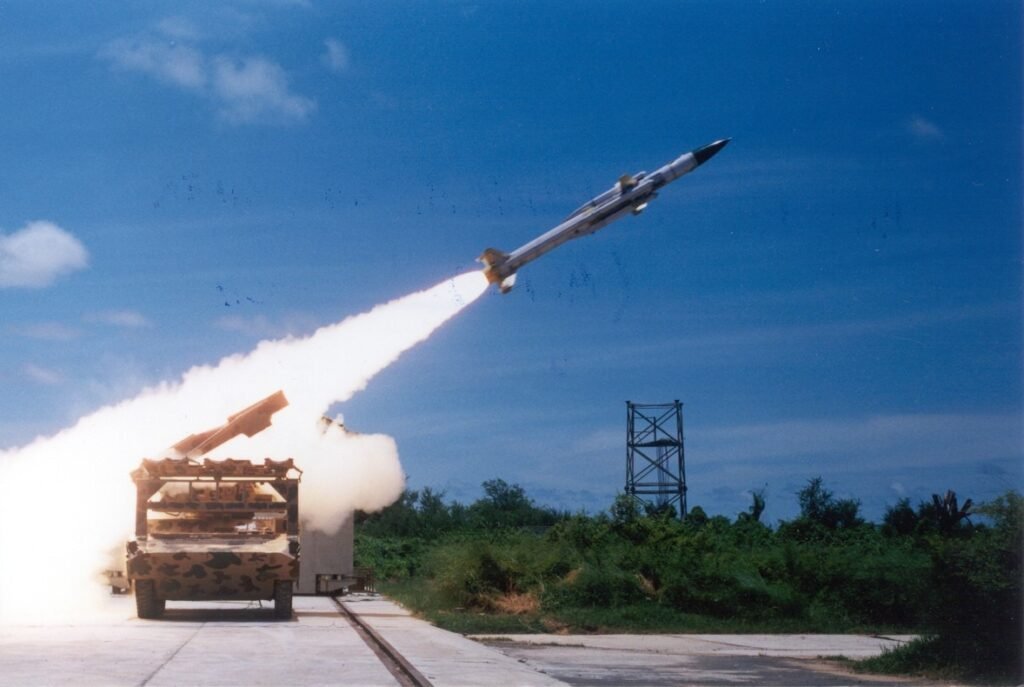
Highlights of Proposed DRDO Missile Testing Range in West Bengal
- Location: The proposed DRDO Missile Testing Range in West Bengal will be located at Junput, a coastal village in Purba Medinipur district.
- Junput lies on the Bay of Bengal, making it suitable for controlled weapon-flight testing over the sea.
- Junput is approximately 177 km from Kolkata, 40 km from Digha, and about 70 km from Chandipur in Odisha.
- Operational Area: The Junput facility is planned on approximately 8.73 acres of coastal land.
- This proposal was presented in 2024 by DRDO.
- Clearance: The proposed location was reported to have met required safety norms and received approval from the Ministry of Environment, Forest and Climate Change during the earlier project process.
- DRDO has stated that flight-testing procedures are designed to protect local residents, fishermen and farmers.
- Importance: The facility is intended to support trials of missiles and other weapon systems, strengthening the test-and-evaluation cycle.
- The facility will share the testing workload of the Chandipur range and conduct trials for short-range tactical missiles and advanced radar systems.
- Status: In September 2026, the West Bengal government approved DRDO’s proposal for the Junput weapon and missile testing range.
- Following the administrative clearance, the project moved into its ground-level execution phase.
What Are Missile Testing Range Facilities?
- About: A missile testing range is a specialised defence facility used to safely launch, monitor and evaluate missiles and other airborne weapon systems.
- It converts a missile’s flight into measurable technical data for designers and users.
- A range requires specialised launch complexes or launch pads from which missiles are fired under controlled conditions.
- These facilities support preparation, integration, countdown and launch operations.
- Current Facilities:
- The Integrated Test Range (ITR), Chandipur, located in the Balasore district of Odisha, serves as the premier test and evaluation (T&E) center under the Defence Research and Development Organisation (DRDO).
- ITR was institutionalized in 1983 under the aegis of the Integrated Guided Missile Development Programme (IGMDP) to achieve indigenous strategic deterrence.
- DRDO identifies ITR as a facility providing launch infrastructure for evaluating rockets, missiles and airborne weapon systems.
- Chandipur Beach is globally distinct because the sea recedes up to 5 kilometers during low tide; it allows for the physical recovery of debris post-test.
- It includes three missile launch pads at Chandipur and one launch complex at Abdul Kalam Island, off the Odisha coast.:
- Launch Complex-III (LC-III): Chandipur-on-Sea, Short-range tactical weapons, multi-barrel rocket systems, and surface-to-air platforms (e.g., Pinaka, Akash, VSHORADS).
- Launch Complex-IV (LC-IV): Dr. APJ Abdul Kalam Island (formerly Wheeler Island), Intermediate and intercontinental strategic delivery mechanisms (e.g., Agni Series, Prithvi, K-series submarine-launched missiles).
- The Pokhran Field Firing Range is a major military testing and live-fire artillery ground situated in the Thar Desert of the Jaisalmer district in Rajasthan.
- It is used extensively by the Indian Army and Indian Air Force for field exercises, artillery trials, and weapon testing.
- It served as the official site for India’s historic underground nuclear tests in 1974 and 1998.
- It is utilized for validating major indigenous defense equipment, such as successful firing trials of the Advanced Towed Artillery Gun System (ATAGS).
- DRDO conducted MPATGM warhead flight trials there in April 2024.
- India is also developing the Nava Durga/Navagurga Testing Range at Nagayalanka, Andhra Pradesh.
- Its foundation stone was laid in 2025, with an estimated project cost of about ₹1,460 crore.
- Its main purpose is to test Phase 2 Ballistic Missile Defence (BMD) interceptor missiles and other advanced weapons.
- It will be equipped with a modern launch center, domestic radars, telemetry tracking, and electro-optical systems.
- It accommodates a diverse portfolio including ballistic and cruise missiles, air-defence interceptors, surface-to-air missiles, and anti-tank systems.
- The Integrated Test Range (ITR), Chandipur, located in the Balasore district of Odisha, serves as the premier test and evaluation (T&E) center under the Defence Research and Development Organisation (DRDO).
Strategic Significance for India’s Defence Preparedness
- Expanding Testing Capacity: The principal strategic benefit of Junput is additional test capacity. When major ranges face heavy scheduling demand, another operational area can support faster trials and reduce bottlenecks.
- It will share the workload of the Odisha testing range.
- Faster Weapon Development: Missile development depends on repeated design–test–data–redesign cycles. Greater testing availability can shorten development timelines and help engineers identify technical problems before operational deployment.
- Strengthening Atmanirbhar Defence: DRDO develops technologies across missiles, sensors, electronics, propulsion and guidance systems.
- Additional testing infrastructure strengthens the complete indigenous development ecosystem and supports India’s defence self-reliance.
- Strategic Eastern Seaboard: West Bengal’s Bay of Bengal coastline provides access to a large sea area, which is valuable for controlled flight trajectories and impact zones.
- Junput is approximately 70 km from Chandipur, creating potential geographical complementarity between the two sites.
- This can strengthen the broader Odisha–West Bengal testing corridor on India’s eastern coast.
- Bay of Bengal Strategic Environment: The Bay of Bengal is increasingly important for India’s maritime security, eastern seaboard defence and Indo-Pacific strategy.
- A stronger testing network on this coast complements India’s wider maritime-security architecture.
- It will act as a vital trade gateway connecting India to Southeast Asia and neighboring landlocked countries.
- The West Bengal’s Eastern Coast aligns with major industrial freight pathways like the Amritsar-Kolkata Industrial Corridor.
Frequently Asked Questions (FAQs):
1. Where will the new DRDO Missile Testing Range be built in West Bengal?
The range will be built at Junput village in Purba Medinipur district, along West Bengal’s Bay of Bengal coast.
2. Why is DRDO setting up the Junput Missile Testing Range?
DRDO aims to expand testing capacity and reduce workload on the existing Integrated Test Range at Chandipur, Odisha.
3. What is the importance of the Junput Missile Testing Range?
It will strengthen India’s missile-testing infrastructure, accelerate weapons trials, and support indigenous defence technology development.
4. How will the West Bengal Defence Project strengthen India?
The project will enhance defence preparedness, testing capacity, indigenous R&D, and strategic infrastructure along India’s eastern coastline.
5. How far is Junput from the Chandipur Missile Testing Range?
Junput is approximately 70 km from Chandipur, allowing the two coastal facilities to complement each other operationally.
Disclaimer: Information in this article is based on official announcements and public records. Regulations and implementation details may evolve over time.
| Also Read: Shivpuri Missile Manufacturing Plant |