



Japan Pushes India on UNICORN Naval Radar Agreement, Geo-Tech Dimensions of India-Japan Co-Development
| General Studies Paper III: International Relations & Bilateral Alliances |
Why in News?
Recently, Japan urged India to expedite internal clearances for the UNICORN Naval Radar Agreement to enhance strategic cooperation and counter maritime threats in the Indo-Pacific region.
What is the UNICORN Naval Radar Agreement?
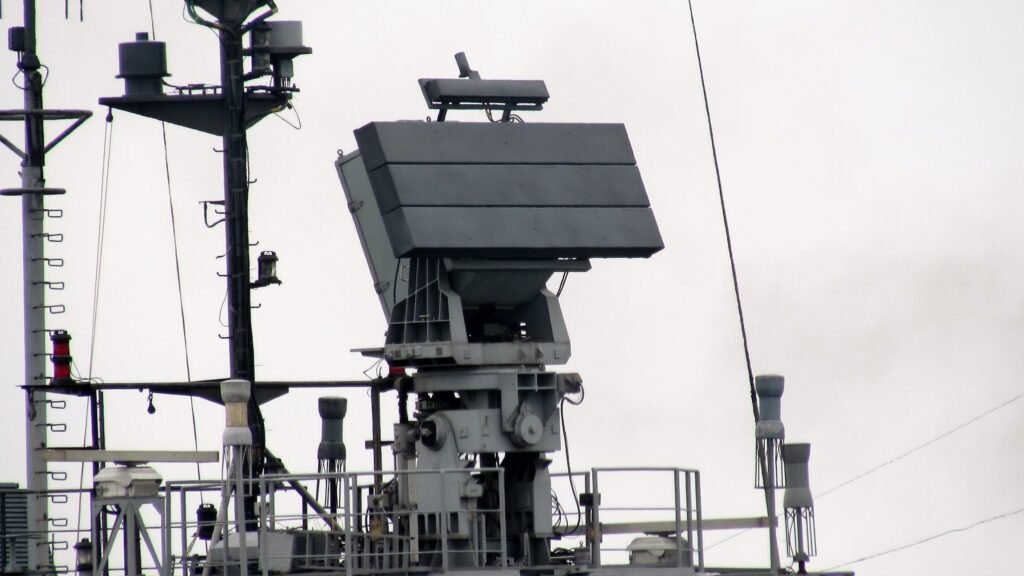
- About: The UNICORN Naval Radar Agreement is a landmark defense technology pact between India and Japan to co-develop and co-produce the UNICORN (Unified Complex Radio Antenna) integrated stealth mast system for Indian Navy warships.
- Framework: The technological transfer rests on the India–Japan Agreement concerning the Transfer of Defence Equipment and Technology, signed during the December 2015 summit and entering into force in March 2016.
- On 15 November 2024, India and Japan signed a Memorandum of Implementation (MOI) in Tokyo concerning the transfer/co-development of UNICORN masts for Indian Navy ships.
- It was signed by Sibi George, India’s Ambassador to Japan, and Ishikawa Takeshi, Commissioner of Japan’s Acquisition, Technology & Logistics Agency (ATLA).
- The formal agreement was officially signed in July 2026 during the 16th India-Japan Annual Summit in New Delhi.
- The historic pact was concluded between Indian Prime Minister Narendra Modi and his Japanese counterpart, Prime Minister Sanae Takaichi.
- On 15 November 2024, India and Japan signed a Memorandum of Implementation (MOI) in Tokyo concerning the transfer/co-development of UNICORN masts for Indian Navy ships.
- Terms:
- Japan agreed to transfer highly advanced design blueprints and primary engineering expertise to India.
- India is the second Asian country, after the Philippines, to receive advanced Japanese defense technology.
- India’s state-run Bharat Electronics Limited (BEL) will spearhead the local manufacturing and adaptation.
- BEL will absorb the technical know-how to integrate these futuristic masts directly into local supply chains.
- Both nations committed to accelerating domestic official processing and bureaucratic pathways.
- Japan agreed to transfer highly advanced design blueprints and primary engineering expertise to India.
- Development Goal: The primary objective of the UNICORN agreement is to dramatically minimize the Radar Cross-Section (RCS) of future Indian Navy surface combatants.
- It is expected to gradually replace the Indian Navy’s existing Advanced Composite Communication System (ACCS)-based external communication infrastructure.
- The goal is to enhance maritime security, bolster India’s “Make in India” defense self-reliance, and secure critical choke points.
What Is UNICORN?
- About: UNICORN stands for Unified Complex Radio Antenna. It is an advanced, shipborne integrated stealth mast system designed for modern naval warships.
- It is associated with Japan’s NORA-50 integrated communications-antenna system.
- Developed By: The system was developed in Japan with NEC Corporation as the main contractor, working with Sampa Kogyo and Yokohama Rubber.
- Origin: The system successfully deployed on the Japan Maritime Self-Defense Force’s (JMSDF) Mogami-class stealth frigates.
- Technology: The core technology relies on a futuristic, low-Radar Cross-Section (RCS) composite radome.
- Traditional warships often place several separate antennas at different locations on a mast. UNICORN instead integrates multiple antenna systems into one structure.
- Features:
- UNICORN has an integrated mast containing seven antennas, with communications and navigation-related functions incorporated into the system.
- A key feature is the protective radome, which encloses the antenna elements.
- Yokohama Rubber developed the radome technology with attention to radio-wave transparency, weather resistance and lightning protection.
- It incorporates heavy-duty fiber-reinforced plastic (FRP), and lightning diverter strips.
- It houses crucial operational electronics including Tactical Air Navigation (TACAN), Identification Friend or Foe (IFF), Link-16 data links, and high-precision Electronic Support Measures (ESM).
India–Japan Defence Cooperation
- Security Declaration (2008): Both nations established their foundational defense baseline by signing the Joint Declaration on Security Cooperation.
- This set the stage for regular military exchanges, official high-level staff talks, and initial anti-piracy operations.
- Tokyo Declaration & Framework (2014): Prime Minister Narendra Modi upgraded the bilateral equation to a Special Strategic and Global Partnership.
- They signed a Memorandum on Defence Cooperation and Exchanges to establish formal defense ministerial meetings.
- Technology Transfer Pacts (2015): The two sides executed critical agreements regarding the Transfer of Defence Equipment and Technology alongside strict security measures for protection of Classified Military Information.
- In July 2018, India’s DRDO and Japan’s ATLA began joint research on UGV/robotics visual localisation and GNSS augmentation technology.
- Institutional 2+2 Mechanism (2019): The alliance intensified with the debut of the 2+2 Foreign and Defence Ministerial Dialogue. This upgraded structure allowed top diplomatic and military chiefs to synchronize strategic visions directly.
- Logistics Agreement (2020): They signed the landmark Reciprocal Provision of Supplies and Services (RPSS) pact, which went fully operational by 2022.
- This allows both workforces mutual access to bases, fuel, and food during cross-regional drills.
- Joint Equipment Development (2024): Marking their first physical defense co-development project, both nations signed a Memorandum of Implementation to design and integrate UNICORN (Unified Complex Radio Antenna) naval masts onto Indian warships.
- Joint Declaration & Strategic Upgrades (2025): During the Annual Summit, an updated Joint Declaration on Security Cooperation was issued. This shifted priorities toward modern challenges, cyberspace defenses, and outer space observation programs.
- Economic Security & Technology Pacts (2026): Both countries formalized a specialized Joint Economic Security Roadmap. This initiative focuses heavily on hardware safety, semiconductor reliance, AI integration, and protecting critical raw minerals.
- Defense Ministers signed a monumental Memorandum of Arrangement on Maritime Security Cooperation. The pact expands intelligence sharing, naval vessel engineering, port repair access, and Maritime Domain Awareness (MDA).
- Veer Guardian Combat Exercise (2026): The military partnership achieved a significant milestone during the Veer Guardian 2026 air drill. For the first time, Japanese fighter aircraft landed in India to perform complex joint air maneuvers.
- Other Defence Exercises:
- Jimex (Navy): The Japan-India Maritime Exercise focuses on advanced anti-submarine warfare, weapon firings, and complex tactical maneuvers in the open ocean.
- Veer Guardian & Shinyuu Guardian (Air Force): Veer Guardian involves high-end aerial combat simulations between fighter jets, while Shinyuu Guardian focuses on tactical airlift operations and transport synchronization.
- Dharma Guardian (Army): This annual land-forces exercise alternates hosting environments to train troops in joint counter-terrorism tactics, urban warfare, and disaster relief operations.
- Malabar & Milan (Multilateral): Beyond bilateral drills, both navies actively participate together in the high-profile Malabar Exercise (alongside the US and Australia) and India’s large-scale Milan naval congregation.
Significance of India–Japan Defence Cooperation
- Countering Regional Hegemony: This alliance helps India counter unilateral actions and territorial assertiveness in the Indian Ocean and broader Indo-Pacific, securing critical sea lanes.
- Boosting Make in India: Joint projects, like the co-development of naval shipbuilding and radar antenna masts, infuse Japanese expertise into India’s domestic defense manufacturing.
- Strategic Logistics Support: The operationalized Reciprocal Provision of Supplies and Services (RPSS) agreement grants India access to Japanese bases and port repair facilities, expanding its strategic naval outreach.
- Advanced R&D Partnerships: Collaborative ties between India’s DRDO and Japan’s ATLA open doors for research in critical domains like unmanned systems and robotics.
- Securing Maritime Lifelines: Partnering with India secures Japan’s vital trade routes and Sea Lines of Communication (SLOCs) across the Indian Ocean, which are essential for its energy imports.
- Reviving Defense Industry: Collaborating with India allows Japan to step out of its historical export restrictions and breathe new life into its domestic defense industrial sector.
- Diversifying Security Alliances: While tightly anchored to the US, Japan’s defense handshake with India diversifies its strategic reliance and strengthens the overall Quad framework.
- Shared Intelligence Sharing: The Maritime Security Cooperation pact allows Japan to exchange real-time operational data, filling intelligence gaps between the East China Sea and the Indian Ocean.
- Aiding “Free and Open Indo-Pacific”: India’s massive naval presence directly complements Japan’s diplomatic vision of ensuring unhindered, lawful commerce across interconnected waters.
Frequently Asked Questions (FAQs):
1. What is the UNICORN naval radar system?
UNICORN is an integrated communications antenna mast, combining multiple antennas to improve naval stealth and reduce exposed equipment.
2. What is the India-Japan UNICORN radar agreement?
It is an India-Japan arrangement for transferring and co-developing UNICORN masts for Indian Navy warships, with BEL and Japanese collaboration.
4. How will UNICORN strengthen the Indian Navy?
It can enhance warship stealth by integrating antennas, while supporting advanced communications, electromagnetic management, survivability and modern naval platform design.
5. What technology does the UNICORN mast system use?
UNICORN integrates multiple antennas within an advanced stealth radome, using frequency-selective materials and carefully arranged antenna elements to minimise radio interference.
Disclaimer: Information in this article is based on official announcements and public records. Details may evolve over time.
| Also Read: 18th India-Japan Strategic Dialogue |