




IDBI Bank Disinvestment: Centre Approves 60.72% Stake Sale to Fairfax
| General Studies Paper III: Government Policies, Business |
Why in News?
Recently, the Union Cabinet approved a 60.72% stake sale in Industrial Development Bank of India (IDBI) Bank to Fairfax Financial Holdings, marking the largest foreign direct investment in India’s banking sector.
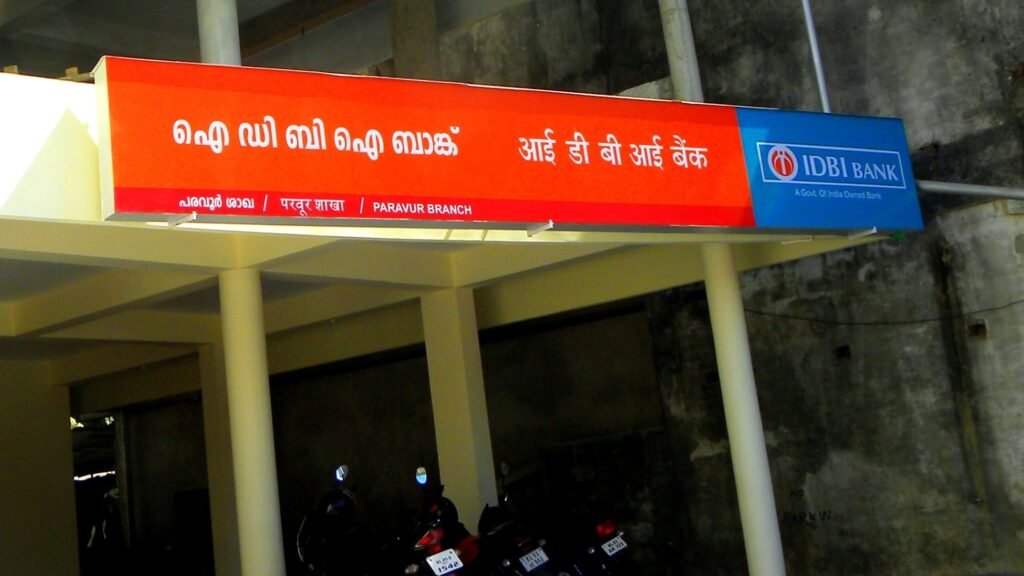
Highlights of IDBI Bank Disinvestment
- Approval: The Union Cabinet officially approved the strategic restructuring of IDBI Bank on October 14, 2026.
- The Cabinet Committee on Economic Affairs (CCEA) cleared the transaction. The transaction marks the largest foreign direct investment in India’s financial services sector.
- Buyer: The restructuring involves two final qualified bidders. Fairfax Financial Holdings outbid Dubai-based Emirates NBD.
- The approved purchaser is 10955230 Canada Inc., whose parent company is Fairfax Financial Holdings Ltd., led by Indian-born Canadian investor Prem Watsa.
- Divestment Methodologies: The transaction utilizes a competitive bidding process spanning five years.
- The fair value was determined using the Market Multiple Method and the Asset Valuation Method for its strategic restructuring and disinvestment.
- The first compared the bank with other public-sector banks; the second assessed tangible and intangible assets, including land and properties, against liabilities, using audited accounts as of 31 March 2026.
- Deal Structure: The buyer acquires a 60.72% controlling equity stake in IDBI Bank.
- The acquisition transfers complete management control to Fairfax. The total deal value stands at ₹52,878 crore.
- Valuation and Pricing: The winning bid price is fixed at ₹81 per share.
- This offer exceeds the independently determined fair valuation benchmark of ₹75.99 per share.
- It also marks a reset from an earlier rejected reserve price of ₹94.42.
- Stake Dissolution: The Governmentof India and the Life Insurance Corporation dissolve their combined majority.
- The Centre sells its 30.48% stake. LIC offloads its 30.24% holding simultaneously.
- Residual Shareholding: The government retains a 15% residual stake. LIC retains a 19% stake in the lender. Their combined holding drops to 34%. Both institutions will withdraw their nominees from the board.
- Further Action: Fairfax must merge CSB Bank with IDBI Bank within two years.
- The successful bidder will now submit its credentials for the RBI’s ‘Fit & Proper’ assessment.
- The government will sell its remaining 15% stake through the open market. Invested capital will remain locked in for three years.
About IDBI Bank
- IDBI Bank began in 1964 as a Development Financial Institution (DFI). It transitioned into a commercial entity in 2004.
- The Reserve Bank of India classified it as a private sector bank in 2019 after Life Insurance Corporation acquired a controlling stake.
- The bank operates a massive network of over 2,100 branches across the nation.
- The lender achieved financial turnaround after overcoming a severe bad-loan crisis that triggered RBI Prompt Corrective Action (PCA) in 2017.
- Its Gross NPA plummeted from a peak of 31.78% in 2018 to just 2.32% by March 2026.
- The bank reported a record net profit of ₹9,513 crore in FY26.
- Its Capital Adequacy Ratio (CRAR) stands strong at 26.65%, reflecting excellent risk cushion.
Government’s Rationale Behind IDBI Bank Fairfax Deal
- Reduce Dependence on Public Funds: IDBI Bank previously required repeated capital support because of its weak financial position.
- The Indian government had to inject over ₹25,000 crore of taxpayer capital into IDBI Bank between 2010 and 2020 to prevent total insolvency.
- The sale aims to reduce future dependence on taxpayer-supported recapitalisation.
- Fiscal Consolidation Targets: The Union Government aims to narrow its fiscal gap toward a target of 4.3 per cent of GDP.
- The realization of ₹52,878 crore provides a vital capital buffer to fund developmental infrastructure.
- Eliminating Asset Rescue Burden: The state aims to transfer the long-term financial burden of non-performing loans to private investors.
- The lender previously buckled under massive corporate defaults, forcing LIC to inject ₹21,624 crore in 2019.
- Privatisation ensures that future credit cycles will not risk state treasury resources.
- Maximising Unlocked Public Value: The government chose this specific timeline to capitalize on the financial turnaround of the institution.
- The bank successfully exited the RBI’s Prompt Corrective Action framework in 2021.
- Selling a stabilized asset allows the state to secure optimal valuation multiples over historical costs.
Impact of IDBI Bank Disinvestment
- Stronger Capital Mobilisation: Private ownership may improve IDBI Bank’s access to growth capital and reduce reliance on government support.
- Fairfax’s investment capacity could support business expansion.
- Technology and Operational Efficiency: The new strategic owner may introduce improved digital banking, customer-service systems, data analytics and operational processes.
- These changes could reduce service costs, improve turnaround times and expand access to banking services.
- Greater Competition: IDBI Bank could strengthen competition in retail lending, deposits, small-business finance and digital banking.
- Other lenders may respond through better products and customer service.
- Credit Growth and Financial Inclusion: Better management and stronger risk assessment could help the bank expand lending to MSMEs, households and productive enterprises.
- Such expansion should remain consistent with prudent lending standards so that higher credit growth does not create future non-performing assets (NPAs).
- Employment and Market Effects: Employees may face organisational restructuring, performance-linked targets or changes in work practices.
- The bank’s market valuation may also fluctuate as investors reassess its growth prospects and deal-related risks.
- Global Macroeconomic Shocks: The capital windfall helps protect the state’s budget from rising international energy costs.
- The proceeds allow the government to absorb severe crude oil price surges exceeding $100 per barrel.
- These funds provide immediate relief without inflating current deficit projections.
- Foreign Direct Investment: The deal infuses unprecedented global capital volumes into the domestic financial ecosystem.
- Securing the largest-ever cross-border banking acquisition signals a massive global appetite for the Indian banking prize.
Frequently Asked Questions (FAQs):
1. What stake has the Centre approved for sale?
The Cabinet approved the sale of a 60.72% stake in IDBI Bank to Fairfax’s subsidiary.
2. What is the total value of the stake sale?
The approved purchase consideration is ₹52,878.08 crore, with Fairfax bidding ₹81 per share.
3. Who is Fairfax, the proposed buyer?
Fairfax Financial Holdings is a Canada-based financial holding company led by Indian-born Canadian investor Prem Watsa.
4. Why is the government selling its stake?
The sale aims to attract private capital, improve management efficiency, reduce dependence on government support, and strengthen banking competitiveness.
5. What role does LIC play in IDBI Bank’s ownership?
LIC currently holds a significant stake and will sell 30.24%, retaining a 19% shareholding after the transaction.
6. How will the acquisition change IDBI Bank’s ownership?
Fairfax will acquire majority control; the Centre will retain 15% and LIC 19%, leaving them with a combined 34% stake.
Disclaimer: Information in this article is based on official announcements and public records. Details may evolve over time.