




Principal Purpose Test in India-Mauritius Treaty, Aiming to Prevent Tax Avoidance
| General Studies Paper II: International Treaties & Agreements |
Why in News?
Recently, the Central Government has notified amendments to the India-Mauritius Double Taxation Avoidance Agreement (DTAA), incorporating a Principal Purpose Test (PPT) to block treaty abuse and tax avoidance.
What is the Principal Purpose Test (PPT)?
- About: The Principal Purpose Test (PPT) is an anti-tax-avoidance rule that allows tax authorities to deny treaty benefits when obtaining those benefits was one of the principal purposes of an arrangement or transaction.
- The Organisation for Economic Co-operation and Development (OECD) established this rule under Article 7 of the Multilateral Instrument (MLI) to combat global revenue leakage.
- A tax authority applies this rule to deny Double Taxation Avoidance Agreement (DTAA) benefits when an entity structures a transaction primarily to secure a tax advantage.
- Features: The test integrates both subjective motivations and objective conditions to evaluate international corporate claims.
- This standard places the burden of proof heavily on the taxpayer, who must demonstrate genuine commercial substance rather than shell configurations.
- Objectives: Governments enforce the PPT to eliminate the practice of treaty shopping by multi-national corporations.
- The mechanism explicitly stops enterprises from artificially inserting conduit companies in low-tax jurisdictions solely to harvest reduced withholding tax rates.
- It protects national treasuries from base erosion while fostering legitimate cross-border trade, capital investments, and standard commercial operations.
- The PPT reflects the broader international movement against Base Erosion and Profit Shifting (BEPS) and treaty abuse. It strengthens the integrity of international taxation.
India–Mauritius Tax Treaty
- Agreement: The India–Mauritius Double Taxation Avoidance Agreement (DTAA) regulates cross-border taxation between the two nations.
- India and Mauritius concluded the Convention for the Avoidance of Double Taxation and the Prevention of Fiscal Evasion relating to income and capital gains on 24 August 1982 at Port Louis.
- The treaty became officially effective in India on April 1, 1983.
- The agreement aimed to reduce double taxation, facilitate investment and strengthen economic cooperation.
- Background: Following India’s economic liberalisation in the 1990s, Mauritius became a major route for foreign investment into India.
- Provisions: The 1982 agreement granted exclusive capital gains taxing rights to Mauritius. India could not tax capital gains arising from the sale of Indian corporate shares by a Mauritian resident.
- The treaty established rules for taxing specified categories of income, including business profits, dividends, interest, royalties and capital gains.
- It also provided mechanisms for cooperation between tax authorities, helping taxpayers avoid overlapping tax liabilities.
- Amendments:
- On 10 May 2016, India and Mauritius signed a protocol amending the treaty. It entered into force in India on 19 July 2016.
- The protocol shifted taxation of capital gains on shares acquired on or after 1 April 2017 in Indian-resident companies towards source-based taxation in India.
- Investments made before that date received grandfathering protection under the specified provisions.
- For qualifying share disposals during 1 April 2017–31 March 2019, the 2016 protocol allowed a transitional tax rate limited to 50% of India’s domestic rate, subject to the Limitation of Benefits (LOB) conditions.
- Full domestic-rate taxation applied from financial year 2019–20 onwards.
- Officials signed a new amending protocol on March 7, 2024, in Port Louis.
- It revised the treaty preamble to address tax avoidance and treaty shopping and inserted Article 27B, establishing the PPT-based entitlement rule.
- Article 27B contains an exception: treaty benefits should not be denied if granting them would be consistent with the object and purpose of the relevant treaty provisions.
- This agreement incorporates the Base Erosion and Profit Shifting (BEPS) minimum anti-abuse standards.
- The protocol entered into force on 10 August 2026, following completion of the required procedures by both countries.
- India’s notification, S.O. 5611(E), dated 13 October 2026, formally notified its implementation under section 159(1) of the Income-tax Act, 2025.
- It revised the treaty preamble to address tax avoidance and treaty shopping and inserted Article 27B, establishing the PPT-based entitlement rule.
- On 10 May 2016, India and Mauritius signed a protocol amending the treaty. It entered into force in India on 19 July 2016.
Implications
- Denial of Treaty Benefits: The PPT gives Indian authorities the legal power to deny treaty benefits like lower withholding taxes on dividends and interest.
- Tax officials can look beyond the simple possession of a Tax Residency Certificate (TRC). They can evaluate the commercial substance of an entity.
- Curbing Tax Avoidance: The amendment explicitly addresses non-taxation or reduced taxation through Base Erosion and Profit Shifting (BEPS) methods. It forces special-purpose vehicles (SPVs) to maintain a genuine economic footprint in Mauritius.
- Impacted Entities: Greater scrutiny will apply to Mauritius-based Foreign Portfolio Investors (FPIs), Private Equity (PE) and Venture Capital funds, holding companies, and Special Purpose Vehicles (SPVs).
- Investor Certainty Concerns: The subjective nature of the test has lowered investor certainty across financial markets. Private equity firms and foreign portfolio investors face heightened administrative scrutiny and litigation risks.
- Impact on FDI: The amendment reshapes Foreign Direct Investment (FDI) inflows entering India via Port Louis.
- Investors must now build comprehensive economic justification and incur extra compliance costs to sustain their structures.
- Official bilateral report cumulative FDI equity inflows of approximately US$180 billion between April 2000 and March 2025, representing around 25% of India’s total FDI equity inflows over that period.
- Capital Gains Taxation: The framework preserves the grandfathering protection for corporate shares acquired before April 1, 2017.
- However, tax experts still worry about how authorities will apply the PPT to post-2017 transactions. Capital gains on recent exits face strict scrutiny to verify their commercial rationale.
- This protocol updates bilateral India-Mauritius economic relations to match current global transparency standards.
India–Mauritius Relations
- Location: Mauritius is an island country in the southwestern Indian Ocean, east of Madagascar. Its maritime location connects Africa, South Asia and wider Indian Ocean trade routes.
- Historical Ties: Historical connections between the nations date back to 1730.
- The arrival of indentured Indian laborers, known as Girmitiyas, at Aapravasi Ghat beginning in 1834 shaped the island’s demographics.
- India established its diplomatic mission in Port Louis in 1948, decades before Mauritius gained official independence in 1968.
- Political Relationship: Both democracies sustain an Enhanced Strategic Partnership featuring regular high-level exchanges.
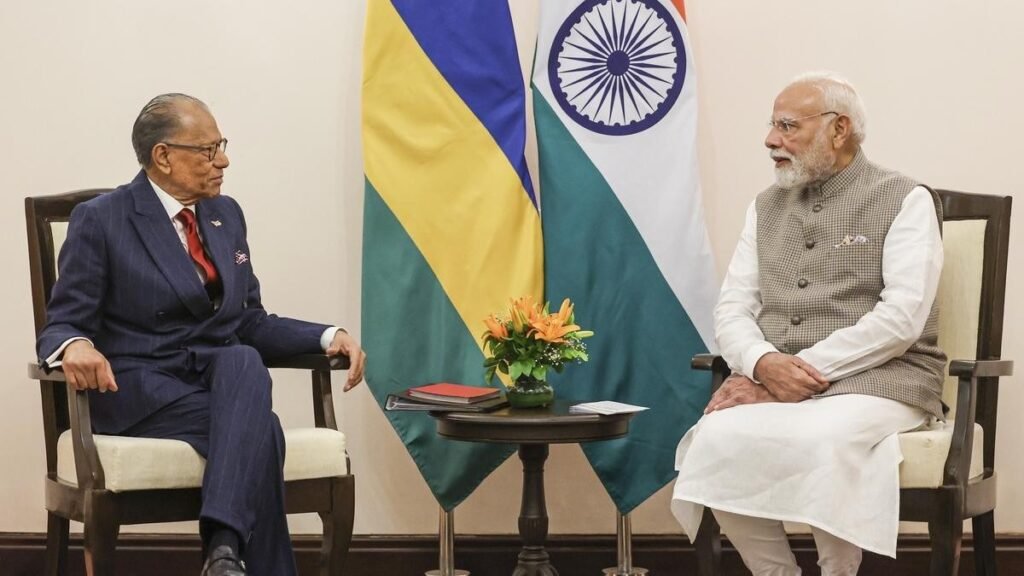
- In March 2025, Prime Ministers Narendra Modi and Navinchandra Ramgoolam agreed to elevate bilateral relations.
- India explicitly respects Mauritian territorial sovereignty, notably supporting the landmark Chagos Archipelago agreement.
- Trade Relations::Bilateral commerce operates under the Comprehensive Economic Cooperation and Partnership Agreement (CECPA), which represents India’s first trade pact with an African country.
- It was signed on 22 February 2021 and entered into force on 1 April 2021.
- India ranks as a primary import source for Mauritius, exporting essential commodities like petroleum products, pharmaceuticals, and textiles.
- Investment Ties: Mauritius historically stands as a top foreign direct investment (FDI) provider to India, contributing a cumulative $180 billion over the past quarter-century.
- Development Partnership: India drives extensive infrastructure through its Special Economic Package and concessional Lines of Credit.
- Key collaborative projects include the island’s Metro Express, a new Parliament building, and specialized Jan Aushadhi Kendras for affordable medicine.
- Cultural Bonds: People of Indian origin make up approximately 70% of the total Mauritian population.
- The nations co-fund institutional pillars such as the Mahatma Gandhi Institute and the World Hindi Secretariat to protect shared linguistic heritage.
- Over 26,000Indian nationals reside on the island alongside numerous Overseas Citizenship of India (OCI) cardholders.
- The Mauritian government notably permits visa-free entry for Indian citizens to cultivate direct grassroots links.
- Strategic Significance: Mauritius remains the bedrock of India’s Neighbourhood First policy and its maritime security framework, Vision SAGAR.
- This partnership supports India’s wider engagement with the Global South and Indian Ocean region.
- Joint military initiatives, such as the Agalega island facilities and coastal radar networks, protect regional maritime interests.
- The two countries cooperate on maritime surveillance, hydrographic surveys, training and protection of Mauritius’s Exclusive Economic Zone (EEZ).
- Challenges: Aggressive Chinese infrastructure investments present a direct geopolitical challenge to India’s traditional regional influence.
- Stricter bilateral taxation rules have reduced traditional offshore fund flows, while transnational drug trafficking threatens local maritime security.
- Way Forward: Both nations must optimize the CECPA framework to diversify trade beyond traditional sectors.
- Transitioning toward local currency settlements, expanding joint space technology missions, and building renewable energy infrastructure will successfully future-proof this vital ocean partnership.
Frequently Asked Questions (FAQs):
1. What is the Principal Purpose Test (PPT) in the India–Mauritius tax treaty?
The PPT allows tax authorities to deny treaty benefits when obtaining them was one of an arrangement’s principal purposes, subject to treaty safeguards.
2. Why has the Centre introduced the Principal Purpose Test?
The Centre aims to prevent treaty shopping, curb tax avoidance, protect India’s tax revenue and ensure treaty benefits serve legitimate purposes.
3. How will the Principal Purpose Test help curb tax avoidance?
It enables authorities to examine transaction purposes and relevant circumstances, denying benefits to abusive arrangements unless granting them aligns with treaty provisions’ objectives.
4. What is the India–Mauritius Double Taxation Avoidance Agreement (DTAA)?
The DTAA is a bilateral tax treaty designed to prevent double taxation, facilitate investment and establish rules for taxing specified cross-border income.
Disclaimer: Information in this article is based on official announcements and public records. Details may evolve over time.
| Also Read: India-Mauritius Relations |