




Cabinet Approves 78 Days’ Productivity Linked Bonus, Benefiting 11.4 Lakh+ Railways Employees
| General Studies Paper III: Government Policies, Mobilization of Resources |
Why in News?
Recently, the Union Cabinet approved a ₹2,009.61 crore Productivity Linked Bonus (PLB), granting 78 days’ wages to over 1.14 million non-gazetted railway employees.
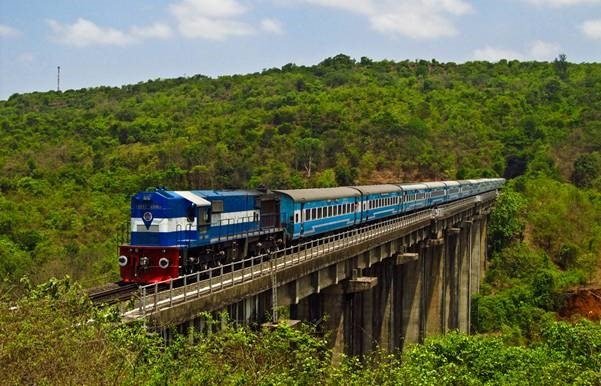
Cabinet Approval Productivity Linked Bonus for Railway Employees
- Approval: The Union Cabinet, chaired by Prime Minister Narendra Modi, approved the Productivity Linked Bonus (PLB) for eligible railway employees on 14 October 2026.
- Financial Outlay: The government approved ₹2,009.61 crore for the bonus.
- The approved bonus equals 78 days’ wages, with a maximum payment of ₹17,951 per eligible employee.
- Beneficiaries: Approximately 11.41 lakh employees, precisely 11,40,770 railway employees, will benefit.
- The payment covers eligible non-gazetted railway personnel across operational, technical, supervisory and ministerial categories.
- Beneficiaries include track maintainers, locomotive pilots, train managers, station masters, supervisors, technicians, technician helpers, pointsmen, ministerial staff and other eligible Group C employees.
- Rationale: The government linked its decision to Indian Railways’ strong performance during FY 2025–26, when it transported a record 1,670 million tonnes of freight and carried nearly 7.41 billion passengers.
- The decision illustrates performance-linked incentives in public-sector employment.
What is Productivity Linked Bonus (PLB)?
- About: Productivity Linked Bonus (PLB) is a performance-based financial incentive paid by the government to employees. It is strictly tied to the operational output and physical performance of specific departments like Indian Railways and India Post.
- Objective: The primary aim is to incentivize workforce efficiency and optimize public sector operational performance.
- It explicitly links financial rewards to departmental achievements to motivate staff members to reduce waste and boost infrastructure delivery.
- Origin: The scheme originated in the financial year 1979–80. It emerged from an agreement between the Ministry of Railways and major recognized unions to replace the traditional concept outlined in The Payment of Bonus Act, 1965.
- Authority: The Union Cabinet, chaired by the Prime Minister, acts as the final approving body.
- It handles annual sanctions based on recommendations from the respective ministries and the Ministry of Finance.
- Eligibility Criteria: PLB targets eligible non-gazetted employees, predominantly encompassing Group C and Group B personnel.
- Certain wings, such as the Railway Protection Force (RPF), are excluded from PLB and receive an ad-hoc alternative instead.
- Calculation Method: Payouts are calculated via a formal formula: (Monthly Wage Calculation Ceiling × Number of Days) ÷ 30.4.
- The central government currently enforces a strict monthly wage ceiling of ₹7,000 for computation purposes, capping a standard 78-day bonus at ₹17,951 per individual.
- Payment Mechanism: Disbursements occur through the standard electronic salary mode on a high-priority basis.
- The payout traditionally hits employee accounts before the major autumn festive season, specifically ahead of Durga Puja and Dussehra holidays.
- Significance: The bonus increases disposable income and may support festive consumption, household expenditure and local demand.
- It also recognises employees’ contributions to a public transport system essential for passenger mobility and freight movement.
- It drives heightened workplace responsibility. Employees are actively driven to hit corporate benchmarks, which directly enhances the overall national logistics infrastructure.
Indian Railways’ Operational Performance and Achievements in FY 2025–26
- Record Freight Loading: Indian Railways transported 1,670 million tonnes of freight, registering 3.25% growth over FY 2024–25. This strengthens railways’ role in India’s logistics and supply-chain network.
- Passenger Transportation: The network carried approximately 741 crore passengers, compared with 716 crore in the previous financial year. Passenger traffic increased by 3.54%, reflecting continued demand for rail-based mobility.
- Passenger Revenue Growth: Passenger revenue reached approximately ₹80,000 crore, up 5.96% from ₹75,500 crore in FY 2024–25. This indicates improved passenger earnings.
- Freight Wagon Handling: The number of wagons handled increased by 4.56%, from 2,79,12,271 to 2,91,86,475. Greater wagon handling supports freight throughput and reflects demand for railway transportation.
- Fertiliser Transportation: Fertiliser transportation increased by 13.49%. Rail-based movement of fertilisers supports agricultural supply chains by connecting production centres with distribution networks and farming regions.
- Pig Iron and Steel Movement: Transportation of pig iron and finished steel grew by 13.11%. This reflects the importance of railways in serving industrial demand and moving essential manufacturing inputs and outputs.
- Iron Ore and Cement: Iron ore transportation rose by 6.74% to 190.12 million tonnes, while cement loading increased by 4.74% to 157.17 million tonnes.
- Freight Earnings: Freight earnings reached approximately ₹1,77,754 crore, compared with ₹1,75,302 crore previously—a 1.44% increase. Iron ore was the largest listed commodity revenue contributor, generating ₹14,600.51 crore.
- Regional Performance: South Western Railway recorded the highest freight-loading growth at 14.89%, followed by North Central Railway at 12.62%, East Coast Railway at 10.42% and West Central Railway at 10.06%.
- Advanced High-Speed Infrastructure: The network achieved a critical milestone by upgrading over 23,000 track kilometers to support maximum speeds of 130 kmph.
- Manufacturing reached a high gear with the production of over 4,224 safety-focused LHB coaches and 1,914 indigenous locomotives.
- The fleet grew with 164 active Vande Bharat services and 72 Amrit Bharat trains. A record-breaking 35,000 seasonal special trains ran during peak travel times to seamlessly manage immense rush.
Frequently Asked Questions (FAQs):
1. How many days of Productivity Linked Bonus have been approved?
The Union Cabinet approved a bonus equivalent to 78 days’ wages for eligible railway employees.
2. How many railway employees will benefit from the 78-day bonus?
A total of 11,40,770 railway employees will benefit, with a total financial outlay of ₹2,009.61 crore.
3. What is the Productivity Linked Bonus (PLB) for railway employees?
PLB is an annual financial incentive recognising railway employees’ contributions and encouraging improved operational performance.
4. Why has the Union Cabinet approved the railway bonus?
The bonus recognises employees’ performance, including record freight loading of 1,670 million tonnes and transportation of nearly 7.41 billion passengers in FY 2025–26.
5. Which categories of railway employees are eligible for the PLB?
Eligible non-gazetted staff include track maintainers, loco pilots, train managers, station masters, supervisors, technicians, pointsmen, ministerial staff and other Group C employees.
Disclaimer: Information in this article is based on official announcements and public records. Details may evolve over time.
| Also Read: Indian Railways Nears 100% Electrification |