




Go-Delhi Foundation Approval, ₹50 Crore Allocation To Support Startups-Innovators
| General Studies Paper II: Governance, Welfare Schemes |
Why in News?
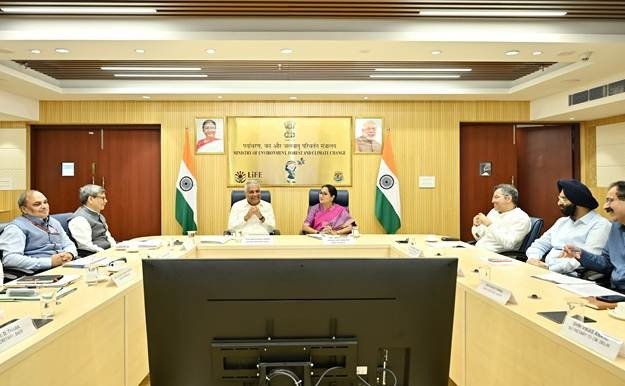
Recently, the Delhi Cabinet approved the Go-Delhi Foundation with a ₹50 crore corpus to empower young innovators and accelerate commercializing ideas.
What is the Go-Delhi Foundation?
- About: The Go-Delhi Foundation is a proposed not-for-profit institutional platform of the Delhi Government designed to strengthen startups, innovation and entrepreneurship by helping innovators convert research and ideas into commercially viable products and enterprises.
- Objective: Its primary objective is to bridge the gap between innovation and commercialisation.
- It aims to improve access to technical facilities, expert guidance, incubation, investors and markets.
- Approval: The Delhi Cabinet, chaired by Chief Minister Rekha Gupta, approved the Foundation on 18 October 2026.
- It followed the enactment of the comprehensive Delhi Start-up and Incubation Policy.
- Institutional Framework: The Foundation is planned as a not-for-profit company under Section 8 of the Companies Act, 2013, functioning under the Delhi Government’s Department of Industries.
- Profits must fund the mission, and members cannot receive dividends.
- Funding: The government has announced an initial ₹50-crore budget outlay.
- Need: Delhi has approximately 21,000 startups recognised by the Department for Promotion of Industry and Internal Trade (DPIIT).
- Despite this entrepreneurial base, innovators can face fragmented access to laboratories, product testing, prototyping, certification guidance, mentorship and investment.
- Targeted Community: The principal beneficiaries are young innovators, researchers, aspiring entrepreneurs, startups and micro, small and medium enterprises (MSMEs).
- Educational institutions, industry partners and government departments may also benefit through collaboration, technology transfer and access to practical innovations.
- Functions: It will act as a centralized platform to support startups, small businesses, and micro, small, and medium enterprises (MSMEs) in the national capital region.
- Technical Guidance and Prototyping: The foundation will facilitate hassle-free accessibility to high-end product engineering, advanced laboratories, and testing centers, drastically minimizing infrastructure barriers for early-stage development.
- Real-World Problem Solving: Government departments will pitch live structural or civic challenges directly to local innovators. Startups can build specific technologies to address these issues and test them via state-backed pilot programs.
- Hub-and-Spoke Networking Matrix: Rather than constructing redundant facilities, the entity will utilize a hub-and-spoke operational model to connect existing infrastructure in state universities, industry hubs, and corporate setups.
- Commercialization Pathways: It will assist young firms with crucial market entry, certification preparation, and mentorship, allowing rapid transition from conceptual design to scalable commercial enterprises.
Significance
- Economic Development & Infrastructure: The proposed hub-and-spoke model will unify over 21,000 startups.
- It will offer testing labs, product prototyping, and investor matchmaking.
- These setups will convert academic research into commercial products, creating high-skill jobs.
- This strategy aligns with the broader state blueprint to cultivate over 10,000 startups and create 4 lakh jobs.
- Tackling Delhi Pollution: The platform will invite green innovators to pitch solutions for road dust, construction waste, and industrial emissions. Startups can design localized clean-air technologies.
- Urban Mobility & Sustainable Transport: The foundation will support entrepreneurs who build components for electric vehicles (EVs). This technology pipeline will accelerate the adoption of clean, battery-operated public transit.
- It will function as a specialized incubator where engineering firms can build and test smart driverless systems.
- Good Governance: The entity will bridge the gap between administrators and innovators.
- Government departments will present real-world municipal problems to startups. The administration can pilot successful models before city-wide deployment.
- The framework will lower structural entry barriers for early-stage student innovators and independent researchers.
- Complementing Ongoing Initiatives: The proposal directly strengthens ongoing government programs:
- It will complement the Master Plan for Delhi 2047 by fostering human capital and technology-driven infrastructure.
- It will align with the Delhi EV Policy by incubating indigenous smart mobility solutions.
- It will assist the World Bank-supported 7-year Air Pollution Mitigation Plan through low-cost emission monitoring technologies.
Union Government Initiatives for Institutional Support
- Atal Innovation Mission (AIM): NITI Aayog launched the Atal Innovation Mission in 2016 to promote innovation and entrepreneurship nationwide.
- Its key components include Atal Tinkering Labs (ATLs) in schools, Atal Incubation Centres (AICs) for startups and the Atal New India Challenge for technology-based solutions to national problems.
- Startup India: Launched on 16 January 2016, Startup India is a flagship initiative of the Department for Promotion of Industry and Internal Trade (DPIIT), Ministry of Commerce and Industry.
- It promotes entrepreneurship through startup recognition, intellectual property support, improved compliance processes and access to government procurement opportunities.
- Eligible recognised startups may also qualify for specified tax benefits, subject to statutory conditions.
- It offers early-stage ventures critical fiscal support through the Startup India Seed Fund Scheme (SISFS) and the Fund of Funds for Startups (FFS).
- NIDHI–PRAYAS: The National Initiative for Developing and Harnessing Innovations (NIDHI) is implemented by the Department of Science and Technology (DST).
- Its PRAYAS programme supports innovators in converting ideas into working prototypes through funding, fabrication facilities, technical guidance and mentorship.
- Under NIDHI–PRAYAS 2.0, the official programme describes support of up to ₹20 lakh through PRAYAS Centres and up to ₹40 lakh through Advance PRAYAS Centres, subject to programme conditions.
- Technology Incubation and Development of Entrepreneurs (TIDE 2.0): The Ministry of Electronics and Information Technology (MeitY) designed TIDE 2.0 to promote technology entrepreneurship through financial and technical support to incubators and technology startups.
- Its focus includes emerging technologies such as artificial intelligence, Internet of Things, robotics and blockchain, particularly where they address societal challenges.
- The original scheme envisaged implementation through 51 incubators and support for approximately 2,000 technology startups over five years.
- Accelerating Growth of New India’s Innovations (AGNIi): Operating under the Office of the Principal Scientific Adviser, AGNIi is a national technology commercialization initiative aligned with the Prime Minister’s Science, Technology, and Innovation Advisory Council (PM-STIAC).
- It acts as a crucial ecosystem facilitator that connects laboratory research, grassroots innovations, and indigenous technologies to market realities and enterprise buyers.
Frequently Asked Questions (FAQs):
1. What is the Go-Delhi Foundation?
The Go-Delhi Foundation is a proposed not-for-profit company under Section 8 of the Companies Act, 2013, supporting startups and innovation in Delhi.
2. Why has the Delhi Cabinet approved ₹50 crore for the foundation?
The ₹50-crore initial allocation aims to strengthen entrepreneurship, develop market-ready products, attract investment and generate employment.
3. What is the primary objective of the Go-Delhi Foundation?
Its primary objective is to help young innovators, researchers and entrepreneurs transform ideas into practical products and commercially viable enterprises.
4. How will the foundation support startups and entrepreneurs?
It will facilitate prototyping, laboratory testing, technical guidance, mentorship, incubation, certification preparation, investor connections and market access.
5. Will the Go-Delhi Foundation provide financial assistance to startups?
A ₹50-crore corpus has been approved, but specific direct grants, eligibility criteria and startup-wise financial assistance have not been confirmed in available reports.
Disclaimer: Information in this article is based on official announcements and public records. Details may evolve over time.