



India Extends ₹30 Billion Currency Swap to Maldives, Boosting Economic Resilience
| General Studies Paper II: India and its Neighbourhood Relations |
Why in News?
Recently, India approved rolling over a ₹30 billion currency swap for the Maldives under the SAARC Framework, stabilizing Male’s critical foreign exchange reserves.
What is India–Maldives Currency Swap Agreement?
- About: The India–Maldives Currency Swap Agreement is a bilateral financial pact signed between the Reserve Bank of India (RBI) and the Maldives Monetary Authority (MMA).
- It provides the Maldives short-term liquidity to tackle critical foreign exchange reserve shortages and balance-of-payments stress.
- The facility originated in the bilateral currency swap agreement signed in October 2024.
- A currency swap is a financial arrangement between two parties to exchange currencies under agreed conditions and reverse the transaction according to specified terms.
- Framework: The agreement operates under the broader SAARC Currency Swap Framework, updated for the 2024–2027 cycle.
- The RBI effective from 19 June 2024 to 18 June 2027. It provides two principal windows:
- Indian rupee window: A total corpus of ₹250 billion, incorporating concessions intended to encourage rupee-denominated swap support.
- US dollar/euro window: An overall corpus of US$2 billion.
- Combined access: In exceptional cases, simultaneous access to both windows is permitted, subject to aggregate disbursements not exceeding US$3 billion or its equivalent at any point.
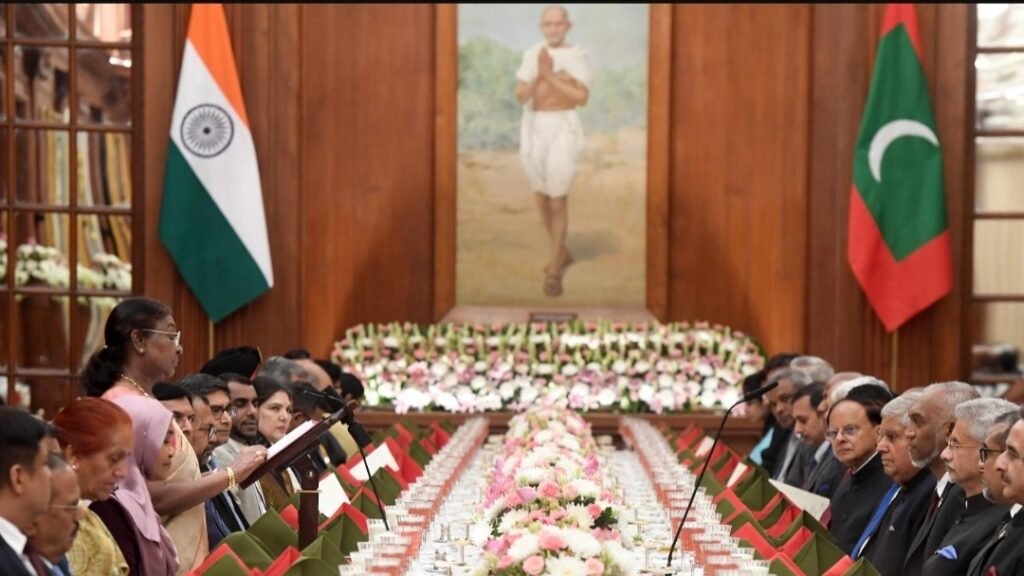
- Formally inked in New Delhi during President Mohamed Muizzu’s state visit, the bilateral contract remains highly active and valid until June 18, 2027.
- Financial Scale: The arrangement provides a combined financial backstop totaling 750 million US dollars.
- This mechanism is split across two distinct lines: a 400 million US dollar window (available in USD or Euros) and an Indian Rupee (INR) window valued at 30 billion rupees.
- On 23 April 2026, India approved the first withdrawal of ₹30 billion under the rupee swap window. On 16 October 2026, India approved the rollover.
- Significance: It features heavily subsidized interest rates and flexible conditions, shielding the small island nation from aggressive, high-cost market borrowing during regional instabilities.
- India’s economic support is deeply entrenched, providing over 1.1 billion dollars in cumulative swap assistance since 2012.
- Beyond swaps, India holds 350 million dollars in Maldivian Treasury Bonds and previously financed interest totaling 42.8 million dollars on settled short-term treasury bills.
- Access to liquidity can help reduce immediate disruption to payments, although the swap does not directly guarantee the supply of commodities or eliminate import costs.
- Financial support to the Maldives reflects India’s approach of maintaining stable, cooperative relations with neighbouring countries. It reinforces India’s role as a development and financial partner in South Asia.
- This economic safety net acts as a core pillar of India’s Neighbourhood First Policy and its holistic MAHASAGAR vision.
- It solidifies a newly upgraded Comprehensive Economic and Maritime Security Partnership, stabilizing the critical Indian Ocean region.
- The 2024 bilateral vision for a Comprehensive Economic and Maritime Security Partnership connects financial cooperation with broader development and security engagement.
- India’s economic support is deeply entrenched, providing over 1.1 billion dollars in cumulative swap assistance since 2012.
Challenges and Way Forward
- Challenges:
- The Maldives faces fiscal and external financing pressures associated with public expenditure, infrastructure commitments and debt servicing.
- Tourism is a major source of Maldivian foreign exchange earnings, employment and government revenue.
- A downturn caused by global recession, geopolitical tensions, health emergencies or weaker visitor demand can reduce foreign exchange inflows and strain the balance of payments.
- The Maldives imports many essential goods, making its economy vulnerable to international shipping disruptions and exchange-rate pressures.
- Repeated emergency assistance, if detached from credible adjustment policies, may weaken incentives for fiscal discipline.
- Way Forward:
- India and the Maldives should maintain transparent implementation, clear repayment schedules and regular communication.
- The Maldives should complement temporary financial support with prudent public expenditure, and stronger domestic revenue mobilisation.
- India and the Maldives can strengthen trade facilitation, banking links and cross-border payment infrastructure.
- The launch of the Favara–UPI integration in July 2026 provides a complementary development in digital financial connectivity.
- India should combine financial cooperation with sustained diplomatic engagement, development assistance and maritime collaboration.
Frequently Asked Questions (FAQs):
1. Why has India extended the facility?
India extended the facility to ease the Maldives’ foreign-exchange pressures, maintain economic stability, and strengthen bilateral relations under its Neighbourhood First policy.
2. What is a currency swap agreement?
It is a repayable financial arrangement allowing central banks to exchange currencies under agreed terms, providing temporary liquidity for foreign-exchange needs.
3. How much financial support has India approved?
India approved a ₹30 billion (₹3,000 crore) rupee swap facility, alongside a separate US$400 million dollar/euro facility under the 2024 agreement.
4. How will the facility help the Maldivian economy?
It can strengthen foreign-exchange liquidity, support eligible payments, ease short-term balance-of-payments pressures, and help maintain confidence in economic stability.
5. What role does the RBI play?
The Reserve Bank of India (RBI) signed the agreement with the Maldives Monetary Authority and administers swap support under the SAARC framework.
6. How does it support India’s Neighbourhood First policy?
It reinforces India’s role as a reliable regional partner by supporting neighbouring countries’ financial stability and deepening strategic and economic cooperation.
Disclaimer: Information in this article is based on official announcements and public records. Details may evolve over time.
| Also Read: India Approves SAARC Swap for Maldives |