


Parliament Winter Session 2026: Prorogation, Key Bills & Constitutional Rules
| General Studies Paper II: Governance & Parliamentary Accountability |
Why in News?
According to some media reports, amidst unprorogued Monsoon Session, the government plans convening Parliament’s Winter Session 2026 before December 15, prioritizing some crucial Bills to introduce.
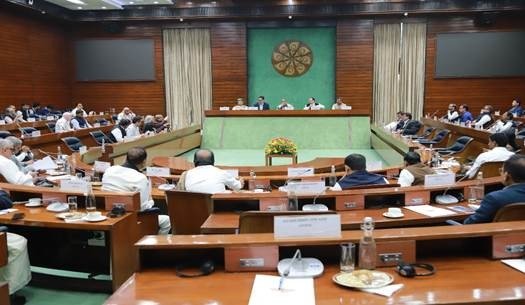
Parliament Winter Session 2026
- Dates: The Parliament Winter Session 2026 faces unprecedented uncertainty.
- As of now no official calendar is notified by the Cabinet Committee on Parliamentary Affairs.
- According to some media reports the government is planning a tentative window in the first or second week of December (potentially concluding before December 15).
- This year, a full-fledged session may be skipped or replaced by a brief 2-to-3-day extended sitting.
- Summoning a fresh session requires 14 days’ notice, making a condensed sitting increasingly probable.
- Delayed Prorogation: Following the conclusion of the Monsoon Session 2026 (July 20 to August 13, 2026), both Houses were adjourned sine die on August 13.
- The President has not yet issued a formal prorogation (formal termination of a parliamentary session) order under Article 85(2)(a).
- As of late November 2026, the session has remained unprorogued for over 100 days.
- It marks the longest unprorogued gap in Indian parliamentary history compared to the typical 2-to-4-day turnaround.
- Notable unprorogued intervals occurred between 1963 and 1987 (41–76 days), in 2008 (87 days).
- India has skipped the Winter Session only four times—in 1975 (Emergency), 1979 (dissolution), 1984 (Indira Gandhi’s assassination), and 2020 (COVID-19 pandemic).
- Key Bills:
- The government’s major anticipated legislative priority is the implementation of 33% reservation for women in the Lok Sabha and State Legislative Assemblies.
- The 106th Constitutional Amendment Act, 2023 (Nari Shakti Vandan Adhiniyam) provides reservation of approximately one-third of seats for women, including seats reserved for SCs and STs.
- Its implementation is linked to a future census and subsequent delimitation exercise. The government has sought changes to accelerate this process.
- In the upcoming winter session the government may push to reintroduce and pass the Constitution (131st Amendment) Bill, 2026 alongside the Delimitation Bill, 2026.
- Constitution (131st Amendment) Bill, 2026 was introduced in Lok Sabha on 16 April 2026, this Bill proposed significant changes to the constitutional framework governing delimitation.
- It sought to remove the existing population-based seat freeze, empower Parliament to determine the census used for delimitation and facilitate the implementation of women’s reservation.
- It also proposed increasing the maximum Lok Sabha strength from 550 to 850 members, including up to 815 representatives from States and 35 from Union Territories.
- It failed to secure the constitutionally required special majority under Article 368. Consequently, the government could not proceed with the two dependent Bills.
- The proposed Delimitation Bill, 2026 sought to establish a Delimitation Commission responsible for redrawing parliamentary and assembly constituencies.
- Its proposed composition included a serving or former Supreme Court judge as Chairperson, an Election Commissioner and the concerned State Election Commissioner.
- The Bill provided for using the latest published census figures available when the Commission was constituted, potentially making the 2011 Census relevant under the proposed framework.
- Constitution (131st Amendment) Bill, 2026 was introduced in Lok Sabha on 16 April 2026, this Bill proposed significant changes to the constitutional framework governing delimitation.
- Pending Joint Parliamentary Committee reports on the Viksit Bharat Shiksha Adhishthan Bill and FCRA Amendment Bill, 2026 remain on consideration.
- The government’s major anticipated legislative priority is the implementation of 33% reservation for women in the Lok Sabha and State Legislative Assemblies.
What are Parliamentary Sessions?
- About: Parliamentary sessions represent the formal time intervals between a House’s initial assembly upon Presidential summons and its eventual prorogation or dissolution.
- Under Article 85 of the Constitution of India, the President summons each House on the advice of the Cabinet Committee on Parliamentary Affairs.
- Parliament conducts three annual sittings: the Budget Session (January/February–May), the Monsoon Session (July–September), and the Winter Session (November–December).
- During these sessions, lawmakers convene to enact statutes, scrutinize executive policies, and authorize public expenditure.
- The period separating prorogation from reassembly is officially designated as a recess.
- Framework and Rules:
- Article 85 of the Constitution of India establishes the foundational legal architecture.
- Under Article 85(1), the President of India summons each House at intervals ensuring that no more than six months elapse between the final sitting of one session and the opening sitting of the next, effectively mandating at least two sessions annually.
- Acting strictly on the aid and advice of the Union Council of Ministers under Article 74(1)—specifically the Cabinet Committee on Parliamentary Affairs—the executive schedules these assemblies.
- Article 87 requires a Special Presidential Address opening the first session each year and after every general election.
- Article 100(4) mandates a one-tenth quorum for valid daily business.
- Daily sittings require a quorum of one-tenth of total members; 55 in Lok Sabha, 25 in Rajya Sabha and feature Question Hour and Zero Hour to enforce executive accountability.
- The President can call Special Sessions for urgent national milestones or Joint Sittings under Article 108 to break legislative deadlocks.
- Sessions conclude through distinct procedural mechanisms:
- In Adjournment or adjournment sine die, Presiding Officers suspend daily sittings under Article 118(1) rules.
- Adjournment suspends a sitting for hours or days, while Adjournment Sine Die ends it indefinitely without setting a return date.
- Prorogation under Article 85(2)(a) formally terminates an entire session via Presidential notification.
- Under Article 107(3), pending Bills do not lapse upon prorogation, and parliamentary committees continue functioning.
- Pending motions, resolutions, and notices (excluding notices to introduce Bills) lapse and require fresh submission.
- Rule 15 of the Lok Sabha Rules empowers the Speaker to reconvene an adjourned House at short notice before formal prorogation occurs.
- Dissolution permanently ends the Lok Sabha after five years or earlier, leaving the Rajya Sabha as a continuous body.
- In Adjournment or adjournment sine die, Presiding Officers suspend daily sittings under Article 118(1) rules.
- Article 85 of the Constitution of India establishes the foundational legal architecture.
Frequently Asked Questions (FAQs):
1. Which Article governs the summoning and prorogation of Parliament?
Answer: Article 85 empowers the President to summon, prorogue Parliament and dissolve Lok Sabha.
2. What is the maximum permissible gap between two parliamentary sessions?
Answer: No more than six months can intervene between the last sitting and the first sitting of the next session.
3. What is the difference between adjournment sine die and prorogation?
Answer: Adjournment sine die ends a sitting, whereas prorogation formally terminates the entire parliamentary session.
4. What is the 106th Constitutional Amendment Act, 2023?
Answer: It provides one-third reservation for women in Lok Sabha and State Legislative Assemblies, subject to constitutional implementation conditions.
5. Why is delimitation controversial among Indian States?
Answer: Population-based seat redistribution may increase northern States’ representation and reduce the relative political influence of southern States.
6. Can prorogation cause pending Bills to lapse?
Answer: No. Pending Bills generally remain alive after prorogation; dissolution of Lok Sabha has separate constitutional consequences.
Disclaimer: Information in this article is based on official announcements and public records. Details may evolve over time.
| Also Read: Parliament Monsoon Session 2026 |