




Government Cuts Petrol and Diesel Excise Duty
|
General Studies Paper II: Government Policies & Interventions |
Why in News?
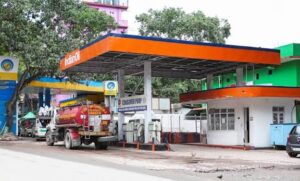
Recently the Indian government significantly cut excise duty by ₹10 per litre on both fuels: petrol duty was reduced from ₹13 to ₹3, and diesel duty was cut from ₹10 to nil (zero) to ease rising fuel costs amid global oil price pressures.
What is Excise Duty?
- About: Excise duty is an indirect tax levied by the Central Government on goods that are produced or manufactured within the country. It is paid by the manufacturer or producer but eventually borne by the consumer through the price of the product.
- Excise duty differs from customs duty (which is levied on imported goods) and GST (which is levied on the supply of goods and services).
- Legal Framework: The excise duty framework in India is governed mainly by the Central Excise Act, 1944 and the Central Excise Tariff Act, 1985. These statutes define when duty is payable, what goods are excisable, and the applicable rates and procedures.
- This is administered by the Ministry of Finance (Department of Revenue) in coordination with the Ministry of Petroleum and Natural Gas, which monitors fuel markets and pricing dynamics.
- How It Works: Excise duty is imposed at the point of manufacture or removal of goods from the factory or warehouse. It is not charged at the point of sale but is historically built into the cost before goods reach the retailer.
- Types: There were three types of excise duty:
- Basic Excise Duty – general duty on manufactured goods,
- Additional Excise Duty – levied on specific goods and shared between central and state governments,
- Special Excise Duty – extra duty on selected goods as per the annual Finance Act.
- Goods: After GST, only a few categories remain excisable, such as petroleum products, alcohol for human consumption, and tobacco products.
- Some goods are exempt from excise duty based on conditions like export status, small scale industry limits, types of raw materials used, or particular processes followed in manufacturing.
- Payment & Penalty: Excise duty must be paid within a specified period after the removal of goods from the manufacturing unit. Monthly or quarterly returns are filed, and payment is often made through the CBIC e‑payment portal as part of routine compliance.
- If excise duty is not paid on time or misdeclared, the law imposes penalties and interest which can be significant, usually a percentage of the duty evaded, in addition to recovery of the unpaid duty itself.
Rationale for the Excise Duty Cut
- Shielding from Global Crude Volatility: The primary driver for this cut is the surge in international crude oil prices, which recently spiked to nearly $119 per barrel following geopolitical conflicts in West Asia. By reducing domestic taxes, the government aims to insulate consumers from “imported inflation” that would otherwise occur if retail prices tracked global market trends directly.
- Controlling Inflationary Pressure: Fuel is a “universal input”; high diesel costs lead to increased logistics and transportation expenses for essential goods like food and medicine. This duty cut helps keep the Consumer Price Index (CPI) stable. Historically, every ₹1 per litre reduction in fuel price has a cooling effect on overall inflation, which was projected to rise toward 5.1% without this intervention.
- Offsetting Oil Marketing Company (OMC) Losses: Public sector OMCs like IOCL, BPCL, and HPCL were facing severe “under-recoveries,” with estimated marketing losses of ₹11 per litre on petrol and ₹14 per litre on diesel at $105 crude. The ₹10 cut in excise duty allows these companies to absorb the high cost of crude without raising prices at the pump, thereby protecting their financial health.
- Encouraging Consumption through Disposable Income: High fuel taxes are often seen as regressive, impacting lower and middle-income groups the most. By providing a ₹10 relief, the government effectively increases the disposable income in the hands of citizens. This extra liquidity is expected to boost private consumption in other sectors, such as FMCG and electronics.
Impact of the Excise Duty Cut
- Nominal Consumer Price Relief: Instead of a price drop, this cut ensures price stability. Without this ₹10 reduction, retail prices would have likely spiked by ₹25–₹30 to match global crude levels, meaning the “impact” for citizens is the prevention of a price hike rather than a discount.
- Widening of the Fiscal Deficit: This duty cut creates a direct fiscal imbalance. According to the Department of Economic Affairs, the annual revenue loss is estimated at ₹1.5 lakh crore to ₹1.75 lakh crore. This loss makes it challenging for the government to stick to its Fiscal Responsibility and Budget Management (FRBM) target of 4.9% for FY25.
- Shift in Government Expenditure Policy: To compensate for the lost fuel tax revenue, the government may be forced to reallocate funds from other sectors. Policies like the Direct Benefit Transfer (DBT) or capital expenditure (Capex) on infrastructure may face slower growth as the exchequer prioritizes fuel price stabilization over new project launches.
- Market Borrowing Plans: The sudden drop in anticipated revenue has a direct impact on the sovereign bond market. As reported in Union Budget assessments, lower tax collections often lead to an increase in government market borrowings. This can push up bond yields, making it more expensive for the government to finance its existing debt.
|
Also Read: Government Raises Excise Duty on Tobacco Products |