India Launches Chenab Hydropower Projects Amid Indus Treaty Freeze
|
General Studies Paper II: India’s Neighborhood, Agreements Related to or Affecting India’s Interests |
Why in News?
Recently, India launched ₹2,600 crore Chenab hydropower and tunnel projects after freezing the Indus Waters Treaty, strategically boosting upstream water control.
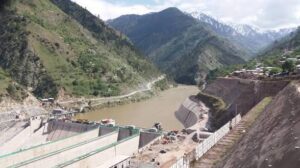
- The Union Government approved the ₹2,352 crore for Chenab–Beas Link Tunnel Project and ₹268 crore for a new Sediment Bypass Tunnel at the Salal Dam in Jammu and Kashmir.
Know About Government’s New Chenab Hydropower Projects
- Chenab-Beas Link Tunnel:
- About: The Chenab–Beas Link Tunnel is a proposed inter-basin water diversion tunnel planned to transfer surplus water from the Chenab River basin through underground Himalayan tunnelling infrastructure.
- Objective: The tunnel is intended to divert excess seasonal flow from the Chenab basin toward the Beas basin using gravity-assisted water transfer systems and controlled hydraulic engineering structures.
- Project Location: The infrastructure project is located in the Lahaul–Spiti district of Himachal Pradesh within the upper Himalayan mountain region characterized by high-altitude valleys.
- It is situated directly upstream of the north portal of the Atal Tunnel. It operates inside the high-altitude landscape of the Rohtang region.
- Project Cost: The Government of India approved an estimated investment of ₹2,352 crore for the project under Himalayan water resource development and river management planning.
- Execution Authority: The project is being executed under the supervision of the Government of India’s water resources authorities in coordination with Himachal Pradesh agencies.
- The National Hydroelectric Power Corporation (NHPC) is working as the primary executing agency.
- Tunnel Length: The approved tunnel alignment measures approximately 8.7 kilometres, making it one of the major planned Himalayan inter-basin diversion tunnels in northern India.
- In addition to the main tunnel, the plan requires building a 19-metre barrage. This barrage is structurally necessary to regulate water flow and facilitate the diversion process.
- Engineering Features: The tunnel design includes underground excavation systems, reinforced lining structures, slope stabilization measures, hydraulic regulation mechanisms and high-altitude geological safety infrastructure.
- The project uses an inter-river diversion mechanism where water from the Chenab catchment is channelled through a mountain tunnel into connected Beas basin networks for regulated flow management.
- Terrain Conditions: Construction is planned in rugged Himalayan terrain above 3,000 metres elevation, involving snow-bound conditions.
- Project Timeline: The project received government approval in 2026 and is currently in the preliminary implementation phase involving technical surveys, geological assessments, alignment studies and infrastructure planning.
- Long-Term Benefits: The diversion augments water availability for the Indira Gandhi Canal command area and boosts hydropower potential.
- It will redefine agricultural sustainability and regional power grids.
- Salal Dam Sediment Bypass:
- About: The Salal Dam Sediment Bypass Tunnel is a newly sanctioned hydraulic infrastructure project designed to remove accumulated silt from the Salal reservoir.
- Project Location: The bypass tunnel is located at the Salal Dam near Reasi district in Jammu and Kashmir on the Chenab River, a major western Himalayan river system.
- Objective: The project aims to create a controlled sediment evacuation mechanism for improving reservoir desilting, maintaining water flow efficiency.
- Project Cost: The Government of India sanctioned approximately ₹268 crore for construction of the sediment bypass tunnel as part of modernization works at the Salal Hydroelectric Project.
- Execution Authority: The project is being implemented under the supervision of NHPC Limited, India’s premier state-owned hydropower company responsible for operating the Salal Hydroelectric Station.
- Technical Features: The project includes reinforced tunnel lining, high-pressure flow channels, sediment discharge outlets and advanced hydraulic regulation mechanisms for continuous sediment management operations.
- The Chenab River carries nearly 32 million cubic metres of annual sediment load, causing rapid reservoir siltation and operational difficulties inside the hydroelectric infrastructure.
- Long-Term Benefits: By protecting the 690 MW capacity of Salal, Northern India’s power grids will experience stabilized and reliable energy supply.
- It secures sustained downstream power benefits for beneficiary states like Punjab, Haryana, and Rajasthan.
|
About Chenab River:
About Salal Dam:
Chenab Besin Hydro Network:
|
Significance
- Strategic Position: The recent approval of Chenab basin infrastructure projects strengthens India’s strategic presence in Jammu and Kashmir, especially across the western Himalayan border region.
- Major river projects improve administrative reach, transport access, tunnel connectivity and infrastructure depth near sensitive frontier zones adjoining Pakistan and China.
- Security Framework: Water infrastructure on western rivers has become closely linked with India’s geopolitical and national security strategy.
- Greater control over upstream river systems improves resource management capability, strengthens border infrastructure and increases strategic leverage in India–Pakistan water negotiations and regional security planning.
- Developing storage and diversion links allows India to assert control over the allowed 3.6 million acre-feet of western river water.
- Treaty Freeze: After suspending operational cooperation under the 1960 Indus Waters Treaty, India accelerated plans for maximizing domestic utilization of western rivers including the Chenab, Jhelum and Indus.
- New hydropower, desilting and diversion projects indicate a policy shift from limited usage toward full exploitation of India’s legally allocated river waters.
- Hydropower Expansion: The Chenab basin alone possesses more than 13,000 MW estimated hydropower potential. Ongoing projects including Pakal Dul, Ratle, Kiru and Kwar are central to expanding renewable electricity generation in northern India through Himalayan river systems.
- Energy Stability: Hydropower projects in Jammu and Kashmir help reduce dependence on imported fossil fuels while strengthening electricity supply for the Northern Grid.
- Improved sediment management and water regulation increase year-round generation reliability during fluctuating glacier melt and monsoon conditions.
- Economic Integration: Large Himalayan infrastructure projects generate employment in tunnelling, transport, engineering and construction sectors.
- They also improve roads, communication networks and investment opportunities in remote districts such as Reasi, Kishtwar and Lahaul–Spiti, promoting long-term regional economic integration.
Pakistan’s Objections Vs India’s Stand
- Pakistan Objections: Pakistan has consistently objected to Indian hydropower projects on the Chenab River, especially the Ratle, Baglihar and Salal projects. Islamabad argues that gated spillways, pondage capacity and low-level outlets violate provisions of the 1960 Indus Waters Treaty (IWT) and could allow India to temporarily regulate downstream water flows.
- Pakistan repeatedly approached international mechanisms under the IWT dispute-resolution framework. It sought intervention through the Permanent Court of Arbitration (PCA) and also raised objections before the World Bank-appointed Neutral Expert regarding design and operational features of Indian hydropower plants.
- Pakistan intensified diplomatic outreach by raising the issue at international forums and through official foreign ministry statements. Islamabad welcomed recent PCA interpretations and demanded uninterrupted downstream river flow into Pakistan.
- India’s Position: India maintains that all Chenab hydropower projects are run-of-the-river projects, fully permitted under the Indus Waters Treaty.
- New Delhi argues that these projects do not permanently divert or stop water flow toward Pakistan and are meant mainly for hydroelectric generation.
- India strongly supported the Neutral Expert mechanism, arguing that technical disputes should first be examined under Annexure F of the treaty rather than directly through international arbitration.
- In January 2025, the Neutral Expert upheld India’s position that he had jurisdiction over disputes concerning the Kishenganga and Ratle projects.
- India rejected the authority of the PCA and stated that the treaty remains “in abeyance” until Pakistan addresses cross-border terrorism concerns.
- India is now accelerating hydropower, desilting and river-management projects across the Chenab basin to maximize lawful utilization of western rivers.
|
Also Read: Pakistan Flags Indus Waters Treaty Dispute Globally |