Karnataka Revokes Hijab Ban Order
|
General Studies Paper II: Government Policies & Interventions, Fundamental Rights |
Why in News?
Recently, the Karnataka government officially revoked the controversial 2022 hijab ban in educational institutions, allowing limited religious symbols with uniforms.
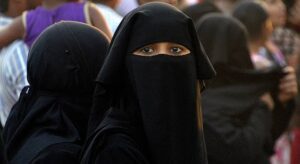
Karnataka Hijab Ban Order and Challenges
- Provision: On February 5, 2022, the Bharatiya Janata Party (BJP)-led Karnataka government issued a formal Government Order (GO) under the Karnataka Education Act, 1983.
- The order mandated that all students strictly adhere to the uniform prescribed by their respective institutional authorities.
- The order explicitly banned any clothing, religious attire, or garments (effectively targeting the hijab) that could disturb uniformity, discipline, or public peace within the classroom.
- Government schools were required to follow the state-prescribed uniform, while Pre-University (PU) colleges were bound by dress codes chosen by their individual College Development Committees (CDCs) or administrative management boards.
- It explicitly directed College Development Committees (CDCs) to bar any attire that threatened equality, integrity, and public order.
- Need: The state administration defended the restriction by asserting that public educational institutions must remain completely secular spaces.
- The state argued that visible religious attire compromises institutional discipline and creates internal divisions among students.
- Proponents insisted that a uniform dress code is a reasonable regulatory restriction required to foster homogeneity, equality, and public order.
- Arguments: Aggrieved Muslim students challenged the state order by invoking Article 25(1) of the Indian Constitution, arguing that the hijab constitutes an Essential Religious Practice (ERP) in Islam.
- Represented by senior advocates, they contended that the ban infringed upon their Article 19(1)(a) right to freedom of expression and Article 21 right to privacy and personal dignity.
- They further asserted it disproportionately burdened Muslim girls, severely disrupting their Right to Education.
- The controversy began in January 2022 when six Muslim female students at a government pre-university college in Udupi, Karnataka, were barred from entering classrooms for wearing a hijab.
- The college administration claimed the headscarf violated its strict uniform policy. The dispute rapidly escalated across the state, triggering massive student demonstrations.
- High Court Verdict: On March 15, 2022, a three-judge bench of the Karnataka High Court upheld the government’s ban in Resham v. State of Karnataka case.
- The court legally ruled that wearing a hijab is not an essential religious practice under Islamic tenets. Wearing the hijab is not protected as an essential religious practice under Article 25 of the Indian Constitution.
- The ban did not violate the right to freedom of speech (Article 19(1)(a)) or the right to privacy (Article 21).
- Research by civil rights groups like PUCL-Karnataka later highlighted the human cost of this policy, revealing that the restriction caused a massive dropout of over 800 Muslim girl students across the state.
- Split Verdict of Supreme Court: The legal battle reached the Supreme Court of India, which delivered a split 1-1 verdict on October 13, 2022.
- Justice Hemant Gupta dismissed the students’ appeals. He argued that the school uniform policy ensures discipline and secularism, and students cannot wear religious symbols, viewing the hijab as not essential.
- Conversely, Justice Sudhanshu Dhulia allowed the appeals, stating that enforcing the ban invaded a student’s privacy, attacked her dignity, and created a structural barrier to secular education. He described wearing the hijab as a “matter of choice” and focused on the empowerment of the girl child.
- Due to the split verdict, the matter was referred to the Chief Justice of India for the constitution of a larger bench. Because of the split verdict, the Karnataka High Court order supporting the ban remained in effect. The reference has been pending since the split decision.
Karnataka Government Revokes 2022 Hijab Order
- Karnataka High Court has issued notice to the state government regarding a public interest litigation (PIL) challenging the Karnataka Examination Authority’s (KEA) refusal to allow students wearing “sacred threads” to appear for the 2025 CET.
- On May 13, 2026, the Congress-led government in Karnataka officially issued a fresh directive under the Karnataka Education Act, 1983, formally withdrawing the February 5, 2022 uniform restrictions implemented during the previous BJP rule.
- The fresh circular, issued by the Department of School Education and Literacy, allows students to wear “limited traditional and practice-based symbols” alongside prescribed uniforms.
- Approved items explicitly include the hijab (headscarf), peta turbans, janeu (sacred threads), Shivadhara, and rudraksha beads.
- However, Chief Minister Siddaramaiah clarified that saffron shawls remain prohibited as they do not constitute a historically pre-existing uniform practice.
- The 2026 order guarantees that no student shall be denied entry, admission, examinations, or academic participation based on these permitted customary practices.
- To balance security with identity, the guidelines dictate that faces must remain clearly visible for structural identification purposes.
- The policy strictly dictates that symbols must not compromise classroom safety, discipline, or public order.
- The government has instructed school officials (SDMCs, CDCs) not to harass, insult, or humiliate students for wearing religious symbols like hijabs, turbans, or rudraksha.
- The state’s revised policy explicitly redefines institutional secularism as equal respect for all religious practices, rather than the strict elimination of personal belief markers.
- Evoking the inclusive philosophy of 12th-century social reformer Basavanna through the phrase “Iva Nammave” (They are ours), the mandate forbids school administrations from humiliating or forcibly removing a student’s permitted religious attire.
|
Constitutional Framework for Religious Freedom: The constitutional framework for religious freedom in India is a fundamental right guaranteed by Articles 25 to 28, fostering a secular state where all religions are treated equally.
|
|
Also Read: State Control of Hindu Temples |