Mirza Fakhrul Islam Alamgir Becomes Bangladesh New President 2026
| General Studies Paper II: India and Its Neighborhood, Groupings & Agreements Involving India and/or Affecting India’s Interests |
Why in News?
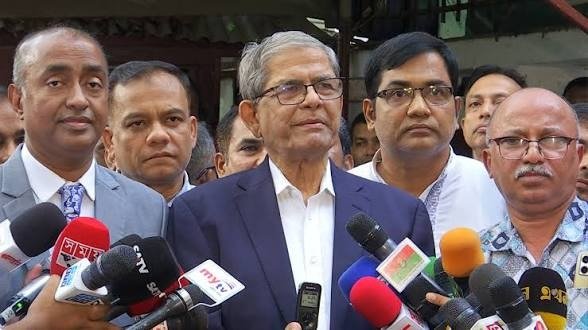
Recently, a veteran politician from the Bangladesh Nationalist Party (BNP) Mirza Fakhrul Islam Alamgir, was elected as the 23rd President of Bangladesh on 20 August 2026.
Highlights of Bangladesh Presidential Election 2026
- Election Date: Bangladesh elected its 23rd President on 20 August 2026 at the Jatiya Sangsad Bhaban, Dhaka. Polling occurred from 2:00–5:00 pm in Parliament’s session chamber.
- Candidates: The election featured Mirza Fakhrul Islam Alamgir, Bangladesh Nationalist Party (BNP) nominee, against Col. (Retd.) Oli Ahmed
- Col. (Retd.) was backed by an 11-party opposition alliance led by Jamaat-e-Islami. He is the president of the Liberal Democratic Party (LDP).
- Need: Former President Mohammed Shahabuddin resigned on 24 July 2026, citing serious physical and mental incapacity arising from multiple health complications.
- Speaker Hafizuddin Ahmed then served as acting president. Constitutionally, elections were required to be held within 90 days of the vacancy.
- It was Bangladesh’s first contested presidential election since 1991, ending a 35-year period without a competitive presidential ballot.
- Constitutional Framework: Under Article 48(1), Bangladesh’s President is elected by Members of Parliament, rather than directly by citizens.
- In Bangladesh, the President is elected by the Jatiya Sangsad i.e. the members of Parliament through the ‘Open Ballot’ system.
- Candidates must be Bangladeshi citizens, at least 35 years old, and eligible for parliamentary election; the maximum is two terms.
- The Chief Election Commissioner acts as the Returning Officer.
- MPs vote through a parliamentary ballot; nominations require prescribed proposers and seconders, while the candidate receiving the highest valid votes is declared elected.
- Result Announcement: The Election Commission formally declared Alamgir elected and issued the gazette notification under the Presidential Election Act, 1991 and Presidential Election Rules, 1991.
- Of 349 eligible MPs, 343 valid votes were cast; six MPs abstained/did not vote. Alamgir secured 255 votes, while Oli Ahmed obtained 88, giving Alamgir a decisive 167-vote margin.
- Oath: Alamgir is scheduled to take the presidential oath on 21 August 2026 at 7:30 pm at Bangabhaban’s Darbar Hall, administered by Acting Speaker Kayser Kamal.
Who Is Mirza Fakhrul Islam Alamgir?
- Early Life: Mirza Fakhrul Islam Alamgir, born 26 January 1948 in Thakurgaon, comes from a politically influential family.
- His father, Mirza Ruhul Amin, was a lawyer, politician and former parliamentarian, giving Alamgir an early exposure to public life.
- His uncle Mirza Golam Hafiz, who served as the Speaker of Parliament.
- Education: Alamgir studied at Dhaka College and the University of Dhaka, where he graduated in Economics.
- He entered the civil service education cadre in 1972, teaching economics at Dhaka College and various state institutions.
- Student Politics: His political journey began during the 1960s student movement.
- At Dhaka University, he was associated with the East Pakistan Chhatra Union and became involved in the 1969 mass uprising, an important phase in the political mobilisation preceding Bangladesh’s independence.
- Post-Independence Career: After independence, Alamgir initially pursued teaching and public service.
- After resigning from government service in 1986, he stepped into local administration. In 1988, he successfully won election as the Chairman of Thakurgaon Municipality, running as an independent candidate.
- Alamgir eventually joined the Bangladesh Nationalist Party (BNP) in the early 1990s and gradually rose through its organisational hierarchy.
- He was elected from Thakurgaon-1, including in 2001, when BNP returned to national power.
- His parliamentary experience provided him with direct exposure to Bangladesh’s legislative and executive institutions.
- During the Khaleda Zia government (2001–2006), Alamgir served as State Minister for Agriculture and subsequently State Minister for Civil Aviation and Tourism.
- He served as district BNP president, Senior Joint Secretary-General, Acting Secretary-General, and ultimately became BNP Secretary-General in 2016.
- He is the longest-serving Secretary-General in the history of the Bangladesh Nationalist Party (BNP).
- During Sheikh Hasina’s long tenure, Alamgir became one of the most recognisable opposition figures.
- He faced nearly 100 criminal cases, earning respect across the aisle as the “gentleman of Bangladeshi politics” for his polite rhetoric.
- Following BNP’s return to power in February 2026, Alamgir became Local Government, Rural Development and Cooperatives Minister while remaining Secretary-General.
- On 20 August 2026, Parliament elected him Bangladesh’s 23rd President, defeating Oli Ahmed.
Powers of Bangladesh President
- Constitutional Head of State: Under Article 48, the President is Bangladesh’s Head of State and takes precedence over all other state officials.
- However, Bangladesh follows a parliamentary system, making the Prime Minister the principal executive authority.
- Executive Authority: The Constitution provides that executive power is exercised by or on the authority of the Government, meaning presidential authority generally operates within the parliamentary executive framework rather than independently.
- Important Appointments: The President appoints as Prime Minister the MP who appears to command majority support in Parliament.
- The President makes several important appointments under constitutional provisions, including the Chief Justice and other judges of the Supreme Court.
- Parliamentary Functions: The President summons, prorogues and dissolves Parliament according to constitutional provisions and gives formal assent to legislation.
- Judicial and Clemency Powers: The President possesses the constitutional power of pardon, reprieve, respite, remission, suspension or commutation in specified cases.
- Commander-in-Chief: The President is the Commander-in-Chief of Bangladesh’s armed forces.
- Although day-to-day governmental authority remains with the elected executive.
- This position gives the presidency strategic significance during security or constitutional crises.
Implications for India
- India–Bangladesh Trust: Relations have been strained since Sheikh Hasina’s 2024 ouster and her continued presence in India.
- Dhaka’s extradition request remains a major diplomatic irritant, potentially affecting the proposed Tarique Rahman–India engagement.
- Alamgir’s India Approach: Alamgir has advocated mutual respect and sovereign equality while also arguing that Bangladesh should expand economic cooperation with India.
- This indicates potential pragmatic engagement rather than automatic alignment.
- Border Security: For India, stable Bangladesh is vital for managing the 4,096-km India–Bangladesh border, including concerns involving illegal trafficking, smuggling, migration and cross-border crime.
- Political cooperation will remain important for effective border management.
- Northeast India Connectivity: Bangladesh provides India’s Northeast with strategically valuable access toward the Bay of Bengal.
- Cooperation on ports, railways, waterways and transit routes can reduce the Northeast’s geographic isolation and strengthen India’s Act East Policy.
- Trade & Economic Relations: India benefits from a stable economic relationship with Bangladesh through bilateral trade, energy supplies and connectivity projects.
- Dhaka’s new leadership has indicated interest in expanding trade and development cooperation while simultaneously seeking greater economic autonomy.
- Water Diplomacy: Ganga and Teesta water-sharing remain sensitive issues. Alamgir has specifically linked bilateral relations to implementation of the Ganges Water Sharing Treaty, while Dhaka continues seeking progress on Teesta arrangements.
- China Factor: Bangladesh is seeking investment and strategic partnerships with China, creating a competitive geopolitical environment for India.
- Dhaka’s balancing strategy means New Delhi must offer competitive connectivity, investment and development alternatives.
- Bay of Bengal & Indo-Pacific: Bangladesh’s location makes it strategically important for the Bay of Bengal, maritime security and Indo-Pacific connectivity.
- Strong India–Bangladesh cooperation can support regional stability.
Frequently Asked Questions (FAQs):
1. Who is Mirza Fakhrul Islam Alamgir?
Mirza Fakhrul Islam Alamgir is a veteran BNP leader, economist, former minister, and Bangladesh’s 23rd President.
2. When was he elected President?
He was elected President on 20 August 2026 through a parliamentary presidential election in Dhaka.
3. How many votes did he receive?
Alamgir secured 255 votes out of 343 votes cast, defeating his sole opponent decisively.
4. Who was his opponent?
His opponent was Colonel (Retd.) Oli Ahmed, nominated by the Jamaat-e-Islami-led 11-party opposition alliance.
5. Which political party does he belong to?
Alamgir belongs to the Bangladesh Nationalist Party (BNP), which returned to national power in February 2026.
6. What is his role in the BNP?
Before becoming President, Alamgir served as BNP Secretary-General, a position he held since 2016, making him the party’s senior organisational leader.
Disclaimer: Information in this article is based on official announcements and public records. Regulations and implementation details may evolve over time.