


NEET-2027: Governance Gaps, Proposed Reforms, and What More Needs to Be Done
| General Studies Paper III: Education |
Why in News?
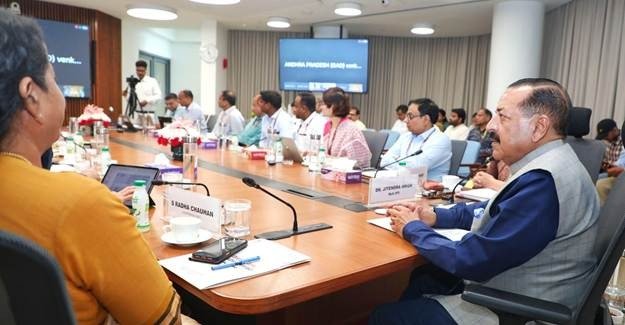
The Indian government has extended the tenure of the six-member high-powered examination reform task force led by Nandan Nilekani until January 2027, formed after the 2026 NEET paper leak and NTA oversight failures.
NEET Examination: Failures & Reforms
- Failures:
- The National Testing Agency (NTA), responsible for conducting the NEET exam, was created in 2017 as a society rather than a statutory body. (National Eligibility-cum-Entrance Test (NEET) is India’s common entrance examination for medical education.)
- It relies heavily on temporary, contractual, and outsourced staff instead of a permanent cadre.
- Critical governance gaps including unverified private test centers and heavy reliance on third-party logistics.
- A Parliamentary Standing Committee report in October 2026 noted there is no public record of paper leaks or FIRs.
- Coordination between central agencies and state authorities has also lagged.
- Major paper leaks hit NEET-UG in 2024 and 2026, alongside UGC-NET disruptions.
- In 2024, strongroom lapses at Hazaribagh and grace-mark disputes triggered Supreme Court intervention.
- In May 2026, leaked questions circulated before the test, forcing cancellation for over 22.79 lakh candidates, and a June 21, 2026 re-exam.
- Examination security failures exposed flaws in physical handling, insider trust, and digital monitoring.
- Even with GPS vehicles, CCTV, and biometrics, paper setters or transit points remained vulnerable.
- The NTA often learned of leaks late through outside tips rather than its own alerts.
- The National Testing Agency (NTA), responsible for conducting the NEET exam, was created in 2017 as a society rather than a statutory body. (National Eligibility-cum-Entrance Test (NEET) is India’s common entrance examination for medical education.)
- Reforms:
- Parliament enacted the Public Examinations (Prevention of Unfair Means) Act, 2024, and strengthened it with the 2026 Amendment Act.
- The Act raised penalties up to 10 years in prison, ₹50 lakh to ₹10 crore fines, 8-year vendor debarment, two-month probes, and fast-track courts.
- The NTA also relocated to Minto Road under tighter security.
- The NTA also replaced 600 experts, inducted 5,000 new ones, and added AI CCTV, jammers, and Air Force logistics.
- On 22 June 2024, the Ministry of Education constituted a seven-member High-Level Committee chaired by Dr K. Radhakrishnan, former ISRO Chairman.
- The panel gave 101 recommendations, covering DIGI-EXAM, 1,000 secure centers, and NTA restructuring.
- It proposed State and District Level Coordination Committees, clearly defined responsibilities, independent audits and stronger grievance-redressal mechanisms.
- The government constituted a High-Powered Steering Committee on 14 November 2024 to monitor implementation.
- Some measures started, yet 2026 leaks proved execution gaps remained.
- After the NEET-UG 2026 controversy, in July 2026, the government constituted a Nandan Nilekani-led High-Powered Task Force to recommend comprehensive examination reforms.
- Its report deadline was extended from October 2026 to January 2027 following more than 50,000 suggestions and stakeholder consultations.
- Parliament enacted the Public Examinations (Prevention of Unfair Means) Act, 2024, and strengthened it with the 2026 Amendment Act.
Proposed NEET-2027 Reforms
- Testing System & Exam Mode: Proposals include shifting from pen-and-paper OMR sheets to a Computer-Based Test (CBT) across multiple shifts.
- However, infrastructure gaps and state resistance make offline OMR mode likely for 2027, with full CBT or a two-stage model possible later.
- The Parliamentary Committee recommended eventually introducing Computer Adaptive Testing (CAT) after strengthening digital infrastructure.
- However, infrastructure gaps and state resistance make offline OMR mode likely for 2027, with full CBT or a two-stage model possible later.
- Multi-Shift Scheduling: A shift to CBT could spread the exam across multiple days and multiple shifts across roughly 1,000 centres and 500 cities.
- Different shifts would use separate question sets, requiring careful logistics and crowd management.
- Question Bank & Security: Panels have discussed a vetted question vault with randomized paper assembly and digital delivery to curb leaks.
- Reforms cover NTA structural overhaul, permanent hiring, state representation, blacklisted vendor registries.
- Biometrics, tighter center monitoring, and government-run venues are also debated to strengthen exam integrity.
- Evaluation Mechanisms & Scoring: Multi-shift testing would require score normalization and percentile ranking to balance difficulty across sessions.
- Several states also proposed giving weightage to Class 12 board marks.
- Attempt Frequency: States have suggested holding NEET twice a year to lower single-exam stress and setting up a test center in every district.
- Core subjects—Physics, Chemistry, and Biology.
What More Needs to Be Done?
- Strengthen Institutional Accountability: The government must transform NTA into a professionally managed, transparent and accountable examination institution.
- Its responsibilities should be clearly defined, with measurable performance indicators and regular institutional assessments.
- Parliamentary oversight, independent audits and public disclosure of reform progress can strengthen democratic accountability.
- Establish Independent Examination Oversight: An independent examination oversight mechanism should audit security protocols, investigate candidate complaints and examine administrative failures.
- It should function independently of NTA and report directly to the Ministry of Education.
- This would reduce conflicts of interest and strengthen public confidence through impartial investigations.
- Develop Permanent Professional Expertise: NTA requires permanent specialists in psychometrics, cybersecurity, digital infrastructure, data analytics, examination logistics and educational assessment.
- The 2026 Parliamentary Committee highlighted that only 23 of 39 sanctioned positions were occupied, indicating a 41% vacancy. Professional recruitment and specialised training are essential.
- Build Secure Government Examination Infrastructure: The government should prioritise government-owned examination centres, particularly in rural, remote and economically disadvantaged regions.
- District-level facilities, and mobile testing centres can improve accessibility while reducing dependence on private examination vendors.
- Strengthen Cybersecurity and Vendor Regulation: Every examination-related contractor must undergo background verification, security audits and performance assessments.
- NTA should maintain a National Registry of Blacklisted Examination Vendors, as recommended by the Parliamentary Committee.
- Encrypted question delivery, biometric authentication, secure servers and independent cybersecurity testing should become mandatory components of examination security.
- Ensure Social Equity and Accessibility: Examination reforms must address the digital divide, regional inequalities and unequal access to preparation facilities.
- Annual Equity Audits should analyse registration, qualification and selection rates across gender, social categories, states, school boards and mediums of instruction.
- Introduce Global Best Practices: India can examine international examination systems such as ETS-administered assessments and computer-based international testing models for secure delivery, psychometric validation, standardised evaluation and professional assessment management.
Frequently Asked Questions (FAQs):
1. What is the primary objective of NEET-2027 reforms?
To ensure examination integrity, transparency, cybersecurity, institutional accountability and equal opportunities for medical aspirants.
2. Who heads the High-Powered Task Force on examination reforms?
Nandan Nilekani chairs the six-member task force constituted in July 2026.
3. What is the proposed examination format for NEET-2027?
Computer-Based Testing is under consideration, but the final examination format remains subject to official decisions.
4. What is the Radhakrishnan Committee’s contribution to NEET reforms?
It submitted 101 recommendations covering examination security, NTA restructuring, technology and examination administration.
5. When will the Nandan Nilekani Task Force submit its report?
The government extended its deadline until January 2027 following extensive stakeholder consultations.
Disclaimer: Information in this article is based on official announcements and public records. Details may evolve over time.
| Also Read: Changes For Upcoming NEET UG 2027 Exam |