


Vehicular Emission Norms: PUC Validity Extended to 3 Years for NV
| General Studies Paper III: Environmental Pollution and Degradation |
Why in News?
Recently, the Ministry of Road Transport and Highways (MoRTH) amended vehicular emission rules, extending PUC validity to three years for new private BS-VI vehicles under six years old.
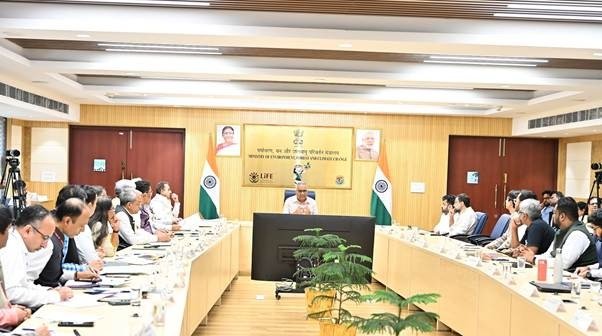
Highlights of PUC Validity Extension Norms
- Amendment: The Ministry of Road Transport and Highways (MoRTH) notified the Central Motor Vehicles (Sixteenth Amendment) Rules, 2026, through G.S.R. 991(E), dated 13 November 2026.
- The amendment modifies Rule 115(7) of the Central Motor Vehicles Rules, 1989.
- This overhauled Pollution Under Control Certificate (PUCC) validity norms in India.
- It introduces an age- and emission-standard-based system for PUC certificate validity.
- Revised PUC Validity Rules and Vehicle Categories:
- Private (Non-Transport) BS-VI Vehicles: For non-transport Bharat Stage (BS)-VI vehicles, including private cars and two-wheelers, validity scales strictly by vehicle age calculated from the date of first registration.
- Vehicles up to six years old now receive a three-year validity period.
- Once a vehicle is older than six years up to 10 years, owners must complete annual renewals.
- Any private BS-VI vehicle exceeding 10 years of age reverts to mandatory six-month renewal intervals to monitor progressive engine wear.
- Commercial (Transport) BS-VI Vehicles: BS-VI transport vehicles receive extended yet tighter intervals due to higher daily mileage.
- Commercial vehicles up to six years old require PUC renewal once every two years.
- Those aged more than six years up to 10 years must undergo annual emission testing, while transport vehicles older than 10 years require checks every six months.
- Older Emission Standards (BS-I to BS-IV): Vehicles compliant with BS-IV norms retain a six-month PUC validity.
- Older vehicles adhering to BS-I, BS-II, and BS-III standards must renew their certificates every three months.
- Private (Non-Transport) BS-VI Vehicles: For non-transport Bharat Stage (BS)-VI vehicles, including private cars and two-wheelers, validity scales strictly by vehicle age calculated from the date of first registration.
- Renewal Timing and Transition Rules: Existing PUC certificates remain valid until expiration, with new validity rules applying upon the first renewal after November 19, 2026.
- If renewed within 10 days before expiry, the new certificate takes effect from the original expiry date; if renewed after expiry, validity begins on the renewal date.
- Driving without a valid PUC attracts fines up to ₹10,000 and invalidates motor insurance claims.
PUC and Its Legal Framework
- About: A Pollution Under Control (PUC) certificate is a mandatory legal document in India certifying that a vehicle’s exhaust emissions comply with statutory environmental limits.
- It is officially issued as Form 59. It verifies that pollutants like Carbon Monoxide (CO) and Hydrocarbons (HC) emitted by internal combustion engines remain within permissible limits set by the Central Pollution Control Board (CPCB).
- Authorized testing centers measure tailpipe gases using calibrated analyzers and upload real-time data directly to the central VAHAN database.
- Framework:
- The Motor Vehicles Act, 1988 provides the legislative foundation for vehicular emission control in India.
- Section 110 empowers the Central Government to frame rules regulating emission standards, while Section 190(2) penalizes operating a vehicle without a valid PUC or violating air pollution norms with fines up to ₹10,000, three months imprisonment, and three-month driving license disqualification.
- Enacted to enforce the parent Act, the Central Motor Vehicles Rules (CMVR), 1989 detail technical testing procedures and compliance mandates.
- Rule 115(2) establishes strict BS emission thresholds, Rule 115(7) mandates carrying a valid PUCC after one year of initial registration, and Rule 116 empowers authorities to detain visibly polluting vehicles and require a fresh test within seven days.
- Under the 2026 MoRTH gazette amendments to CMVR 1989, Electric Vehicles (EVs) are completely exempt.
- Form 59-A serves as an official rejection slip for non-compliant vehicles.
- The Motor Vehicles Act, 1988 provides the legislative foundation for vehicular emission control in India.
Bharat Stage (BS) Emission Norms
- Framework: Bharat Stage (BS) norms are India’s statutory vehicular emission standards modeled on European Euro norms to curb CO, HC, NOx, and PM.
- The Central Pollution Control Board (CPCB) formulates standards under the Ministry of Environment, Forest and Climate Change (MoEFCC).
- The Ministry of Road Transport and Highways (MoRTH) notified them under the Central Motor Vehicles Rules, 1989, backed by cleaner fuel supply from the Ministry of Petroleum and Natural Gas.
- Evolution: India’s emission norms are guided by the Mashelkar Committee (2002) and Auto Fuel Policy.
- India moved from India 2000 (BS-I) to BS-II, BS-III, and BS-IV nationwide by April 2017.
- To combat severe urban air pollution, India skipped BS-V and leapfrogged directly to BS-VI on 1 April 2020 (adopted earlier in Delhi in April 2018).
- BS-VI Phase-II took effect in April 2023, while BS-VII alignment is slated ahead.
- BS-VI Model:
- BS-VI slashes fuel sulphur content from 50 ppm (BS-IV) to 10 ppm (ultra-low sulphur).
- It cuts diesel PM by ~80%–82%, diesel NOx by ~68%–70%, and petrol NOx by ~25%.
- Key technologies include Diesel Particulate Filters (DPF), Selective Catalytic Reduction (SCR) using urea/AdBlue, Lean NOx Traps (LNT), and On-Board Diagnostics (OBD-II).
- BS-VI Phase-II mandates Real Driving Emissions (RDE) testing via Portable Emissions Measurement Systems (PEMS) alongside lab cycles, and pairs with Corporate Average Fuel Economy (CAFE-II) norms.
- Norms cover on-road motor vehicles (excluding off-highway gear like tractors) and complement NCAP, FAME, and ethanol blending.
- BS-VI slashes fuel sulphur content from 50 ppm (BS-IV) to 10 ppm (ultra-low sulphur).
PUC Validity Extension Significance
- Modern BS-VI compliant engines feature advanced onboard diagnostics, catalytic converters, and fuel-injection systems that emit up to 82% less particulate matter than older models.
- Their emission control systems rarely degrade rapidly, making longer intervals scientifically justified.
- Extending renewal intervals for newer vehicles eliminates frequent, repetitive visits saving motorists significant time and money.
- By lowering the volume of low-risk vehicles requiring routine checks, testing infrastructure avoids bottlenecks.
- Granting extended validity for private cars and two years for commercial fleets—acts as a non-monetary incentive for buyers to transition toward newer, cleaner mobility.
- For commercial operators, reduced vehicle downtime directly lowers operational costs, encouraging faster retirement of outdated vehicles.
- A valid PUC is strictly mandated, directly affecting motor insurance renewals, steep traffic fines, and strict fuel-dispensing bans like the “No PUC, No Fuel” rule.
- Longer validity periods maintain seamless integration with central databases like Parivahan.
Frequently Asked Questions (FAQs):
1. Which ministry announced the revised PUC validity rules?
The Ministry of Road Transport and Highways (MoRTH) notified the revised PUC certification framework in November 2026.
2. Which vehicles receive three-year PUC validity?
BS-VI non-transport vehicles up to six years old receive three-year PUC certificate validity.
3. What is the PUC validity for BS-VI transport vehicles?
BS-VI transport vehicles up to six years old receive two-year PUC certificate validity.
4. How is vehicle age calculated for PUC validity?
Vehicle age is calculated from its date of first registration, not its manufacturing date.
5. Does extended PUC validity exempt vehicles from emission checks?
No. Authorities can still require emission testing when vehicles are suspected of violating prescribed pollution standards.
Disclaimer: Information in this article is based on official announcements and public records. Details may evolve over time.