


NHAI Toll Plaza Vehicle Insurance Alert: Vahan Integration & Road Safety
| General Studies Paper III: Transport, Digital Public Infrastructure |
Why in News?
Recently, the National Highways Authority of India (NHAI) has begun testing a toll plaza vehicle insurance SMS alert system using the VAHAN database.
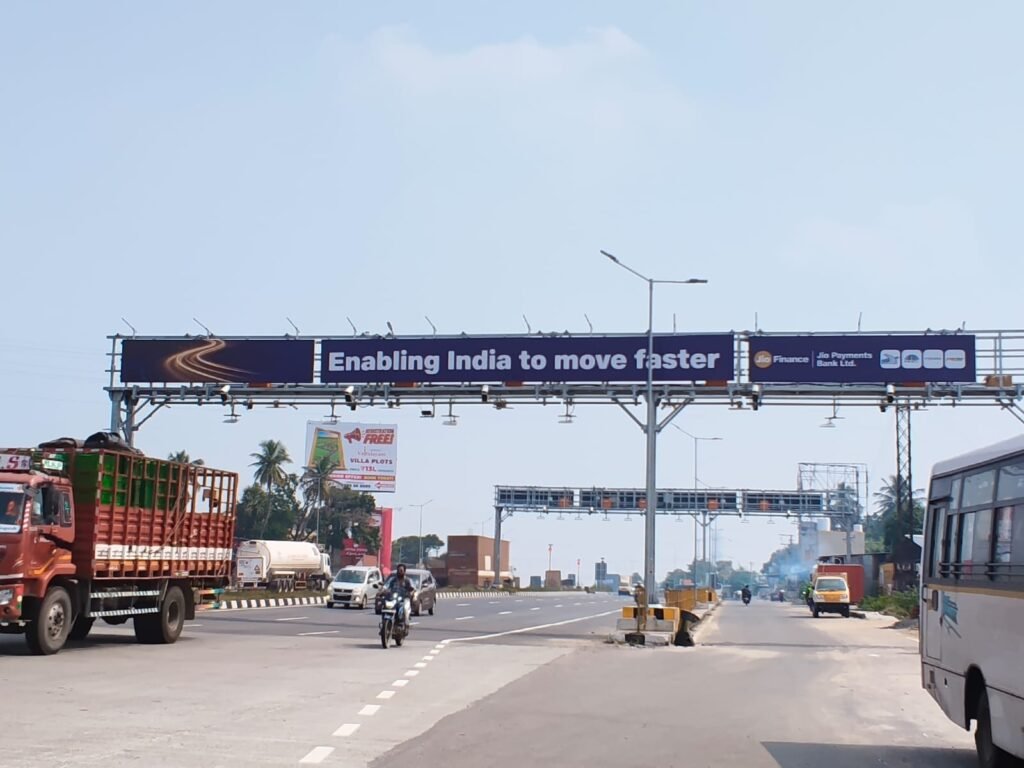
What is NHAI Toll Plaza Vehicle Insurance Alert Initiative?
- About: The NHAI Toll Plaza Vehicle Insurance Alert initiative is a testing-stage public awareness and advisory system by the National Highways Authority of India (NHAI).
- It checks third-party motor insurance validity when vehicles cross toll plazas and sends SMS reminders for expired or missing coverage.
- NHAI clarified that the system is purely informational and issues no challans or toll-plaza penalties.
- Driving without mandatory third-party insurance remains an offence under Section 196 of the Motor Vehicles Act, 1988.
- Objective: The initiative promotes responsible vehicle ownership and timely insurance renewal on National Highways.
- It addresses high rates of uninsured vehicles and helps accident victims claim compensation. While the SMS is advisory.
- Framework: The framework pairs toll plaza capture with centralized registry checks and automated SMS delivery.
- It uses existing toll infrastructure without stopping vehicles for physical verification.
- Separate draft Motor Vehicle Rules amendments address toll dues and VAHAN linkages rather than automatic toll insurance fines.
- The VAHAN database, maintained by the National Informatics Centre (NIC), serves as the verification source for registration and insurance records.
- Working: When a vehicle passes a toll plaza, its registration details transmit to the backend.
- The system verifies insurance validity and sends an SMS alert within minutes if coverage is expired or absent.
- The message lists the registration number, crossing date and time, and expiry date, advising policy renewal.
- Alerts go to the mobile number linked in the registration record, keeping toll lanes moving.
- Testing & Implementation:
- The pilot test runs at the Mundka toll plaza on Urban Extension Road-II (UER-II / NH-344M) in Delhi.
- Select highway users receive test SMS notifications as NHAI evaluates accuracy and system stability.
- After system stabilization and trial evaluation, NHAI may expand the mechanism across National Highways nationwide.
- The pilot test runs at the Mundka toll plaza on Urban Extension Road-II (UER-II / NH-344M) in Delhi.
NHAI Toll Plaza Vehicle Insurance Alert Benefits
- Road Safety: This alert system will nudge motorists to keep vehicles legally covered across high-speed corridors.
- National Highways recorded 31.0% of India’s 4,87,707 road accidents and 36.6% of 1,77,175 fatalities in 2024, equal to about 151,189 crashes and 64,846 deaths.
- Better policy awareness will encourage responsible highway habits alongside enforcement of existing Motor Vehicles Act rules.
- The initiative indirectly supports SDG 3.6, which seeks to halve global deaths and injuries from road traffic accidents.
- Accident Victims Support: Higher insurance coverage will strengthen financial protection for crash victims and grieving families.
- About 44% of active vehicles in Vahan lacked insurance as of March 6, 2026, leaving many crashes without direct insurer payouts.
- More active third-party policies will speed up claims while easing pressure on the Motor Vehicle Accident Fund for uninsured or hit-and-run cases.
- Insurance Compliance Gains: Timely SMS reminders will help close India’s large motor insurance gap without stopping traffic.
- If 44 out of 100 vehicles lack coverage, targeted alerts will prompt faster renewals before lapses occur.
- Owners who ignore mandatory third-party cover will still risk legal fines up to ₹5,000 or 3x base premium for a first offense and ₹10,000 or 5x base premium for repeat offenses.
- Digital Governance Expansion: Following successful stabilization at the Mundka pilot, the authority will evaluate expanding the alert framework across national highways.
- Automated verification will reduce manual roadside checks and support seamless digital highway management.
- The initiative reflects the principles of Digital India, minimum government and maximum governance, using existing databases and communication systems to deliver preventive public services.
Government Initiatives for Road Safety
- The Ministry of Road Transport and Highways executes a four-pillar strategy covering Education, Engineering, Enforcement, and Emergency Care to curb fatalities.
- The Union Cabinet approved the National Road Safety Policy in 2010 based on the Sunder Committee report.
- This policy establishes a National Road Safety Board and a dedicated fund financed by fuel cess to build safer infrastructure and protect vulnerable road users.
- The government conducts nationwide publicity campaigns through electronic media, print media, and non-governmental organizations.
- Authorities observe National Road Safety Month every January under themes like Sadak Suraksha – Jeevan Raksha to promote safe driving habits.
- The Indian Academy of Highway Engineers runs certification courses for road safety auditors, while the government establishes Model Driver Training Institutes to improve driving standards.
- Highway authorities identify and rectify accident-prone black spots on National Highways through immediate engineering fixes and structural redesigns.
- Agencies also conduct mandatory road safety audits and integrate pedestrian facilities into highway designs.
- The government enforces strict automobile safety standards requiring airbags, Anti-lock Braking Systems (ABS), speed-limiting devices, and crash-test compliance.
- Parliament enacted the Motor Vehicles (Amendment) Act, 2019 to impose heavy fines and strict penalties for overspeeding, drunk driving, mobile phone usage, and helmet or seatbelt violations.
- The law also holds road contractors and vehicle manufacturers accountable for design defects.
- Moreover, the Good Samaritan Law protects helpful bystanders from legal harassment when they assist crash victims.
- The government provides cashless medical treatment for road accident victims during the critical golden hour immediately following a crash.
- Highway authorities deploy upgraded Basic Life Support ambulances at toll plazas to ensure rapid hospital transport.
- The law guarantees immediate financial compensation for hit-and-run victims to support timely recovery.
Frequently Asked Questions (FAQs):
1. What is the NHAI Vehicle Insurance Alert Initiative?
It is an SMS-based advisory mechanism that reminds vehicle owners about expired or potentially invalid insurance policies.
2. Which database supports this initiative?
It uses vehicle registration and insurance-related information available through the VAHAN database, maintained by NIC.
3. Where was the NHAI Vehicle Insurance Alert pilot initiative tested?
The pilot was reported at Mundka Toll Plaza on Delhi’s Urban Extension Road-II (UER-II).
4. Does receiving an insurance alert automatically attract a penalty?
No. NHAI clarified that the alerts are advisory and do not automatically generate challans or penalties.
5. Which provision mandates third-party vehicle insurance in India?
Section 146 of the Motor Vehicles Act, 1988, mandates third-party insurance for vehicles used in public places.
Disclaimer: Information in this article is based on official announcements and public records. Details may evolve over time.
| Also Read: Delhi-Dehradun Expressway |