


First SCO Civilisational Dialogue Forum: Highlights and Significance
| General Studies Paper II: International Relations, Regional Groupings |
Why in News?
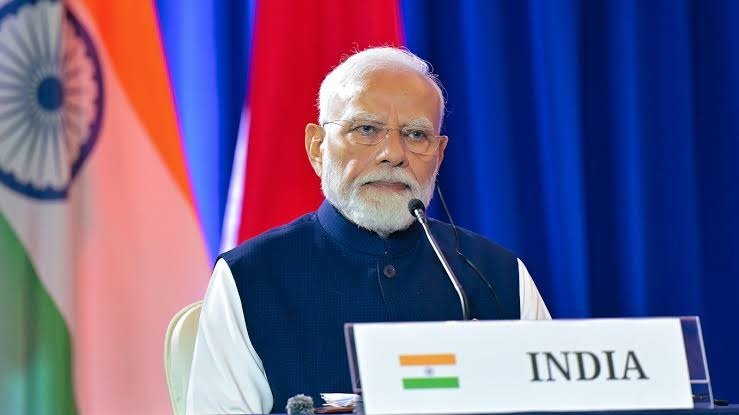
Recently, Prime Minister Narendra Modi inaugurated the first SCO Civilisational Dialogue Forum at Purana Qila, New Delhi, promoting shared Eurasian heritage and regional cooperation.
What is the SCO Civilisational Dialogue Forum?
- About: The SCO Civilisational Dialogue Forum is a dedicated platform under the Shanghai Cooperation Organisation (SCO) framework for promoting cultural understanding, shared heritage, academic exchanges and people-to-people connections among SCO countries.
- Inauguration: The first edition inaugurated by Prime Minister Narendra Modi at Purana Qila, New Delhi. It is three-day conclave runs from 20 to 22 November 2026.
- Organisers: It is jointly organised by India’s Ministry of Culture and Ministry of External Affairs.
- Background: The initiative originated from India’s proposal at the 2025 SCO Summit in Tianjin, China, where Prime Minister Modi advocated establishing a dedicated platform for civilisational dialogue.
- The proposal subsequently received recognition in the Bishkek Declaration. It also coincides with the SCO’s 25th anniversary in 2026.
- Participation: India invited all 10 SCO member states—including Russia, China, Iran, Belarus, Central Asian republics, and Pakistan—alongside observer states and dialogue partners.
- Delegations from 15 confirmed nations, including Nepal, Armenia, Saudi Arabia, and Cambodia, joined ministers, ambassadors, scholars, and artists in New Delhi.
- Thematic Pillars: Deliberations span four interconnected pillars exploring historical linkages:
- Cultural Expressions (music, performing arts, textiles, cuisine, and traditional games);
- Art and Architecture (cross-regional monuments and sacred geometry);
- Language and Literature (ancient scripts and classical manuscripts); and
- Philosophical and Monastic Traditions (the historical movement of Buddhist monks and ideas along ancient Silk Route networks).
- Vasudhaiva Kutumbakam: Anchored in India’s civilisational ethos of Vasudhaiva Kutumbakam (The World Is One Family), the forum elevates cultural diplomacy as a stabilising geopolitical tool.
- Digital Heritage Preservation: To transmit centuries-old archival legacies to tech-savvy youth, PM Modi proposed collaborative manuscript digitisation, joint historical research, and AI-enabled translation of rare texts across SCO museums and libraries.
- Cultural Exhibitions: The inaugural programme featured Civilisations in Conversation, combining music, dance, visual storytelling and narration.
- The exhibition ASTITVA – The Essence of Our Existence presented India’s archaeological, artistic and literary heritage, including evidence of Delhi’s history dating from 1200 BCE to 1200 CE.
- The Anant: A Rare 18th Century Mahabharata Scroll pavilion highlighted illustrated epic traditions.
- The presentation by the Sangeet Natak Akademi featured over 200 artists from across India and served as a key instrument of soft power and cultural diplomacy.
- Cultural Diplomacy: The programme opened with energetic recitations invoking India’s 5,000-year-old Vedic heritage.
- Performances of Sufi music, Gurbani (set against a visual backdrop of the Golden Temple), and Qawwali from the Nizamuddin Auliya Dargah were given.
- India showcased Buddhist heritage and traditions from Arunachal Pradesh in the presence of Chinese delegates, alongside Kashmiri cultural performances before the Pakistani delegation.
| Note: The Shanghai Cooperation Organisation (SCO) is a permanent Eurasian (Europe + Asia) intergovernmental organization.It was established on June 15, 2001, in Shanghai, evolving from the Shanghai Five (1996).India has been a member of this organisation since 2017.It promotes regional security, counter-terrorism, economic cooperation, and multipolarity across Eurasia. |
India–Eurasia Historical Connections
- Silk Route Corridors and Trade: India connected with overland and maritime Silk Route networks from the 2nd century BCE to the 15th century CE via Uttarapatha, Srinagar, Gilgit, the Karakoram Pass, Purushapura, and Bamiyan, alongside maritime hubs like Barbaricon, Barygaza, and Muziris.
- Merchants traded Indian spices, cotton textiles, ivory, and gems for Chinese silk, Central Asian horses, and glassware.
- Under the Kushan Empire, relative stability linked South Asia, Central Asia, and China into a major commercial and diplomatic crossroads.
- Buddhism Transmission and Scholarship: Originating in ancient India around the 5th–6th centuries BCE, Buddhism traveled along Silk Route corridors to Central Asia, China, Tibet, Korea, and Japan.
- Mauryan emperor Ashoka and Kushan ruler Kanishka backed missionaries, monasteries, and Buddhist councils.
- Monks, merchants, and translators—including An Shigao, Kumarajiva, Faxian, and Xuanzang—spread Mahayana, Sarvastivada, and Dharmaguptaka teachings and translated texts.
- Artistic Synthesis and Scripts: Gandhara and Mathura schools pioneered human Buddha images, blending Greco-Roman, Iranian, and Indian motifs across schist, stucco, and red sandstone.
- Stupas, rock-cut shrines, and cave murals flourished across Gandhara, Bamiyan, Khotan, Turfan, and Dunhuang.
- Manuscripts and inscriptions used Kharoshthi, Brahmi, Gandhari, Sanskrit, and Central Asian vernaculars like Sogdian, Khotanese Saka, Tocharian, and Tibetan.
- Shared Heritage and Sciences: Beyond Buddhism, Silk Route contact carried Hinduism, Zoroastrianism, and Manichaeism, leaving Central Asian depictions of Shiva, Ganesha, Narayana, and Krishna alongside Vedic practices.
- Indian mathematics, astronomy, and medicine traveled across Eurasia.
- Overland Silk Road Buddhist influence later declined after the 7th century due to shifting routes, Islamic expansion, and Mongol and Turkic upheavals.
SCO Civilisational Dialogue Forum Significance
- The SCO traditionally prioritises counter-terrorism, hard security, and regional trade. This Indian-led initiative injects a normative cultural pillar into the bloc’s institutional architecture.
- It operationalises the SECURE vision by linking regional stability with deep-rooted civilisational empathy.
- The forum reclaims India’s historical centrality across Central Asia without relying on inaccessible land routes.
- It transforms soft power assets into tangible diplomatic leverage across the extended neighbourhood.
- Beijing actively promotes its Global Civilization Initiative to shape normative standards across developing nations.
- New Delhi offers an inclusive, pluralistic alternative. This prevents unilateral cultural dominance within the Eurasian grouping.
- Geopolitical friction often paralyses formal political dialogues between rival neighbours like India and Pakistan.
- Cultural multilateralism provides a non-political entry point that keeps diplomatic communication channels open.
- It allows adversarial states to interact constructively without compromising core national security postures.
- The initiative promotes digital manuscript preservation, joint archaeological research, and artificial intelligence translation tools.
- These institutional mechanisms foster long-term intellectual integration among scholars and youth.
- Escalating global wars highlight the limits of purely transactional realpolitik.
- The forum positions civilisational trust-building as a stabilising instrument against geopolitical fragmentation.
- provides an opportunity to strengthen people-to-people connectivity among SCO countries.
- For India, the initiative complements its Connect Central Asia Policy and broader engagement with Eurasia.
- It also supports India’s ambition to act as a bridge between South Asia and Eurasia.
- India establishes an independent intellectual and cultural narrative within a bloc often dominated by Sino-Russian geopolitics.
- The forum can indirectly support regional economic integration by encouraging cultural tourism, educational exchanges, heritage circuits, creative industries and people-oriented connectivity.
Frequently Asked Questions (FAQs):
1. What is the SCO Civilisational Dialogue Forum?
It is an SCO platform promoting shared civilisational heritage, cultural understanding, academic exchanges and people-to-people cooperation.
2. Where and when was the first SCO Civilisational Dialogue Forum inaugurated?
It was inaugurated at Purana Qila, New Delhi, on 20 November 2026.
3. What is the main theme of the SCO Civilisational Dialogue Forum?
Its guiding philosophy is Vasudhaiva Kutumbakam, meaning the world is one family.
4. What are the four thematic pillars of the SCO Civilisational Dialogue Forum?
Cultural expressions, art and architecture, language and literature, and monastic and philosophical traditions.
5. Why is the SCO Civilisational Dialogue Forum important for India?
It strengthens India’s cultural diplomacy, Eurasian partnerships, soft power and regional cooperation through shared heritage.
Disclaimer: Information in this article is based on official announcements and public records. Details may evolve over time.