




PCA Fast-Tracks Indus Waters Treaty Case Hearing
|
General Studies Paper II: India and its Neighbourhood, Bilateral Groupings & Agreements |
Why in News?
Recently, the Permanent Court of Arbitration (PCA) fast-tracked hearings on the Indus Waters Treaty dispute, despite India’s boycott. The court is focusing on legal issues and Pakistan’s requests, highlighting ongoing tensions between both countries over water sharing.
What is Indus Waters Treaty?
- About: The Indus Waters Treaty is a landmark water-sharing agreement between India and Pakistan, signed in 1960. It governs the use of waters from the Indus River system, ensuring cooperation despite political tensions.
-
- Signatories: The treaty was signed by Jawaharlal Nehru (India) and Ayub Khan (Pakistan), with the World Bank acting as a guarantor and facilitator, making it an internationally recognized agreement.
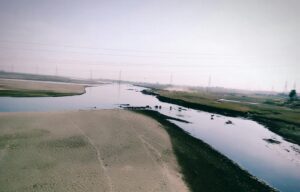
- River System Allocation: The treaty divides six rivers of the Indus Basin. The Eastern Rivers—Ravi, Beas, Sutlej—are allocated to India, while the Western Rivers—Indus, Jhelum, Chenab—are largely reserved for Pakistan, giving Pakistan about 80% of total water flow.
- Provisions:
-
- Rights & Restrictions: India has limited rights over Western Rivers, including non-consumptive uses like hydropower, irrigation (restricted), and navigation. However, it cannot significantly alter water flow.
- Institutional Mechanism: The treaty established the Permanent Indus Commission, a bilateral body that meets regularly to exchange data and resolve minor disputes.
- Dispute Resolution: For conflicts, a three-tier mechanism exists:
- Bilateral talks (Commission): It serves as the first point of contact for resolving “questions” through bilateral dialogue.
- Neutral Expert (technical issues): If the PIC cannot resolve a “question,” it is upgraded to a “difference”. The World Bank appoints a Neutral Expert to handle technical disagreements. The expert’s decision on these technical matters is final and binding.
- Court of Arbitration (Permanent Court of Arbitration): If a Neutral Expert cannot resolve the issue or if the matter involves a legal interpretation of the Treaty, it becomes a “dispute”. An ad hoc seven-member court is established to provide a final verdict on the dispute.
- Exclusivity: Under the IWT, the Neutral Expert and CoA pathways are generally considered mutually exclusive for a single specific issue to prevent parallel proceedings.
- Success: The treaty is considered one of the most successful international water treaties, surviving wars (1965, 1971, Kargil 1999).
Indus Waters Treaty Dispute
- Suspension Post-Pahalgam Attack (2025-2026): Following a severe terror attack in Pahalgam in April 2025, India formally suspended the IWT, declaring it “in abeyance” until terrorism ceases.
- India has ceased sharing hydrological data and is actively reviewing the treaty, citing Article 62 of the Vienna Convention on the Law of Treaties due to changed circumstances.
- Modification Demand (2023–2024): India issued a formal notice to Islamabad in January 2023 and September 2024, seeking to alter the dispute resolution mechanism and technical specifications under Article XII(3) of this treaty. Pakistan has condemned this, claiming it violates international law.
- Hydroelectric Project Disputes (1987-2015): Pakistan has consistently objected to the 330 MW Kishanganga Hydroelectric Project on the Jhelum tributary, citing the design of its spillways. India argues the project is a “run-of-the-river” design, permitted under the treaty, but Pakistan calls it a violation of water flow stipulations.
- Located on the Chenab river, the 850 MW Ratle Hydroelectric Plant faces objections from Pakistan regarding its storage capacity and spillway design. India strictly adheres to Annexure D of the IWT and has led to intense legal disputes via the neutral expert, particularly in early 2025.
- Pakistan raised objections to the 450 MW Baglihar Power Project’s design (spillway height) on the Chenab, arguing it allowed excessive storage. Though a neutral expert permitted it in 2007, it remains a frequently cited example of tension over “run-of-the-river” restrictions.
PCA in India-Pakistan Water Dispute
- 2013: Following Pakistan’s 2010 request regarding India’s Kishanganga Hydro-electric Project, the PCA constituted a Court of Arbitration.
- On February 18, 2013, the PCA issued a Partial Award, ruling that India is entitled to operate the Kishanganga project but must operate it in a manner that ensures a minimum flow of water into Pakistan.
- The Court allowed India limited diversion but mandated minimum flow (9 cumecs) to Pakistan, balancing development and downstream rights.
- The final award in 2013 allowed India to proceed with the project while confirming technical, specific requirements on water release, providing a delicate, legal compromise.
- 2016: Following dissatisfaction with the 2013 award, Pakistan raised concerns over the design of the Kishanganga and the Ratle Hydro-electric Project in 2016.
- Pakistan argued these violated design restrictions in Annexure D, demanding a Court of Arbitration, while India requested a Neutral Expert.
- The World Bank paused the process due to separate requests from India and Pakistan, urging resolution through the PIC.
- 2022-2023: In October 2022, the World Bank initiated the appointment of a Court of Arbitration for the new disputes. Simultaneously, a Neutral Expert was appointed for the same issues, leading to a unique situation of simultaneous, overlapping proceedings.
- From 2023, India officially boycotted PCA proceedings, calling the Court “illegally constituted” and arguing that disputes should be handled only by a Neutral Expert, not arbitration.
- India challenged the jurisdiction of the Court of Arbitration, asserting it violated IWT’s hierarchical, dispute-resolution mechanism.
- On July 6, 2023, the PCA ruled that it has the competence to hear Pakistan’s objections, asserting its authority despite India’s refusal to participate in the proceedings.
- The PCA rejected India’s objections to the competence of the CoA, as raised through its communications with the World Bank.
- 2025-2026: India abstained from the neutral expert hearing on April 24, 2025, when it suspended the Indus Water Treaty following the Pahalgam attack on April 22.
- PCA continued proceedings, stating that unilateral suspension is not valid under the treaty. On August 8, 2025, the Court of Arbitration rendered a significant “Award on Issues of General Interpretation of the IWT.”
- On March 12 and 21, 2026, PCA delivered two consecutive verdicts, where India was given a deadline of March 30 to clarify its position on the illegality of the PCA. India did not change its position on the PCA.
- By March 2026, despite India’s boycott, proceedings continued. The PCA allowed Pakistan access to technical data on Kishanganga and Ratle projects, even linking it with Neutral Expert processes.
- The PCA has issued its schedule for India’s absence from the proceedings. It had stated that if India does not inform the Court of its intention to appear before April 13 at the interim measures and treaty status hearings, Pakistan will be able to file its memorial.
The PCA is fast-tracking hearings on key issues like India’s suspension legality and project compliance, even without India’s participation. An oral hearing will be held at the Peace Palace in The Hague from April 26 to 28. A verdict is expected by May-end.
|
Permanent Court of Arbitration (PCA):
|
|
Also Read: Suspension of Indus Waters Treaty |