



Rajasthan One State One Election Policy
| General Studies Paper II: State Legislature, Constitutional Bodies |
Why in News?
Rajasthan Cabinet has approved the One State-One Election proposal, aligning Panchayati Raj and urban local-body elections to streamline administration.
What is Rajasthan’s One State–One Election Policy?
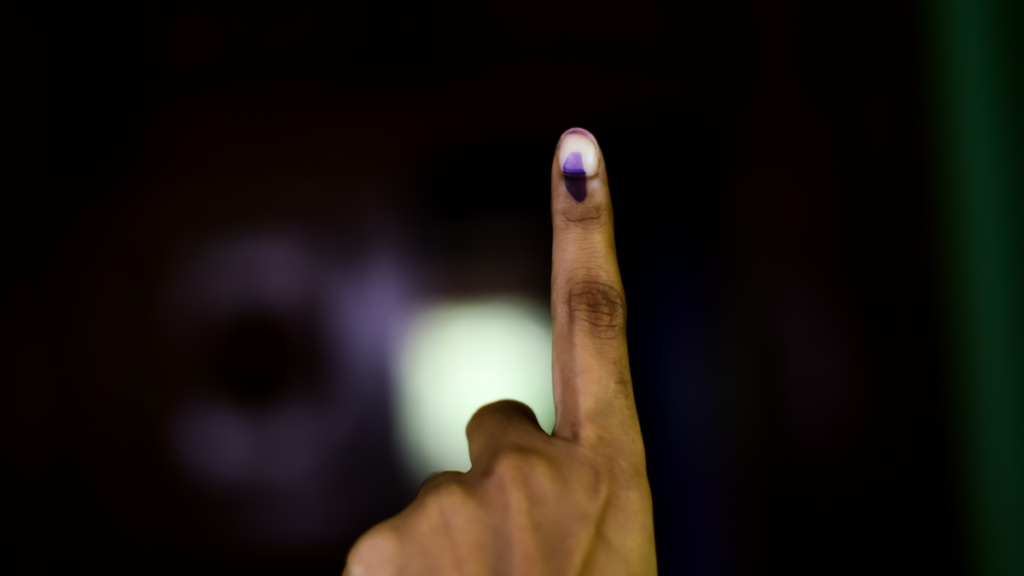
- About: Rajasthan’s One State-One Election framework seeks to synchronise elections to Panchayati Raj Institutions (PRIs) and Urban Local Bodies (ULBs) into a common electoral cycle.
- It is a state-level local-election synchronisation model, not the same as One Nation–One Election, which covers Lok Sabha and State Assemblies.
- Objective: The principal objective is electoral synchronisation.
- It can also reduce repeated Model Code of Conduct-related interruptions and administrative disruption.
- Background: In 2024–25 Rajasthan Budget, the government announced a high-level committee to examine simultaneous rural and urban local-body elections.
- In August 2025, the Cabinet approved delimitation reports for rural and urban bodies.
- The Rajasthan Cabinet officially approved this landmark electoral policy framework on August 7, 2026. Chief Minister Bhajanlal Sharma chaired the decisive cabinet meeting.
- Constitutional Basis: PRIs and municipalities derive their constitutional status from the 73rd and 74th Constitutional Amendments, 1992.
- Part IX covers Panchayats, while Part IX-A covers Municipalities. Article 243E provides a five-year term for Panchayats.
- Article 243U provides a five-year term for Municipalities.
- Elections are conducted under the supervision of the State Election Commission (SEC) through Articles 243K and 243ZA.
- State Legislation: The operational framework rests mainly on the Rajasthan Panchayati Raj Act, 1994 and the Rajasthan Municipalities Act, 2009.
- Rajasthan’s Legislative Assembly passed the Rajasthan Panchayati Raj (Amendment) Bill, 2026 and Rajasthan Municipalities (Amendment) Bill, 2026 in March 2026.
- The Assembly’s official records list them as Bill Nos. 7/2026 and 8/2026, respectively.
- Key Provisions:
- The policy ensures rural and municipal boards are elected in a unified time window. Polls will finish concurrently rather than dragging across a two-year phase.
- A single, standardized common voter registration list will be deployed for local bodies. This will remove duplicate voter verification.
- The Model Code of Conduct (MCC) will be active only once every five years. This will ensure unhindered scheme implementation.
- It implements the OBC Political Representation Commission recommendations, adding updated OBC quotas alongside existing SC/ST reservations via a uniform lottery process.
Rajasthan State OBC (Political Representation) Commission
- The Supreme Court of India mandated a “Triple Test” formula to validate Other Backward Classes (OBC) reservations in local self-governments.
- In compliance, states set up dedicated commissions. The primary objective is to provide constitutionally sound reservation without breaching judicial limitations.
- The Rajasthan State OBC (Political Representation) Commission, headed by retired Judge Madan Lal Bhati, adopted a rigorous, empirical process.
- It collected comprehensive field data through a specialized “Rajdhara Survey Mobile App”.
- The commission successfully surveyed 74.85 lakh OBC families, capturing information of nearly 3.8 crore individuals.
- The 2026 report identified 92 distinct castes within the state’s OBC category. It exposed severe intra-category disparity in grassroot politics.
- Only 11 politically dominant castes have historically fielded over 1,000 electoral contestants.
- Conversely, about 22 backward castes see minimal or zero local political representation.
- The panel recommended local-body-wise quotas instead of a uniform blanket reservation.
- The quantum is bounded by the 50% maximum ceiling limit after subtracting SC/ST statutory shares.
- To facilitate immediate local polls, it projects reserving approximately 2,500 Sarpanch posts and 1,750 urban councillor seats.
- The Commission sought Panchayat-wise population and OBC-population data for all 14,403 Gram Panchayats.
Why One State–One Election Matters?
- Governance Continuity: Synchronised elections can create longer periods of policy stability. Governments may face fewer election-driven interruptions and can focus more consistently on implementation, monitoring and service delivery.
- Better Administrative Capacity: Elections require large deployments of teachers, officials, police and logistical resources. A common electoral cycle can reduce repeated diversion of this workforce and improve departmental continuity between elections.
- More Predictable Planning: A fixed electoral calendar can help governments and election authorities plan budgets, personnel, security, polling infrastructure and logistics well in advance. This improves institutional preparedness.
- Reduced Electoral Fatigue: Frequent elections can demand repeated political campaigning and voter participation. Synchronisation could reduce voter fatigue, while concentrating electoral activity into a predictable period may make participation easier to plan.
- Stronger Local Governance: Bringing Panchayat and municipal elections closer together can create a clearer local democratic cycle. It may also help voters distinguish between different tiers while ensuring that local institutions receive regular electoral legitimacy.
- Economic Efficiency: Repeated elections generate recurring requirements for security, transport, personnel and polling arrangements. Synchronisation can reduce repetitive mobilisation.
- Development Momentum: Fewer election periods could provide governments with a more stable environment for capital expenditure, welfare implementation and long-term projects.
- Democratic Deepening: The strongest significance is potentially systemic rather than merely financial. A predictable election calendar can strengthen electoral administration, transparency and voter confidence.
- However, the reform must preserve federalism, local autonomy, accountability and the constitutional five-year cycle.
- The HLC itself followed a two-stage model, with local elections envisaged within 100 days of Lok Sabha–Assembly elections.
What is One Nation, One Election?
- Meaning: One Nation, One Election (ONOE) means synchronising elections to the Lok Sabha and State Legislative Assemblies.
- Voters would elect both levels within the same electoral cycle. It does not necessarily mean voting on one single day; elections may continue in phases.
- Historical Background: India already practised simultaneous elections from 1951–52 to 1967.
- Lok Sabha and Assembly elections were held together in 1951–52, 1957, 1962 and 1967.
- The cycle weakened after premature dissolution of Assemblies and the Lok Sabha.
- Present Policy Basis: The High-Level Committee (HLC) headed by former President Ram Nath Kovind submitted its report on 14 March 2024.
- The 18,626-page report resulted from 191 days of consultations and research.
- Cabinet Approval: The Union Cabinet accepted the HLC recommendations on 18 September 2024. This provided the executive policy basis for pursuing simultaneous elections through constitutional and statutory changes.
- Constitutional Route: The Constitution (129th Amendment) Bill, 2024 was introduced in Lok Sabha on 17 December 2024.
- It was accompanied by the Union Territories Laws (Amendment) Bill, 2024.
- Both were referred to a Joint Parliamentary Committee (JPC) on 20 December 2024.
- Proposed Election Cycle: The HLC recommended a two-stage approach.
- First, Lok Sabha and State Assembly elections would be synchronised.
- Second, Municipal and Panchayat elections would be held within 100 days of the simultaneous Lok Sabha–Assembly elections.
- Mid-Term Dissolution: The proposed framework addresses premature dissolution and the remaining tenure of legislatures.
- Fresh elections would not necessarily restart a full five-year cycle.
- Electoral Administration: ONOE requires substantial coordination of EVMs, VVPATs, polling personnel, security forces and election logistics. The objective is to reduce repeated mobilisation while improving advance planning.
- Federalism and Democracy: ONOE directly affects State political autonomy and legislative accountability.
- The current JPC is examining federalism, Basic Structure Doctrine, ECI powers and mid-term elections.
- These issues make constitutional consensus essential.
- Current Status: As of July 2026, ONOE remains under parliamentary examination, not an implemented electoral system.
- The JPC continued nationwide consultations, including discussions on constitutional safeguards and electoral mechanisms.
Frequently Asked Questions (FAQs):
ajasthan aims to synchronise Panchayat and urban local-body elections, creating a common electoral cycle across the state.
The objective is to reduce repeated election expenditure, administrative disruption and Model Code of Conduct-related interruptions.
It could create predictable election scheduling, improve administrative efficiency, reduce repeated deployments, and support uninterrupted development programmes.
The Cabinet accepted the OBC Commission’s recommendations, providing an evidence-based framework for political reservation in local bodies.
It can strengthen OBC political representation in Panchayats and municipalities through data-based reservation and revised electoral rosters.
The Cabinet approved a new agricultural policy aimed at improving farm productivity, irrigation, technology adoption, investment and farmers’ incomes.
Disclaimer: Information in this article is based on official announcements and public records. Regulations and implementation details may evolve over time.