Supreme Court Upholds Pension Rights of Women Short Service Officers
|
General Studies Paper II: Gender Equality, Issues Related to Women |
Why in News?
Recently, the Supreme Court of India delivered a landmark ruling on March 24, 2026, granting full pension benefits to women Short Service Commission officers in the Army, Navy, and Air Force.
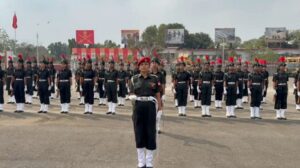
Women’s Entry in the Armed Forces
- Early Entry: The entry of women into the Indian Armed Forces began in a limited capacity through the Military Nursing Service (1888) and later the Army Medical Corps (1958), where women doctors were granted regular commissions. These roles were primarily support-based, restricting women from mainstream military operations.
- Entry Reforms: A major shift occurred in 1992 with the introduction of the Women Special Entry Scheme (WSES), allowing women to join as Short Service Commission (SSC) officers in non-combat branches like Signals, Intelligence, Engineers, and Education Corps. This marked the beginning of women’s formal integration into core defence structures beyond medical roles.
- In 2005, WSES was replaced by the Short Service Commission (SSC) system, providing a structured career with 10 years of service extendable to 14 years. However, unlike men, women initially lacked access to Permanent Commission (PC), limiting their career progression and leadership opportunities within the armed forces.
- Policy Framework: The entry of women has been regulated under Section 12 of the Army Act, 1950, which allowed their inclusion only in notified branches by the government. Over time, policies expanded their roles to departments like Judge Advocate General (JAG), Army Postal Service, and Ordnance Corps.
- A landmark transformation occurred with the Supreme Court judgment (2020, Babita Puniya case), which directed the government to grant Permanent Commission to women officers in all eligible branches. The Court held that denying equal opportunities violated Article 14 (Right to Equality) and emphasized the removal of gender-based discrimination in defence services.
- Expansion: Women’s roles have expanded significantly, especially in the Indian Air Force, which inducted women as fighter pilots in 2016, later institutionalized in 2022. The Indian Navy has opened all branches including aviation, while the Army has gradually expanded roles, though combat arms like infantry remain restricted.
- A historic milestone was achieved when women were allowed entry into the National Defence Academy (NDA) from 2022, enabling them to access the same elite training and leadership pipeline as men.
- The Agnipath Scheme (2022) introduced women as Agniveers across all three services—Army, Navy, and Air Force—signifying a paradigm shift from officer-level entry to soldier-level recruitment.
- As of March 2026, the number of women officers has surged to over 11,000, up from approximately 3,000 in 2014. The IAF maintains the highest representation at 13.4%, followed by the Navy (6%) and the Army (6.85% for officers).
Issues Faced by Women Short Service Officers
- Limited Access: Women Short Service Commission (SSC) officers have historically faced restricted access to Permanent Commission (PC), limiting long-term career growth. Despite serving 10–14 years, many were released without continuation, unlike male counterparts who had broader PC opportunities, affecting institutional continuity.
- Bias in Evaluation: Concerns have been raised regarding subjective evaluation in Annual Confidential Reports (ACRs). Women officers reported casual or inconsistent grading, particularly before 2020, which affected merit ranking for PC selection. The Supreme Court highlighted that such practices adversely impacted overall merit and fairness.
- Unequal Consideration: The evaluation process often applied different benchmarks or cut-offs, creating an uneven playing field. Judicial observations noted that women officers were treated as a separate class, affecting their chances of selection for permanent roles and equal recognition of service performance.
- Structural Limitations: Women SSC officers have faced restricted exposure to command and operational roles, which are crucial for career advancement. Limited access to key assignments, courses, and field postings impacted their professional profiles, even though many participated in important operations like Galwan and Balakot.
- Pension Uncertainty: SSC officers typically serve up to 14 years, whereas pension eligibility requires 20 years of service, leading to post-retirement financial uncertainty. Women officers, lacking PC opportunities earlier, were disproportionately affected, creating long-standing concerns over pension and social security benefits.
Highlights of Supreme Court Judgment
- Background: After the Supreme Court’s 2020, Babita Puniya judgement, between 2019, 2020, and 2021, selection boards evaluated women SSC officers for PC under new policies. Many officers, including those commissioned around 2007–2012, were denied PC and released in 2021, triggering widespread legal challenges.
- In July 2024, the Armed Forces Tribunal dismissed several appeals, after which officers approached the Supreme Court. On 9 May 2025, the Court granted interim relief, directing that women SSC officers challenging denial of PC should not be released from service.
- After extensive hearings involving Army, Navy, and Air Force cases, the Supreme Court reserved its judgment in September 2025. The case involved issues like ACR-based evaluation, vacancy calculations, and new performance benchmarks.
- Final Verdict: On 24 March 2026, the Court delivered its final judgment granting pensionary benefits and PC relief. It ruled that women SSC officers considered in 2019–2021 boards will be deemed to have completed 20 years of service, despite serving about 14 years, thereby making them eligible for full pension and consequential benefits.
- The Court invoked Article 142 to ensure complete justice, identifying systemic discrimination in ACR grading and evaluation processes. It observed that lower gradings were influenced by assumptions of limited tenure, not merit.
- Court mandated that pension must be calculated by including notional increments from the date of release till the deemed 20-year service mark, correcting earlier practices where only the last drawn salary at release was considered.
- The Court clarified that eligible officers are entitled to arrears of pension, calculated from the date they are deemed to have completed 20 years of service. However, it differentiated between pension arrears and salary, specifying that no back wages (salary) will be paid.
- The judgment extended additional benefits such as Ex-Servicemen Contributory Health Scheme (ECHS) and clarified provisions related to commuted pension and leave encashment (up to 300 days).
- The judgment reaffirmed the need for fair, transparent, and merit-based evaluation systems in the armed forces. It stressed that gender-based assumptions regarding limited career roles must not influence decision-making, ensuring alignment with constitutional principles of equality.
- The Supreme Court of India ruled that vacancy caps cannot override constitutional equality, rejecting arguments that limited seats justified restricting women’s recruitment.
|
Permanent Commission (PC):
|
|
Also Read: SC Flags Arbitrary Criteria in Women Officers Appointment |