



TIME World Greatest Places 2026
| General Studies Paper II: International Recognition, Tourism and Heritage |
Why in News?
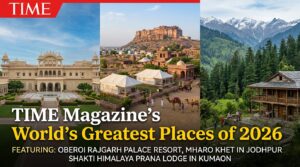
Three Indian luxury properties—Oberoi Rajgarh Palace Resort, Mharo Khet in Jodhpur, and Shakti Himalaya Prana Lodge in Kumaon—have been featured on TIME Magazine’s World’s Greatest Places of 2026 list, showcasing India’s growing prominence in world tourism and culturally rich travel experiences.
Highlights of TIME’s World’s Greatest Places 2026 List
- Total Destinations: TIME’s World’s Greatest Places 2026 features around 100 global destinations. The list includes hotels, attractions, museums, cruises, and natural sites, reflecting evolving global tourism trends.
- Categories: The list is broadly divided into two major categories: “Places to Stay” and “Places to Visit.” It includes diverse entities such as resorts, heritage sites, theme parks, and cultural institutions, selected through expert evaluation.
- Geographical Diversity: The 2026 edition spans all continents, including Asia, Africa, Europe, North America, South America, Oceania, and the Middle East, highlighting balanced global representation.
- Top Places Worldwide: Prominent highlights include Epic Universe (USA), Port Davey (Australia), and Grand Egyptian Museum (Egypt), representing innovation, natural beauty, and cultural heritage respectively.
- The broader top selections feature destinations like Ise-Jingu (Japan), Cappadocia caves (Turkey), Royal Malewane (South Africa), and Oberoi Rajgarh Palace (India), reflecting luxury, spirituality, and eco-tourism trends.
- Top 3 Cities: Parallel global city rankings show Melbourne, Shanghai, and Edinburgh as top cities in 2026.
- Melbourne (Australia) ranked No. 1 for its exceptional quality of life, vibrant cafe culture, independent cinemas, and extensive public transport.
- Shanghai (China) ranked 2nd top destination for its incredible blend of modern financial, high-speed rail hubs, and surrounding historic villages.
- Edinburgh (Scotland) recognized for its stunning history, spanning from the Old Town’s medieval architecture to the elegant 18th-century New Town.
- Top 10 Cities: The top 10 cities include Melbourne, Shanghai, Edinburgh, London, New York, Cape Town, Mexico City, Bangkok, Seoul, and Tokyo, highlighting urban diversity, economic vitality, and cultural dynamism.
TIME’s World’s Greatest Places List:
Note: TIME is a global media organization known for its influential journalism, signature red-bordered magazine, and digital media presence.
|
India’s Presence in TIME’s World’s Greatest Places 2026 List
- Oberoi Rajgarh Palace Resort, Khajuraho (Madhya Pradesh): The Oberoi Rajgarh Palace Resort represents India’s heritage luxury tourism excellence in TIME’s 2026 list. This 350-year-old Bundela dynasty palace, restored over nearly 7 years, spans about 76 acres with 65 rooms and suites, blending royal architecture with modern amenities.
- Located near UNESCO-listed Khajuraho temples and adjacent to Panna National Park (543 sq. km.), the property integrates culture, wildlife, and landscape tourism. The park’s tiger population recovery (over 90 tigers) highlights India’s successful conservation model, enhancing experiential tourism.
- The resort features private villas, infinity pools, spa therapies based on ancient traditions, and curated experiences like tiger safaris and cultural performances, aligning with global demand for immersive luxury travel.
- Economically, such ultra-luxury stays (₹70,000–₹1 lakh per night range) contribute to high-value tourism inflow, generating employment for local artisans and service sectors.
- Mharo Khet, Jodhpur (Rajasthan): The Mharo Khet represents a new paradigm of agritourism and sustainable rural hospitality. Spread across a 40-acre regenerative farm in the Thar Desert, it transforms an arid landscape into a green ecological retreat.
- Developed by Rajnush Agarwal and Vedika Prasad, the property features 10 standalone luxury cottages, blending traditional Indian crafts (block prints, Channapatna toys, regional textiles) with modern minimalist design.
- A defining feature is its farm-to-table ecosystem. Guests engage in organic farming, cooking classes, and guided farm walks, while dining focuses on plant-based cuisine across three restaurants, including orchard dining experiences.
- This model aligns with sustainable tourism principles, promoting local agriculture, water conservation, and low ecological footprint in a desert region. It also generates rural employment and skill development.
- Shakti Himalaya Prana Lodge, Kumaon (Uttarakhand): The Shakti Himalaya Prana Lodge represents India’s leadership in high-end eco-adventure and wellness tourism. Opened in October 2025, this exclusive seven-suite retreat is located at around 7,000 feet altitude in the Himalayas.
- Uniquely, access is only by 30–50 minute trek, reinforcing its positioning as a remote, low-impact destination. The lodge is solar-powered, built using local materials, and designed to minimize ecological disruption.
- It offers panoramic views of Nanda Devi (India’s second-highest peak) and the Panchachuli range, integrating nature, spirituality, and wellness. Experiences include guided Himalayan treks, yoga, meditation, and curated local cuisine, reflecting global demand for transformative travel.
- Economically, such high-value niche tourism (packages often exceeding $3,000–$8,000) supports local communities through employment, homestays, and supply chains.
- The lodge is part of the broader Shakti Himalaya network, which promotes community-based tourism and cultural preservation across remote Himalayan regions.
Significance of International Recognition on Indian Tourism
- Economic Growth and FDI Inflow: Global accolades act as a catalyst for Foreign Direct Investment (FDI). With India’s tourism sector projected to contribute $512 billion to GDP by 2028, such recognition validates the profitability of the luxury hospitality segment.
- Rise of Regenerative Travel: Recognition of Mharo Khet signals India’s leadership in regenerative agriculture. Moving beyond “eco-friendly,” these sites actively improve soil health and biodiversity, aligning India with the global trend where 80% of travelers now prioritize sustainable stays.
- Boosting the Wedding Tourism Market: India aims to capture a larger share of the $5 billion global destination wedding market. Global rankings for regal palaces enhance India’s “brand” as a premier nuptial destination, competing with European venues in Italy and France.
- Boost to Foreign Tourist Arrivals (FTA): Global recognition enhances India’s visibility, increasing Foreign Tourist Arrivals (FTAs), which crossed 9 million in 2023, recovering strongly post-pandemic and indicating rising international confidence.
- Soft Power and Cultural Diplomacy: Tourism is a key pillar of soft power. Showcasing Kumaoni traditions at Shakti Prana projects an image of a culturally rich yet modern nation, fostering international goodwill and strengthening bilateral ties through “people-to-people” exchange.
- Infrastructure Development Incentives: Recognition often leads to expedited UDAN (Regional Connectivity Scheme) flights and better road infrastructure in rural belts, benefiting both tourists and local residents.
- Employment Generation: Tourism supports nearly 10–11% of India’s total employment (WTTC estimates), creating jobs in hospitality, transport, handicrafts, and services, especially for youth and women.
| Also Read: Deepavali added to UNESCO Intangible Cultural Heritage List |