


UNESCO World Heritage Tentative List 2026: 3 New Indian Sites Added to The List
| General Studies Paper I: Important Recognition, Indian Heritage |
Why in News?
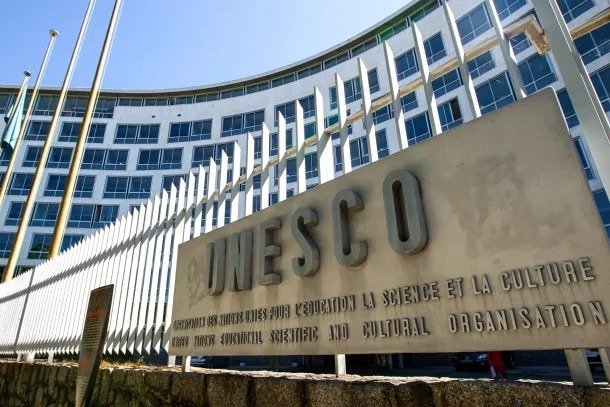
Recently, UNESCO added three Indian sites to its 2026 World Heritage Tentative List: Baratang’s Karst-Mud Volcano Complex, Andaman Subduction Volcanoes, and Sirpur Cultural and Archaeological Landscape.
Highlights of Three Newly Added Indian Sites
- Baratang Karst-Mud Volcano Complex: The Baratang Karst-Mud Volcano Complex, located in the Andaman and Nicobar Islands.
- It is situated in the North and Middle Andaman district, approximately 100–150 km north of Sri Vijaya Puram (Port Blair).
- The complex sits along the highly active Sunda–Andaman Subduction Zone, where the Indian Plate subducts beneath the Burma Microplate. It is part of an outer-arc accretionary wedge.
- The site is embedded within a rich tropical ecosystem comprising lowland rainforests, tidal swamps, and dense mangrove creeks.
- Mud Volcanoes (Jalki): These are India’s only active mud volcanoes. Unlike traditional magmatic/igneous volcanoes (e.g., Barren Island), they do not erupt molten magma.
- Instead, seismically triggered diapiric movements of overpressured subsurface shale layers push up cold slurries of mud, brine, and gases—mainly methane (CH₄) and hydrogen sulphide.
- They act as indicators of subsurface hydrocarbon horizons.
- Recent major sporadic eruptions occurred in 2005 and October 2025.
- Mud Volcanoes (Jalki): These are India’s only active mud volcanoes. Unlike traditional magmatic/igneous volcanoes (e.g., Barren Island), they do not erupt molten magma.
- Karst Topography: The region features the largest underground cave complex in the area, spanning over one square kilometer.
- These limestone caves were sculpted over millions of years by the chemical dissolution of calcium carbonate by water, creating distinct stalactites, stalagmites, and solution chambers.
- The island is home to the indigenous, particularly vulnerable tribal group (PVTG)—the Jarawa tribe.
- The site is recognized as a national Geoheritage site by the Geological Survey of India (GSI) to promote geo-tourism while ensuring strict ecological and tribal reserve protection.
- Andaman Subduction Volcanoes: The Andaman Subduction Volcanoes constitute a geologically distinct island-arc chain in the Andaman Sea.
- It was formed during the Quaternary period, representing the only subduction-induced volcanic arc in the Indian subcontinent.
- The volcanoes are positioned along the Burma–Andaman–Java subduction complex.
- They originate from the oblique subduction of the oceanic lithosphere of the Indian Plate beneath the Burma microplate (Sunda Plate).
- This convergent boundary induces flux melting in the mantle wedge, triggering the upward migration of magma.
- These subaerial peaks form part of the Neogene Inner Volcanic Arc, which stretches from Myanmar (e.g., Mount Popa) down to Sumatra, Indonesia.
- Components:
- Barren Island: India’s only active volcano and the sole confirmed active site in South Asia. It is a stratovolcano composed of basaltic andesite lava and ash. It sits on the oceanic crust, featuring a 2-km-wide caldera, and has experienced multiple historical eruptions, including significant events in 1991, 2017, and late 2025.
- Narcondam Island: A dormant stratovolcano located northeast of Barren Island. It exhibits a domal dacite-andesite structure rising 710 meters above sea level. Built over a thicker transitional crust, its rocks display calc-alkaline characteristics derived from magma mixing between the mantle and crust.
- The extreme isolation of Narcondam Island has fostered distinct ecological succession, famously serving as the exclusive habitat for the endangered Narcondam Hornbill.
- The region is high-risk, falling under Seismic Zone V. The underlying megathrust faults pose significant earthquake and tsunami hazards to mainland India.
- Sirpur Cultural and Archaeological Landscape: The Sirpur Cultural and Archaeological Landscape is a major 5th–12th century CE multi-religious urban site.
- It is located on the eastern banks of the Mahanadi River in Mahasamund district, Chhattisgarh.
- History: Originally known as Shripur, it was the flourishing capital of Dakshina Kosala under the Sharabhapuriya, Panduvanshi, and Somavamshi dynasties.
- The 7th-century Chinese traveler Xuanzang (Hiuen Tsang) visited Sirpur, documenting its prosperous Buddhist monasteries and religious coexistence.
- The site was first identified in 1882 by Alexander Cunningham.
- Art & Architecture: Sirpur represents one of the most complete surviving early-medieval urban designs, seamlessly integrating stone and brick.
- Lakshmana Temple (7th Century CE): A benchmark of Nagara style brick architecture. It features a fully staggered square plan, molded brick facades, and an intricate stone doorframe dedicated to Vishnu.
- Surang Tila Complex: A massive Panchayatana temple built on an elevated 9-meter terrace with 37 steps, exhibiting structural engineering built to survive seismic shocks.
- Syncretism: The urban fabric displays coexistence with 22 Shiva temples, 5 Vishnu temples, 10 Buddhist viharas, and 3 Jain structures. Notable among them is the Tivaradeva Mahavihara housing a monolithic Avalokiteshvara.
- Socio-Economic Development:
- Urban Center: Excavations revealed a structured 6th-century market complex, public assembly halls, defensive fortifications, and residential quarters.
- Hydrology & Health: Advanced water management systems, stepped community tanks, and an Ayurvedic public bath reflect high ancient civic standards.
- Limestone Basin Geology: The landscape sits over ancient stromatolite fossils, offering unique geological value.
What is the UNESCO World Heritage Tentative List?
- About: The UNESCO World Heritage Tentative List is a mandatory administrative inventory compiled by Member States containing properties they consider eligible for subsequent nomination to the formal UNESCO World Heritage List.
- Criteria & Rules: Sites must meet at least one of the ten operational criteria (six cultural, four natural) and satisfy conditions of authenticity and integrity.
- Under the 1972 World Heritage Convention, a cultural, natural, or mixed heritage asset must reside on a country’s Tentative List for at least one year before formal evaluation. Inclusion does not automatically guarantee permanent inscription.
- States Parties are encouraged to systematically re-examine and update their inventories at least every ten years.
- India: In India, the Archaeological Survey of India (ASI) serves as the nodal agency processing, validating, and submitting documentation.
- India’s total count on the Tentative List stands at 81 properties, operating alongside its 45 formally inscribed World Heritage Sites (following Sarnath’s final inscription).
Frequently Asked Questions (FAQs):
1. Which three Indian sites were added to UNESCO’s World Heritage Tentative List in 2026?
The Karst-mud-volcano Complex of Baratang, Andaman Subduction Volcanoes, and Sirpur Cultural and Archaeological Landscape were added.
2. What is UNESCO’s World Heritage Tentative List?
It is an inventory of properties countries intend to nominate for future inscription on UNESCO’s World Heritage List.
3. How does a site get included in the UNESCO World Heritage Tentative List?
A country identifies a potentially outstanding heritage property and submits its details to UNESCO’s World Heritage Centre for inclusion.
4. What is the difference between the Tentative List and the official World Heritage List?
The Tentative List identifies potential nominees; the official World Heritage List includes properties formally inscribed after evaluation and approval.
5. How can UNESCO recognition help preserve India’s cultural and natural heritage?
It increases international visibility, encourages conservation funding and expertise, promotes sustainable tourism, and strengthens awareness of heritage protection.
Disclaimer: Information in this article is based on official announcements and public records. Details may evolve over time.