39 Naga Ancestral Remains to Return India, Oxford Museum Will Restore Colonial Artifacts
| General Studies Paper I: Cultural Diplomacy, Ancient History |
Why in News?
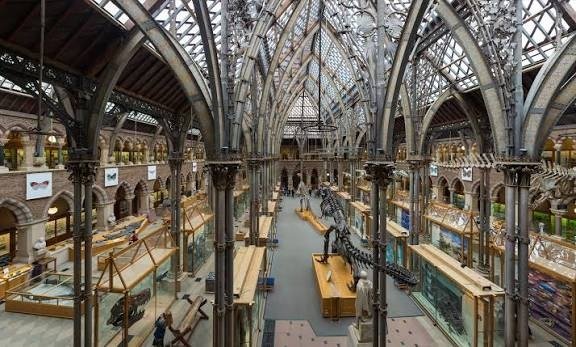
Recently, Oxford University’s Pitt Rivers Museum approved the repatriation of 39 Naga ancestral remains to northeast India. This milestone accelerates decolonization by prioritizing Indigenous cultural dignity.
Highlights of 39 Naga Ancestral Remains to Return India
- Approval: The University of Oxford Council formally agreed on 13 July 2026 to return 39 Naga ancestral human remains held by the Pitt Rivers Museum (PRM) in the United Kingdom.
- The decision was communicated by Museum Director Professor Laura Van Broekhoven to the Forum for Naga Reconciliation (FNR).
- It follows roughly six years of dialogue, research and community advocacy.
- Note- The Pitt Rivers Museum was founded in 1884 after General Augustus Henry Lane Fox Pitt-Rivers donated his collection to the University of Oxford.
- Background: The Naga community considered ancestors whose relationship with the community continues after death.
- The process began around 2020, when the Pitt Rivers Museum engaged with the FNR.
- The FNR subsequently supported the Recover, Restore and Decolonise (RRaD) initiative, involving Naga researchers, and wider communities.
- In June 2025, Naga tribal leaders, elders and FNR-RRaD representatives visited the museum.
- During consultations held from 9–13 June 2025, the delegation examined the issue directly and issued the Naga Oxford Declaration on Repatriation on 13 June. It strengthened the community’s collective demand for the ancestors’ return.
- In February 2026, the Forum for Naga Reconciliation submitted a claim concerning 40 sets of ancestral remains held by the museum. Oxford subsequently agreed to return 39.
- Remains Type: 39 Naga ancestral remains being returned consist primarily of skeletal human remains.
- These items include: Skulls and craniums, including the cranium of a warrior and the skull of a woman and bone fragments, such as the jawbone of a young person.
- They were historically categorised and exhibited under themes like “Treatment of Dead Enemies” and labelled as “headhunting trophies”.
- Handover: The museum and Naga representatives are working together on the practical arrangements.
- The return is intended to culminate in a dignified resting place in Nagaland.
- The proposed approach seeks to make the resting place a symbol of unity, healing and peace.
- Significance: The decision represents a shift from viewing colonial-era human remains principally as research collections towards recognising descendant communities’ authority, dignity and cultural rights.
- India has increasingly pursued the recovery of antiquities and cultural property from abroad.
- In March 2026, the Indian High Commission in London highlighted the forthcoming return of several Indian antiquities through cooperation of British and Indian institutions.
- In 2022, Glasgow Life Museums became the first UK museum service to agree to repatriate Indian antiquities under an arrangement involving Indian authorities.
- India has increasingly pursued the recovery of antiquities and cultural property from abroad.
Naga Collection in Pitt Rivers Museum
- The Pitt Rivers Museum holds more than 6,000 Naga artefacts, including textiles, weapons, and physical human skeletal remains (mostly skulls and jawbones).
- The term Naga refers to a diverse group of communities inhabiting areas of present-day Nagaland and neighbouring parts of Northeast India and adjoining Myanmar.
- The Naga collection’s history is closely connected with the expansion of the British Empire.
- The Naga Hills became an important frontier region for the British administration.
- British officials conducted surveys, administrative operations and ethnographic investigations there.
- After arriving in India in 1869, Robert Gosset Woodthorpe, a British Royal Engineers officer and Survey of India official worked on frontier surveys and spent periods in the Naga Hills.
- His collection includes writings, photographs, sketches and objects connected with the region during the nineteenth century.
- British administrators and anthropologists such as John Henry Hutton and James Philip Mills also made major contributions to Naga ethnographic collections.
- Both of them served as Deputy Commissioners of the Naga Hills.
- Hutton collected extensively among the Nagas and eventually loaned and donated substantial material to the Pitt Rivers Museum.
- Human remains were collected in the nineteenth and early twentieth centuries partly to support anthropological theories that attempted to classify human societies.
- The museum holds objects associated with Rani Gaidinliu, the Zeliangrong Naga leader who resisted British rule. Following her capture, British authorities confiscated body cloths, bracelets, and other ritual objects.
- The collection contains an additional 178 cultural items—such as ceremonial headdresses, shields, baskets, and textiles—that contain, or are woven with, human hair.
- Human displays were dismantled during the museum’s comprehensive ethical overhaul in 2020.
- The museum removed 120 human remains from open display, including Naga trophy heads, and began broader work involving descendant communities.
- Human displays were dismantled during the museum’s comprehensive ethical overhaul in 2020.
India–UK Cultural Cooperation
- Programme: India and the United Kingdom signed a landmark Programme of Cultural Cooperation (POCC) in May 2025 to deepen ties in arts, heritage, and the creative economy.
- It was signed to enhance two-way cultural exchange, heritage conservation, and dialogue surrounding historical artifacts.
- Areas of Cooperation:
- Digital Technologies: Focuses on digitizing archives, libraries, and museum collections alongside new digital tools for cultural research and preservation.
- Exhibitions and Collections: Encourages joint displays, curation expertise, and library management support between institutions like the British Museum and Indian national counterparts.
- Performances and Events: Promotes cross-border cultural events and festival programming featuring artists from both nations.
- Artifacts and Repatriation Discussions: The framework has facilitated ongoing, collaborative discussions regarding high-profile historical items—including the Kohinoor diamond.
- Cultural Property: Combats the illicit trafficking of cultural artifacts and builds shared expertise in monument and heritage conservation.
- Sustainability: Integrates eco-friendly practices into the cultural sector to respond to global climate challenges.
- Implementing Bodies:
- British Council Division: Acts as the primary implementing body in New Delhi alongside the Indian Ministry of Culture.
- Major UK Institutions: Includes partnerships involving Arts Council England, the British Library, and the Science Museum Group.
International Laws on Return of Artefacts
- UNESCO 1970 Convention: The principal international framework is the 1970 UNESCO Convention on illicit trafficking of cultural property.
- India deposited its instrument of ratification in 1977.
- The Convention seeks to prevent illicit import, export and transfer of cultural property and provides mechanisms for return and restitution.
- It does not apply retroactively to items taken during historical colonial rule before 1970.
- Article 9 of the UNESCO framework encourages States to negotiate when cultural heritage is threatened or when cases do not fit straightforward recovery mechanisms.
- UNESCO’s Intergovernmental Committee for Promoting the Return of Cultural Property can also facilitate negotiations between states.
- UNIDROIT 1995 Convention: The 1995 UNIDROIT Convention on Stolen or Illegally Exported Cultural Objects is an international treaty adopted in Rome on June 24, 1995, to combat illicit trafficking and facilitate the restitution of cultural property.
- The treaty introduces a requirement of “due diligence” for buyers, requiring them to verify the origin and legitimacy of an item before purchase.
- Claims for restitution must be brought within 3 years of discovering the location and owner of the object, and within a hard limit of 50 years from the time of the theft.
- This agreement handles “good faith” buyers but still struggles to force Western nations to return possessions acquired legally under past colonial laws.
| Note: Antiquities and Art Treasures Act (AATA) 1972 is India’s primary law. It governs heritage items and helps the government claim smuggled artifacts when they surface abroad. |
Frequently Asked Questions (FAQs):
1. Why is Oxford Museum returning 39 Naga human remains?
They are being repatriated following a Naga community claim and years of dialogue over colonial-era ancestral remains.
2. Where were the 39 Naga ancestral remains kept?
They were held at Oxford University’s Pitt Rivers Museum in Oxford, United Kingdom.
3. When will the Naga human remains be returned to India?
A handover date is being finalised; reports indicate the ceremony is expected in November 2026.
4. Why did the Pitt Rivers Museum decide to return the Naga remains?
The museum recognises historical acquisition without informed consent and supports respectful, ethical repatriation with descendant communities.
5. How did the Naga human remains reach Oxford during the British colonial era?
They entered museum collections during colonial-era anthropological collecting, particularly through administrators such as John Henry Hutton and James Philip Mills.
6. Who demanded repatriation of the 39 Naga remains?
The Forum for Naga Reconciliation (FNR) submitted the repatriation claim, supported by wider Naga organisations and community representatives.
7. Where will the Naga ancestral remains be returned?
They will return to the Naga homeland in Nagaland, arriving in Dimapur, followed by dignified arrangements for their final resting place.
Disclaimer: Information in this article is based on official announcements and public records. Regulations and implementation details may evolve over time.
| Also Read: US Returns 657 Stolen Artefacts to India |