



Cross-Voting in Rajya Sabha Elections
| General Studies Paper II: Indian Constitution, Parliament |
Why in News?
Recently in Rajya Sabha elections 2026, cross-voting by MLAs significantly influenced results in states like Haryana, Bihar and Odisha, benefiting the ruling alliance and exposing absenteeism, and allegations of inducements.
What is Cross-Voting in Rajya Sabha Election?
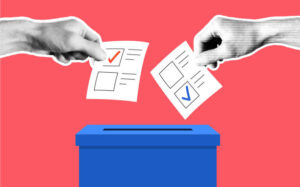
- About: Cross-voting refers to a situation where MLAs vote against their party’s official candidate in indirect elections like Rajya Sabha Elections. It means legislators support candidates from rival parties instead of their own.
-
-
- Cross-voting is also observed in Legislative Council, Presidential, Vice-Presidential elections, and even no-confidence motions.
- Reasons: Major causes include personal ambition, dissatisfaction with party leadership, ideological differences, and political bargaining. MLAs may also act based on regional or constituency interests over party loyalty.
-
- Background: Before 1998, Rajya Sabha elections were often uncontested. The 1998 Maharashtra elections saw notable cross-voting, marking a shift towards unpredictable outcomes.
-
-
- Recent elections, including Rajya Sabha and Presidential elections (2022, 2024), witnessed cross-voting by MLAs from opposition parties, indicating shifting political loyalties.
-
- Constitutional Basis: Under Article 80, Rajya Sabha members are indirectly elected by elected MLAs of State Legislative Assemblies. This structure allows room for individual voting behaviour, enabling cross-voting.
- Election System: Elections follow Proportional Representation by Single Transferable Vote (STV). MLAs rank candidates by preference, and a candidate needs a minimum quota of votes (e.g., 37 votes in UP for one seat), creating scope for cross-voting.
- Party Whip: Political parties cannot issue a binding whip in Rajya Sabha elections because these are conducted by the Election Commission, not the Assembly proceedings.
-
-
- While the MLA keeps their seat in the Assembly, the party has the power to expel or suspend them for “anti-party activity.”
-
- Anti-Defection Law: The Tenth Schedule (Anti-Defection Law) does not apply to Rajya Sabha elections. Therefore, MLAs are not disqualified for voting against their party, though internal party action may occur.
-
-
- In the Lok Sabha or Vidhan Sabha, if a member votes against the party whip, they can lose their membership under the Anti-Defection Law (10th Schedule).
-
- Open Ballot System: To curb malpractice, the Representation of the People Act, 1951 was amended in 2003, introducing an open ballot system. MLAs must show their vote to party agents, increasing transparency but not eliminating cross-voting.
-
- In the landmark 2006 case of Kuldip Nayar v. Union of India, a five-judge Constitution Bench of the Supreme Court unanimously upheld the constitutional validity of the open ballot system for Rajya Sabha elections.
Democratic Risks of Cross Voting in Elections
- Erosion of Electoral Mandate: Cross-voting leads to distortion of the voters’ mandate, as elected representatives are expected to follow party ideology chosen by the electorate. When MLAs vote against party lines, candidates may win without majority political support, weakening representative democracy.
- Corruption and Horse-Trading: A major concern is bribery and inducement politics. Historically, the 1967 Bihar case (Rajendra Prasad Jain) involved cross-voting linked to bribery, later declared void by the Supreme Court. Recently, reports (2026) alleged offers of ₹5 crore per MLA to influence votes, highlighting ongoing risks.
- Weakening of Party Discipline: Cross-voting reflects internal party dissent and factionalism, reducing cohesion. It disrupts policy consistency and governance stability, as parties struggle to maintain unified legislative behavior, especially in coalition politics.
- Decline in Public Trust: Frequent cross-voting incidents reduce citizens’ confidence in democratic institutions. When representatives prioritize personal or political gains over public interest, it creates a perception of unethical political practices and lack of accountability.
- Impact on Legislation: The Rajya Sabha is the House of Elders. If a ruling party loses seats due to cross-voting, it struggles to pass crucial bills or Constitutional amendments. Therefore, cross-voting in a single state can have a massive impact on National Policy.
Key Committee Recommendations to Address Cross Voting in Elections
|
Effective Measures to Prevent Cross Voting in Elections
- Strengthening Anti-Defection Provisions: The scope of the Tenth Schedule should be expanded to cover indirect elections like Rajya Sabha and Presidential polls, ensuring legal consequences for unethical cross-voting while safeguarding legitimate dissent.
- Transparent Voting Mechanisms: Further reforms in the open ballot system with strict monitoring can reduce secret deal-making and inducements, ensuring greater accountability of legislators during voting.
- Time-Bound Disqualification Decisions: Decisions on defection and misconduct must be made within a fixed timeframe (e.g., 3 months) to prevent delays and political manipulation by presiding officers.
- Internal Party Democracy: Political parties should promote transparent candidate selection and internal dialogue, reducing dissatisfaction among MLAs, which is a major cause of cross-voting.
- Strict Anti-Corruption Enforcement: Agencies like Election Commission and vigilance bodies must strictly act against bribery and horse-trading, including financial surveillance and penal action, to uphold electoral integrity.
| Also Read: Rajya Sabha Election Process |