




Shigellosis Outbreak
|
General Studies Paper II: Health, Government Policies & Interventions |
Why in News?
Recently, a shigellosis outbreak was reported in Kerala’s Eranjikal area, with 12 cases and one confirmed death, prompting urgent public health responses.
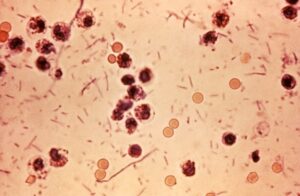
What is Shigellosis?
- About: Shigellosis is an acute intestinal infection caused by Shigella bacteria, leading primarily to diarrhea (often bloody), fever, and abdominal cramps.
- It is a highly contagious communicable disease affecting the gastrointestinal tract, especially the colon.
- In the United States around 450,000 cases occur annually, indicating significant disease burden.
- In India, it is endemic, contributing substantially to diarrheal diseases among children under 5.
- Causative Agent: The disease is caused by four major species: Shigella sonnei, S. flexneri, S. dysenteriae, and S. boydii.
- Among these, S. dysenteriae type 1 is the most virulent and potentially fatal, associated with higher mortality.
- S. flexneri is more common in developing countries, including India, while S. sonnei dominates in developed nations.
- Transmission: Shigellosis spreads through the fecal-oral route, meaning ingestion of food, water, or surfaces contaminated with infected feces.
- Even a very low infectious dose (as few as 10–100 bacteria) can cause infection, making it extremely transmissible in crowded and unsanitary conditions.
- High-Risk Groups: The most vulnerable populations include: Children under 5 years, Elderly individuals, Immunocompromised persons, People in overcrowded settings (schools, slums, refugee camps).
- Symptoms: Symptoms typically appear within 1–2 days of infection and last about 5–7 days. Key symptoms include: Watery or bloody diarrhea, Fever, Abdominal pain and cramps, Tenesmus (feeling of incomplete evacuation).
- Severity: Although often self-limiting, complications may occur: Hemolytic Uremic Syndrome (HUS) (kidney failure), Seizures in children and Bloodstream infections (0.4–7.3% cases).
- Shigella is the second leading bacterial cause of diarrhea worldwide and the third leading cause of death in children under 5 years old, with approximately 164.7 million annual episodes.
- Diagnosis: Diagnosis is confirmed through laboratory testing, primarily: Stool culture, Culture-independent diagnostic tests (CIDTs). Accurate diagnosis is essential for outbreak detection and targeted treatment.
- Treatment: Most cases resolve with oral rehydration and rest. However, severe cases require antibiotics such as: Ciprofloxacin, Azithromycin and Ceftriaxone.
- Treatment reduces duration and transmission, but must consider resistance patterns.
- In U.S. due to multidrug-resistant (MDR), about 242,000 infections are antibiotic-resistant, highlighting a global threat.
- Prevention: Key preventive strategies include: Handwashing with soap, Safe drinking water and sanitation, Food hygiene practices and Avoiding contaminated water sources.
- Handwashing with soap and water is widely reported to reduce Shigella transmission by as much as 70%.
Government Initiatives and Policy Framework in India
- Integrated Disease Surveillance Programme (IDSP): The Integrated Disease Surveillance Programme (IDSP) under the Ministry of Health ensures real-time tracking of outbreaks, including shigellosis.
- It collects weekly disease data from districts and enables early warning signals, helping contain outbreaks through rapid response teams.
- National Health Mission (NHM): The National Health Mission (NHM) strengthens primary healthcare systems, focusing on maternal-child health, sanitation, and communicable disease control. It supports infrastructure, human resources, and awareness, particularly in rural and underserved areas.
- Swachh Bharat Mission (SBM): The Swachh Bharat Mission (SBM) has significantly improved sanitation coverage, with rural toilet coverage rising from ~39% (2014) to nearly 100% (2019). This directly reduces open defecation, a major cause of fecal-oral transmission of Shigella.
- Jal Jeevan Mission (JJM): The Jal Jeevan Mission (JJM) aims to provide Functional Household Tap Connections (FHTC). As of 2024, over 14 crore rural households have access to safe drinking water, reducing water-borne infections.
- National Programme for Prevention and Control of Diarrheal Diseases: India implements targeted strategies for diarrheal disease control, including ORS (Oral Rehydration Solution) distribution and Zinc supplementation. These interventions have significantly reduced child mortality due to diarrhea.
- POSHAN Abhiyaan: The POSHAN Abhiyaan addresses malnutrition, which increases susceptibility to infections like shigellosis. By improving nutritional outcomes in children and women, it indirectly reduces disease severity and mortality.
- Food Safety and Standards Authority of India (FSSAI): The Food Safety and Standards Authority of India (FSSAI) regulates food hygiene and safety standards. Initiatives like Eat Right India promote safe food handling, preventing food-borne transmission of pathogens.
- National Centre for Disease Control (NCDC): The National Centre for Disease Control (NCDC) plays a key role in outbreak investigation, laboratory support, and training. It collaborates with states to manage epidemics and antimicrobial resistance surveillance.
- Antimicrobial Resistance (AMR) Action Plan: India’s National Action Plan on AMR (2017–2025) addresses rising drug-resistant Shigella strains. It focuses on surveillance, rational antibiotic use, and awareness, crucial for effective treatment.
- Hygiene Programmes: Government-led initiatives in schools promote handwashing, sanitation, and hygiene education. Programs like Swachh Vidyalaya ensure separate toilets and clean water, reducing transmission among children.
|
Also Read: Nipah Virus Case Reported in West Bengal |