Government Launches Nationwide Fire Safety Week
|
General Studies Paper II: Government Policies & Interventions, Disaster Management |
Why in News?
Recently, India’s Health Ministry launched a nationwide Fire Safety Week (May 4–10, 2026) to strengthen hospital preparedness through mock drills, audits, training, and stricter safety guidelines.
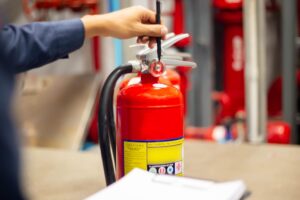
Highlights of Nationwide Fire Safety Week
- Nature: Nationwide Fire Safety Week (4–10 May 2026) is a government-led campaign to strengthen fire prevention, preparedness, and response systems, especially in healthcare facilities across India.
- Objective: The initiative aims to build a proactive safety culture, shifting from reactive disaster response to prevention.
- Institutional Mechanism: The campaign is coordinated by the Ministry of Health with support from the Directorate General of Fire Services, involving inter-ministerial and state-level coordination.
- Coverage: It is implemented across all States and Union Territories, covering hospitals, medical colleges, district hospitals, and multispeciality centres.
- Theme: The 2026 theme—“Safe School, Safe Hospital and Fire Safety Aware Society”—emphasizes awareness, institutional safety, and community participation in fire prevention.
- Activities: Major activities include mock drills, fire audits, staff training, evacuation exercises, and awareness campaigns, ensuring real-time preparedness and capacity building.
- Staff are being trained in PASS techniques (Pull, Aim, Squeeze, Sweep) for extinguisher use and efficient patient evacuation, especially from ICUs and OTs.
- Policy Linkage: The week aligns with National Guidelines on Fire and Life Safety in Healthcare Facilities (2026) and promotes compliance monitoring through digital platforms like Integrated Health Information Platform (IHIP).
Increasing Fire Accidents in India
- Rising Fatality Trends: India experiences a staggering 1.6 lakh fire incidents annually, resulting in over 27,000 deaths according to recent National Crime Records Bureau (NCRB) data.
- Fire-related mishaps currently account for approximately 6–8% of total accidental deaths across the country, highlighting a critical public health crisis.
- As per NCRB 2022 data, over 7,435 deaths in 7,500+ fire incidents were recorded, indicating significant human loss despite improved reporting systems.
- Electrical Failure Triggers: Faulty electrical systems remain the primary ignition source, responsible for nearly 70% of urban fires.
- The surge in electrical load consumption from high-power cooling appliances often overwhelms ageing wiring, leading to catastrophic short circuits in residential and commercial hubs.
- Residential Vulnerability Gaps: Dwellings are the most dangerous zones, where 57.6% of fire deaths occur.
- High mortality in homes is frequently linked to LPG cylinder explosions and the use of combustible materials like polyurethane foam, which release toxic fumes during combustion.
- Commercial Safety Deficits: A significant number of facilities operate without a valid Fire No Objection Certificate (NOC).
- Investigations into tragedies like the 2024 Rajkot game zone fire revealed systemic failures in obtaining structural stability certificates, leading to at least 27 preventable fatalities.
- Urban Infrastructure: Rapid, unplanned urbanisation has created congested layouts with narrow lanes less than 1.5 meters wide.
- This “creeping disaster” morphology prevents fire tenders from reaching incident sites promptly, while blocked exits and single staircases trap occupants inside burning structures.
- About 57% of fire deaths occur in residential areas, where evacuation challenges and hazardous materials intensify impacts.
- 70% of urban fires originate from short circuits, upgrading infrastructure is non-negotiable.
- Industrial Oversight Issues: Industrial fire risks are escalating due to overheated machinery and unserviced Heating, ventilation, and air conditioning (HVAC) systems.
- In pharmaceutical and warehouse sectors, boiler explosions and the improper storage of hazardous chemicals frequently trigger large-scale fires that cause heavy property and life loss.
- Climate-Linked Intensification: Rising temperatures and heatwaves have intensified fire risks, especially in summer months.
- In early 2025, Delhi saw a 14.8% rise in fire calls, partly attributed to record maximum temperatures that destabilised electrical grids and increased vegetation flammability.
- Emergency Resource Shortfall: India faces a massive 65% shortfall in operational fire stations, with only 2,087 functional against a required 8,599.
- The national firefighting workforce is at just 10% of required strength, severely limiting the capacity for simultaneous rapid response.
- Infrastructure Gaps: Weak enforcement of fire safety norms, outdated infrastructure, lack of audits, and limited emergency preparedness are key systemic issues, making many incidents preventable yet recurring.
- India faces severe shortages—97% fire stations, 80% vehicles, 96% personnel deficits, weakening implementation.
Fire Safety Regulations in India
- Constitutional Mandate: Fire services are categorized as a State Subject under the Twelfth Schedule (Article 243W) of the Indian Constitution.
- This grants states and municipal corporations the primary authority to legislate and manage fire prevention.
- Institutional Oversight: The Directorate General Fire Services, under the Ministry of Home Affairs, provides national-level technical coordination.
- The Standing Fire Advisory Council (SFAC) advises on modernization and uniform equipment standards across states.
- Regulatory Standards: The National Building Code (NBC) 2016, recently updated to NBCS 2026, dictates structural safety. It classifies buildings by risk and mandates fire-resistant materials and unobstructed means of escape.
- The Model Bill: The Model Fire Service Bill 2019 acts as a legislative template for states to modernize their laws.
- It redefines fire departments as Multi-Hazard Response Forces, including emergency medical and disaster rescue roles.
- Modernization Funding: The government launched a ₹5,000 crore scheme for expanding and modernizing fire services.
- This includes a ₹500 crore incentive for states adopting legal reforms like digital NOC systems.
- Mandatory NOCs: High-rise buildings (>15m) and commercial hubs (>500sqm) must obtain a Fire No Objection Certificate.
- In 2026, many states are transitioning these to Fire Safety Certificates (FSC) for better accountability.
- Infrastructure Targets: SFAC norms recommend one fire station per 10 sq. km in urban areas. Recent data indicates a 65% shortfall, with only 3,377 stations active against the 8,559 required.
- Digital Safety Compliance: New 2026 policies mandate digital logs for inspections and maintenance. These are integrated into the IHIP portal to allow real-time monitoring and transparent third-party auditing.
- Specialized Training: The National Fire Service College (NFSC) in Nagpur serves as the premier institute for professional training. Mandatory mock drills and staff training are required biannually for all institutional buildings.
- Healthcare Initiatives: The Fire Safety Week focuses on “Safe Hospitals”. Guidelines now require Fire Safety Supervisors in all medical facilities to manage oxygen and electrical risks.
- Factories Act Provisions: Under Section 38 of the Factories Act 1948, industrial occupiers must adopt practical measures for fire prevention.
- Violations regarding blocked exits or faulty equipment can lead to heavy penalties or closure.
Way Forward
- Audit Mandates: Enforcing mandatory annual audits by certified third-party professionals is the first step toward systemic safety.
- Standardizing these through a Digital Audit Portal ensures that fire suppression systems are tested and compliant with National Building Code.
- Electrical Modernization: Using Flame Retardant Low Smoke (FRLS) cables and installing Residual Current Circuit Breakers (RCCB) can mitigate ignition risks.
- Implementing thermal imaging for electrical panels allows for the detection of overheating components, preventing disasters before they start.
- Access Planning: Urban redevelopment must prioritize fire corridors to ensure rapid emergency response. Access lanes must be at least 3 metres wide to accommodate fire tenders in congested zones.
- Integrating Smart Hydrant Systems into city infrastructure provides firefighters with immediate, drastically reducing the critical response time in high-density areas.
- Smart Detection: Transitioning to AI-powered detection and IoT-linked sensors enables 24/7 monitoring of hazardous zones.
- Linking these sensors to a centralized command centre ensures that evacuation alerts are triggered instantly, saving lives during the “golden minutes” of an outbreak.
- Resident Empowerment: Fostering a safety-first culture through biannual mock drills in residential complexes can reduce fire fatalities by up to 80%.
- Appointing trained Floor Wardens and conducting community-led inspections of exit stairways prevents the common tragedy of blocked escape routes.
- Legal Enforcement: Strengthening criminal liability for building owners who bypass safety norms is essential for long-term deterrence.
- Adopting a uniform National Fire Act would replace fragmented state laws with one powerful mandate.
|
Also Read: Floods in Rajasthan |