Air Marshal Ashutosh Dixit Named Next Vice Chief of Air Staff
|
General Studies Paper IlI: Defence, Various Security Forces & Agencies, Appointments |
Why in News?
Recently, Air Marshal Ashutosh Dixit was appointed as the next Vice Chief of Air Staff (VCAS), effective July 1, 2026.
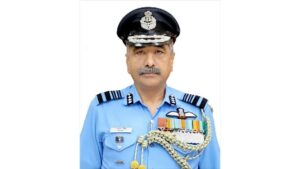
Who is Air Marshal Ashutosh Dixit?
- Background: Air Marshal Ashutosh Dixit is an alumnus of the prestigious National Defence Academy (NDA), Khadakwasla, Air Force Academy, Dundigal, Defence Services Staff College (DSSC), Bangladesh, and National Defence College (NDC), New Delhi.
- Commission: He was commissioned into the fighter stream of the Indian Air Force on 6 December 1986.
- His career spans nearly four decades, making him one of the most experienced officers in the IAF leadership hierarchy.
- Elite Flying: Air Marshal Dixit is a Qualified Flying Instructor and Experimental Test Pilot.
- He has logged over 3,300 flying hours on more than 20 aircraft types, including MiG-21, Mirage-2000, Jaguar, and Hawk.
- He commanded a Mirage-2000 Squadron, a frontline fighter base in the western sector.
- As Commanding Officer of the Flight Test Squadron at ASTE, Bengaluru, he led critical testing and evaluation missions while contributing to indigenous aerospace capability development.
- Combat Experience: He served in major operations such as Operation Rakshak, Kargil War, and Operation Safed Sagar, gaining extensive combat and operational experience.
- Contribution: He played a major role in Jaguar and MiG-27 avionics upgrade programmes, strengthening India’s self-reliance in military aviation and extending aircraft operational life.
- As Director of Air Staff Requirements, he helped plan and conduct the landmark Medium Multi-Role Combat Aircraft (MMRCA) trials, one of India’s largest fighter acquisition initiatives.
- Appointments: He served as Director Air Staff Requirements, Principal Director Air Staff Requirements, Assistant Chief of Air Staff (Projects) and Assistant Chief of Air Staff (Plans), influencing capability development and force planning.
- His major appointments included Air Defence Commander, Southern Air Command, Senior Air Staff Officer, South Western Air Command, Deputy Chief of the Air Staff (2023–24), AOC-in-C Central Air Command (2024–25), and Chief of Integrated Defence Staff (2025–26).
- As Chief of Integrated Defence Staff, he played a significant role in promoting tri-service integration, theatre command reforms, and military jointness, key pillars of India’s future defence structure.
- Honours: For distinguished service, he received the Param Vishisht Seva Medal (PVSM), Ati Vishisht Seva Medal (AVSM), Vayu Sena Medal (VM), and Vishisht Seva Medal (VSM).
Role and Responsibilities of VCAS in the Indian Air Force
- Second-in-Command: The Vice Chief of Air Staff (VCAS) is the second-highest-ranking officer in the Indian Air Force, acting as the principal deputy to the Chief of Air Staff (CAS).
- The VCAS ensures continuity of leadership and can assume full command of the IAF during the absence or incapacitation of the CAS.
- Operational Readiness: A core responsibility is overseeing operational preparedness, including readiness of fighter squadrons, air defence systems, and strategic assets.
- The VCAS supervises deployment planning during both peacetime surveillance and wartime mobilisation.
- Capability Development: The VCAS plays a key role in shaping the IAF’s future combat capability structure, including induction of aircraft, missile systems, UAVs, and space-based surveillance assets.
- The VCAS is deeply involved in defence acquisition processes, including fighter procurement, indigenous development projects like Make in India defence programmes, and evaluation of new aerospace technologies.
- Air Headquarters Staff Supervision: At Air Headquarters (Vayu Bhawan, New Delhi), the VCAS coordinates multiple Principal Staff Officers (PSOs), ensuring smooth execution of policies related to operations, logistics, intelligence, and planning.
- Joint Military Integration: With increasing focus on theatre commands and tri-service integration, the VCAS contributes to coordination between the Army, Navy, and Air Force, enhancing interoperability in joint operations.
- Human Resource Development: The office ensures continuous improvement in pilot training standards, air combat doctrine, and professional military education, strengthening human capital across ranks.
- During conflict scenarios, the VCAS assists in air campaign planning, target prioritisation, force allocation, and strategic airlift operations, ensuring optimal air dominance.
- Resource Management: The VCAS contributes to defence budgeting decisions, prioritising allocation for maintenance, upgrades, logistics chains, and long-term capital expenditure planning.
- Policy Execution: The VCAS ensures continuity in implementation of national defence policies, government directives, and modernization roadmaps, bridging leadership transitions smoothly within the IAF hierarchy.
|
IAF Hierarchy in Highest-to-Lower Order:
|
|
FAQs: Q1. Who is Air Marshal Ashutosh Dixit? Air Marshal Ashutosh Dixit is a senior Indian Air Force officer, fighter pilot, test pilot, currently serving as Chief of Integrated Defence Staff, appointed Vice Chief of Air Staff. Q2. What is the role of Vice Chief of Air Staff? VCAS is second-in-command of IAF, assisting Chief of Air Staff in operations, planning, modernisation, administration, and ensuring continuity of command and force readiness. Q3. When will he take charge as Vice Chief? Air Marshal Ashutosh Dixit will assume charge as Vice Chief of Air Staff on 1 July 2026, as officially announced by the Ministry of Defence. Q4. What are his achievements in IAF? He served as CISC, AOC-in-C Central Air Command, DCAS; contributed to indigenous aircraft upgrades, MMRCA trials, and joint-force integration initiatives. Q5. Why was he appointed Vice Chief? He was appointed due to vast operational experience, modernization expertise, indigenous defence contribution, and strong leadership in joint operations and strategic planning roles. |
|
Also Read: Lt Gen N S Raja Subramai Appointed as India’s Next CDS |