RHRS Lam Farm Releases Two New Chilli Varieties
| General Studies Paper lII: Agricultural Resources, Cropping Patterns |
Why in News?
Recently, the Regional Horticultural Research Station (RHRS) at Lam Farm, Guntur, released two advanced chilli varieties—LCA-625 and LCA-643—offering higher market adaptability.
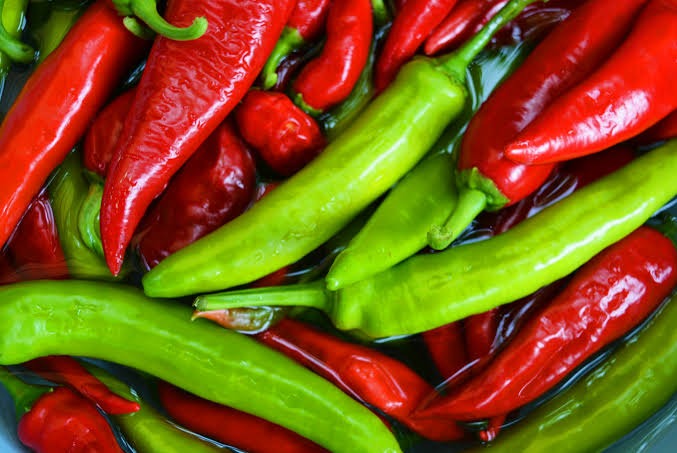
Two New Chilli Varieties LCA-625 and LCA-643
- LCA-625: LCA-625 is a high-yielding chilli variety developed by Lam Farm Research Station. Plants grow tall up to 170.67 cm with a robust canopy, dense branching, and closely spaced nodes.
- The pods are slender, 8 to 10 cm long, dark green when fresh, and mature into a Teja-like shape.It possesses a high pungency of 45,000–50,000 Scoville Heat Units (SHU) and a red colour intensity of 60–65 ASTA units.
- Under multi-location on-farm trials, it recorded a dry fruit yield of 4,776 kg/ha to 5,167 kg/ha. This represents a 39.6% yield increase over standard local checks, producing a per-plant yield of 247.5g to 920g depending on management.
- The variety shows strong moderate tolerance to fruit rot (anthracnose). Its elevated capsaicin levels help naturally lower flower drop and mitigate physiological pod damage under field settings.
- It is highly ideal for direct sowing in main fields during Rabi. It displays a lower thrips incidence of 27.6% compared to 43% in standard checks, securing an optimal Benefit-Cost (B:C) ratio of 2.77.
- Due to limited availability, the sale of these foundation seeds is strictly restricted to 250 grams per farmer and priced at ₹1,200 per kilogram.
- LCA-643: It is a highly versatile cultivar optimized for both green fresh market and dry spice production. This dual utility allows farmers to hedge market price risks efficiently.
- Pods are premium and long, measuring 13 to 14 cm. They feature a light green shade when fresh and dry into slightly wrinkled, bright red pods that perfectly resemble the popular commercial Byadgi type.
- Trial data indicates excellent vegetative vigor with high pod-set density. It delivers high market returns by matching commercial color demands crucial for spice processing and export.
- LCA-643 offers advanced moderate resistance to Gemini virus. Furthermore, it performs outstandingly under severe black thrips infestations, maintaining structural health where other hybrids fail.
- The variety showcases distinct tolerance to moisture stress. It thrives with minimal pesticide dependency, lowering chemical inputs and ensuring safer, sustainable production under drought-prone environments.
- Due to limited availability, the sale of these foundation seeds is strictly restricted to 250 grams per farmer and priced at ₹1,200 per kilogram.
Note: Regional Horticultural Research Station (RHRS), Lam Farm, Guntur, under Dr. YSR Horticultural University, is one of India’s premier chilli-research centres.
- It has released numerous crop varieties over decades: Paprika Varieties (LCA-436, LCA-424, LCA-620), LCA-334 (impressive average fruit weights and yields), LCA-305, LCA-315, LCA-357, LCA-206 and LCA-235.
- It plays a major role in strengthening Andhra Pradesh’s position as India’s leading chilli-producing state.
- The Guntur region accounts for roughly a third of India’s total chilli output, with varieties exported to over 160 countries.
Economic Significance
- Boosting Farm Incomes: The release of LCA-625 and LCA-643 aims to improve farmers’ earnings by combining higher productivity, better fruit quality and stronger market acceptance.
- Improved varieties reduce dependence on older cultivars whose yields and quality often fluctuate under changing climatic and market conditions.
- Reducing Per-Unit Cost of Production: Higher-yielding varieties increase output from the same land area, reducing the cost per kilogram of dried chilli.
- This improves farm profitability and enhances resilience against market volatility, a major concern in chilli cultivation regions.
- Supporting India’s Dominance: India remains the world’s largest producer, consumer and exporter of chilli. The development of improved varieties helps sustain export competitiveness.
- In FY24, chilli exports were valued at approximately US$ 1.51 billion, making it the largest contributor among all spice exports.
- India exported 17.99 lakh tonnes of spices worth US$ 4.72 billion in FY25, with chilli remaining a flagship export commodity.
- Meeting International Quality: Export markets increasingly demand uniform colour, pungency, cleanliness and residue compliance.
- Research-driven varieties improve consistency, helping exporters meet quality standards and reduce rejection risks in overseas markets.
- Better-quality chillies attract premium buyers from processing industries, spice manufacturers and export houses.
- Generating Employment: Higher chilli production stimulates employment in seed production, cultivation, harvesting, grading, storage, transportation, processing and exports. The economic benefits therefore extend beyond farmers to the broader rural economy.
IMPORTANT FACTS:
- Chilli (Capsicum annuum L.) belongs to the Solanaceae family, which also includes tomato, potato and brinjal. It is cultivated as both a vegetable and spice crop.
- Chilli originated in Central and South America, particularly Mexico, and was introduced to India by Portuguese traders during the 16th century. Over time, India became a secondary centre.
- The pungency of chilli comes from capsaicin, concentrated mainly in the fruit placenta. Chilli also contains capsaicinoids, carotenoids, flavonoids and antioxidants, which determine its heat, colour and industrial value.
- Chilli is exceptionally rich in Vitamin C, along with Vitamin A, Vitamin E, potassium and folic acid. These nutrients contribute to its growing importance in nutraceutical applications.
- Chilli can be cultivated under both warm and moderately cool conditions and grows on a wide range of soils. However, well-drained loamy soils and adequate moisture management are essential for high productivity and quality.
- Chilli is among the world’s most widely cultivated spice crops and is considered the second most consumed vegetable-spice crop after tomato. Its versatility makes it indispensable in culinary and food-manufacturing industries worldwide.
- Chilli cultivation faces significant losses from diseases such as Anthracnose (fruit rot) caused by Colletotrichum capsici, Powdery Mildew, Damping-off, Cercospora Leaf Spot, Bacterial Leaf Spot, Fusarium Wilt, and Phytophthora Blight.
- Viral diseases including Chilli Leaf Curl Virus (ChiLCV), Cucumber Mosaic Virus (CMV), and Mosaic Disease are among the most destructive, often causing severe yield reductions.
- Major insect pests include Thrips (Scirtothrips dorsalis), Aphids, Whiteflies, Mites, and Fruit Borers, which not only damage plants directly but also transmit viral infections.
- India contributes about 40% of world production. The leading chilli-producing states are Andhra Pradesh, Madhya Pradesh, Telangana and Karnataka.
- Together, these states account for nearly 68% of the cultivated area and more than 87% of national production.
- The Government of India supports chilli cultivation through multiple schemes:
- The Mission for Integrated Development of Horticulture (MIDH) promotes quality planting material, protected cultivation and post-harvest infrastructure.
- The National Horticulture Board (NHB) provides assistance for storage and value-addition facilities.
- The Spices Board of India supports chilli farmers through quality improvement programmes and promotion of Good Agricultural Practices (GAP).
- Under the Agriculture Export Policy 2018, chilli has been identified as a key export commodity.
- The One District One Product (ODOP) initiative recognizes chilli in several districts, while Operation Greens and the Agricultural and Processed Food Products Export Development Authority (APEDA) help strengthen supply chains and export competitiveness.
FAQs:
Q1. Which new chilli varieties were released by Guntur Lam Farm?
RHRS Lam Farm, Guntur, recently released LCA-625 and LCA-643, two improved chilli varieties developed to compete with popular varieties like Teja and Byadgi.
Q2. What are the features of the new chilli varieties?
The varieties offer high yield, strong pungency, superior colour retention, export suitability, market-preferred fruit quality, and improved adaptability under different cultivation conditions.
Q3. How will farmers benefit from these varieties?
Farmers can gain through higher productivity, better market prices, improved profitability, lower pest incidence, stronger export demand, and enhanced income stability.
Q4. What is the significance of Lam Farm in chilli research?
Lam Farm is one of India’s leading chilli research centres, having developed numerous nationally released varieties and advanced breeding lines for productivity and quality improvement.
Q5. Are the new varieties resistant to pests and diseases?
Yes. Available research indicates tolerance to fruit rot disease, lower thrips incidence, drought tolerance, and improved resistance traits, helping reduce crop losses.
| Also Read: Black-headed Caterpillar Disease |