Bangladesh-China Teesta Project: Security Concerns for India
| General Studies Paper III: India and its Neighbourhood, Water Resources, Water Management |
Why in News?
During a state visit to Beijing, Bangladesh and China agreed to deepen cooperation on the Teesta River Project, raising Indian concerns over expanding Chinese influence.
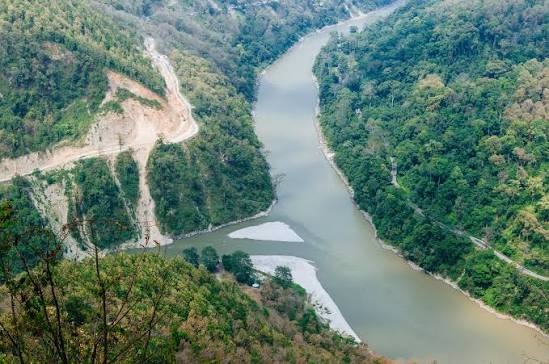
What is the Teesta River Project?
- About: The Teesta River Project or Teesta River Comprehensive Management and Restoration Project (TRCMRP) is a Bangladesh-led integrated river basin management programme designed to restore the Teesta River.
- The Teesta River is a transboundary Himalayan river and a major right-bank tributary of the Brahmaputra (Jamuna in Bangladesh).
- Stretching about 414 km, it flows through India and Bangladesh, making it strategically, economically, and environmentally significant.
- The river originates from Tso Lhamo (Cholamu) Lake in North Sikkim at about 5,280–5,330 m above sea level.
- It traverses Sikkim, West Bengal, enters Bangladesh through Nilphamari, and finally joins the Brahmaputra (Jamuna) near Gaibandha.
- The Teesta Basin covers nearly 12,000 km², with around 83% in India and 17% in Bangladesh.
- It drains most of Sikkim and supports agriculture, settlements, and ecosystems across the eastern Himalayas.
- Important tributaries of the river include the Rangeet, Rangpo Chu, Lachung Chu, Dik Chu, and numerous glacier-fed mountain streams.
- The Teesta is glacier-fed and rain-fed, exhibiting extreme seasonal flow variation.
- The river supports irrigation, hydropower, drinking water, fisheries, and agriculture, particularly rice, jute, and maize cultivation.
- Multiple Teesta Hydroelectric Projects operate in Sikkim and West Bengal.
- The basin sustains Himalayan biodiversity, forests, wetlands, aquatic habitats, and fertile alluvial plains.
- However, erosion, sedimentation, and climate change increasingly threaten ecological stability.
- Before the catastrophic 1787 flood, the Teesta flowed into the Padma (Ganga). The flood permanently shifted its course eastward.
- Objectives: The project seeks to stabilize the river channel, reduce floods, prevent erosion, store dry-season water, expand irrigation, improve inland navigation, and reclaim productive land.
- Assistance: Driven by the Bangladesh Water Development Board (BWDB), the project is being pursued with Chinese technical assistance through POWERCHINA.
- China provides technical expertise, engineering support, and assistance in feasibility studies.
- Background: The project originated after decades of dry-season water shortages and severe riverbank erosion affecting northern Bangladesh.
- In 2016, the Bangladesh Water Development Board (BWDB) signed an MoU with China’s Power Construction Corporation (PowerChina) for feasibility studies.
- The proposal received government approval in May 2019.
- Progress accelerated after an MoU extension in January 2026, followed by renewed China-Bangladesh cooperation in June 2026.
- Estimated Cost: The proposed investment has been estimated at approximately US$1 billion.
- Most funding discussions involve Chinese loans and technical assistance.
- Technology: The project proposes deep dredging, river channel narrowing, modern embankments, groynes, levees, cross-bars, dry-season reservoirs, hydrological monitoring, and integrated river engineering.
- Physical Components: The project include dredging about 140 million cubic metres of sediment, reclaiming nearly 171 km² of land.
- It also targets to repair 110 km and construct 124 km of embankments, build a 224-km road network, 82 jetties and irrigation facilities.
- Significance: The project aims to protect millions from floods, riverbank erosion, and water scarcity in Bangladesh, while boosting agricultural productivity, and strengthening climate resilience in the northern Rangpur region.
- For China, it strengthens its South Asian infrastructure diplomacy, expands engineering cooperation and enhances its development partnership with Bangladesh.
India’s Concerns over China’s Role in the Teesta River Project
- Threat to the Siliguri Corridor: The proposed Chinese-backed project is located near India’s Siliguri Corridor (“Chicken’s Neck”), a 20–22 km-wide strategic passage connecting the Northeast with mainland India. Any sustained Chinese presence here raises qsignificant national security concerns.
- Expansion of Chinese Strategic Influence: India views the project as part of China’s broader effort to expand its geopolitical footprint in South Asia through infrastructure financing and the Belt and Road Initiative (BRI), potentially reducing India’s regional influence.
- Dual-Use Infrastructure Risks: River engineering requires terrain mapping, hydrological surveys, digital monitoring, and logistics networks. Such civilian infrastructure could also support intelligence collection or other strategic objectives.
- Regional Strategic Competition: The Teesta project has evolved into a key arena of India–China rivalry, reflecting wider competition over connectivity, development partnerships, and strategic influence in India’s neighbourhood.
- Chinese Economic Leverage: Bangladesh already owes about US$6.2 billion to China, while Chinese companies have invested roughly US$7.7 billion in the country.
- Additional Teesta financing could deepen Bangladesh’s economic dependence on Beijing.
Impact on India–Bangladesh Relations
- Growing Strategic Trust Deficit: Bangladesh’s decision to deepen Chinese involvement in the Teesta project has generated concerns in New Delhi, creating a trust deficit in bilateral ties despite decades of close cooperation on security, trade, and connectivity.
- Increased Complexity in Water Diplomacy: The unresolved Teesta water-sharing agreement, pending since 2011, has become more difficult as Chinese participation introduces a broader geopolitical dimension into what was primarily a bilateral river-management issue.
- The Teesta water-sharing agreement is a proposed bilateral treaty between India and Bangladesh for equitable distribution of the Teesta River’s dry-season flow (December–May).
- India and Bangladesh reached an ad hoc arrangement in 1983, allocating 39% of the dry-season flow to India and 36% to Bangladesh, while 25% remained unallocated.
- This was only an interim administrative arrangement and never became a legally binding treaty.
- After negotiations through the Joint Rivers Commission (JRC), both governments prepared a 15-year interim agreement in 2011.
- The draft proposed allocating 42.5% of the dry-season flow to India and 37.5% to Bangladesh, while maintaining environmental flows and establishing joint hydrological monitoring stations for scientific data collection.
- The agreement was never signed because the West Bengal Government, led by Mamata Banerjee, opposed the proposed allocation, arguing that North Bengal required more Teesta water for irrigation and drinking purposes.
- Under India’s federal framework, the Centre could not proceed without the state’s support.
- So, No permanent Teesta water-sharing treaty exists as of 2026. The 2011 draft remains unsigned.
- Continued Economic Interdependence: Despite strategic differences, both countries remain deeply connected through trade, border management, power cooperation, and transit arrangements, making sustained dialogue essential to prevent geopolitical competition.
India–Bangladesh Transboundary Water Management
- Institutional River Diplomacy: India and Bangladesh manage 54 shared rivers through the Joint Rivers Commission (JRC), the principal bilateral mechanism established in 1972.
- The JRC facilitates hydrological data exchange, technical studies, flood forecasting, and negotiations on all transboundary rivers, ensuring disputes remain within an institutional framework.
- Renewing Ganga Water Treaty: With the 1996 Ganga Water Sharing Treaty expiring in December 2026, both countries have initiated formal discussions for renewal.
- India has also begun joint water measurements on the Ganga–Padma system to generate scientifically verified flow data before negotiations.
- Scientific Water Cooperation: India’s Central Water Commission (CWC) and Bangladesh’s Water Development Board (BWDB) conduct joint hydrological monitoring, flood forecasting, and seasonal discharge assessments.
- It promotes evidence-based water allocation rather than politically driven decisions.
- Bilateral Water Agreements: Beyond the Teesta issue, India signed the 2022 Kushiyara River MoU, allowing regulated dry-season water withdrawal with a Joint Monitoring Team.
- High-Level Political Engagement: Water issues are regularly discussed during Prime Ministerial visits, Foreign Office Consultations, and Water Resources Minister-level meetings, reflecting India’s preference for negotiated, bilateral solutions instead of third-party mediation.
Way Forward
- Finalise the Teesta Agreement: A mutually acceptable treaty supported by the Centre and West Bengal would rebuild trust and reduce Bangladesh’s dependence on external partners for river management.
- Offer a Competitive River Restoration Package: India should propose advanced river engineering, climate-resilient infrastructure, satellite hydrology, and concessional financing as an alternative to Chinese technical assistance.
- Deepen Economic Integration: Expanding CEPA, cross-border industrial zones, digital connectivity, and supply chains would create durable economic incentives that strengthen bilateral relations beyond political changes.
- Institutionalise Strategic Dialogue: Establishing an annual 2+2 Foreign and Defence Dialogue and regular National Security Adviser-level consultations can improve transparency on infrastructure and regional security issues.
- Develop Joint River Management: Establishing a permanent India–Bangladesh Teesta Basin Authority for joint hydrological monitoring, flood forecasting, sediment management, and climate adaptation would create institutional cooperation beyond water allocation.
FAQs:
-
What is the Teesta Project?
It is Bangladesh’s river restoration project for flood control, irrigation, erosion prevention, navigation, and sustainable river management
-
Why is the Teesta River important to India and Bangladesh?
It supports irrigation, hydropower, drinking water, agriculture, fisheries, and livelihoods across both countries.
-
What is the Teesta water-sharing dispute?
It concerns the absence of a permanent agreement on sharing the Teesta’s dry-season water between India and Bangladesh.
-
Why is China’s involvement in the Teesta Project significant?
It expands China’s strategic presence in South Asia, raising geopolitical and security concerns for India.
-
How does the Teesta Project affect India-Bangladesh relations?
It influences water diplomacy, strategic trust, bilateral cooperation, and regional geopolitical dynamics between both countries.
-
Where does the Teesta River originate and flow?
It originates at Tso Lhamo Lake in Sikkim and flows through India into Bangladesh before joining the Brahmaputra.
-
Why is the Teesta Project strategically important for India?
It is located near the Siliguri Corridor, making foreign infrastructure involvement strategically sensitive for India’s security.
-
What are the main objectives of the Teesta Project?
To control floods, reduce erosion, expand irrigation, improve navigation, reclaim land, and strengthen climate resilience
Disclaimer: Information in this article is based on official announcements and public records. Regulations and implementation details may evolve over time.
| Also Read: India-Bangladesh Border Fencing |